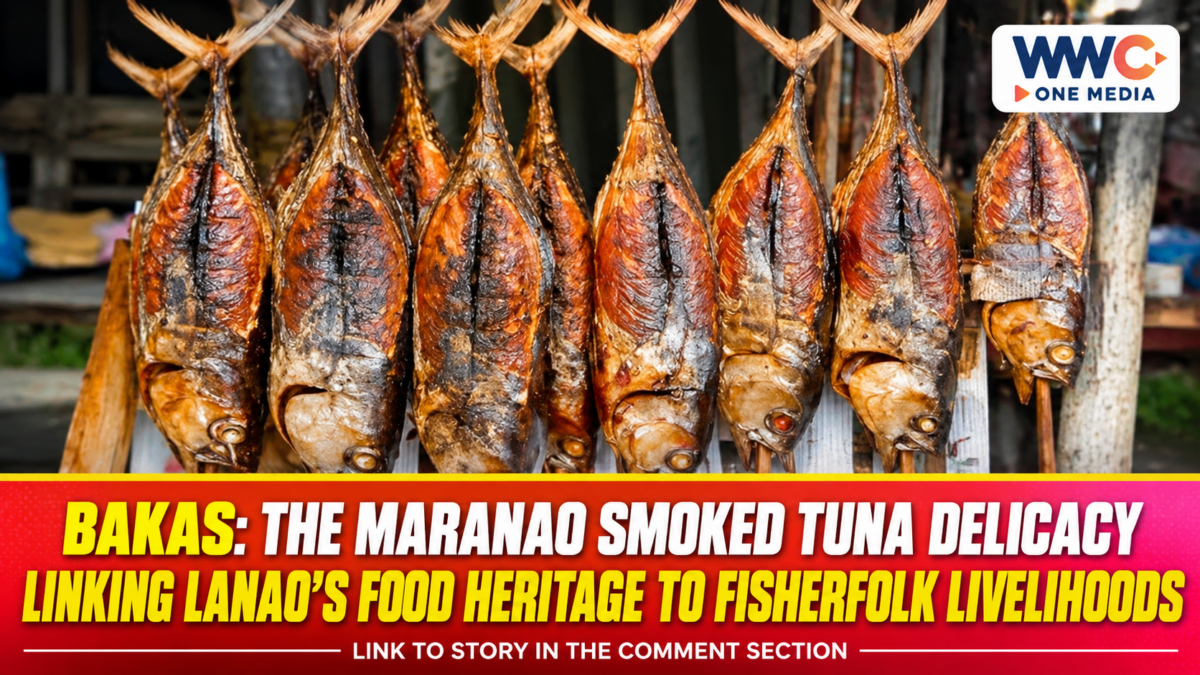
Bakas, the traditional smoked tuna delicacy associated with Lanao, is more than a familiar food sold along roads in parts of Mindanao. Its production connects Maranao culinary heritage with fishing communities, small food processors and a supply chain that depends on access to fresh tuna, reliable preservation facilities and local markets.
The Bangsamoro government’s own records identify Malabang and Marantao in Lanao del Sur, as well as Balo-i in Lanao del Norte, among the leading producing areas for bakas. The delicacy offers a closer look at how a regional food tradition can support livelihoods while facing practical challenges involving fish supply, processing and distribution. BARMM Official Website+1
What makes bakas a distinct part of Maranao cuisine?
Bakas is smoked tuna traditionally prepared through a slow-smoking process that helps preserve the fish. The Bangsamoro Information Office describes it as a signature smoked-tuna product of Lanao del Sur, with production also associated with Balo-i in Lanao del Norte.
The delicacy can be served in different forms. One preparation, Piaparan a Bakas, combines smoked tuna with shredded coconut, while Pisasati a Bakas turns the fish into smoked-tuna nuggets. Both demonstrate how a preserved ingredient can become part of a wider range of traditional dishes. BARMM Official Website+1
Bakas also fits into a broader Maranao food culture built around coconut, local spices and distinctive condiments.
One important ingredient is palapa, a traditional mixture using native scallions, ginger and chilli. It provides a strong flavour base for several Maranao dishes, including chicken and beef preparations. The Bangsamoro government also identifies sakurab, a native scallion used in palapa, as an ingredient associated with Maranao cooking. BARMM Official Website+1
This culinary identity extends beyond main dishes. Maranao food traditions include sweets such as dodol, made with sticky rice flour and coconut milk, as well as other delicacies served during family gatherings and celebrations.
For visitors, bakas offers an introduction to a food tradition that is closely tied to the region’s communities rather than simply another packaged souvenir.
Malabang’s fishing industry is part of the story
The connection between bakas and coastal livelihoods becomes clearer in Malabang, one of the towns identified by the Bangsamoro government as a major production area.
A 2022 People’s Budget document prepared by the Minority Bloc of the Bangsamoro Transition Authority Parliament described the supply challenges facing Lanao del Sur’s smoked-tuna producers.
It noted that traditional tuna sources from coastal areas of Lanao del Sur had become less available because of declining wild tuna stocks. As a result, bakas producers had turned to fresh tuna caught in neighbouring provinces, including Lanao del Norte and Misamis Oriental, or purchased from fish traders handling tuna from General Santos City. People’s Budget_FINAL.docx
That detail reveals an important weakness in the production chain: a product associated with a particular place does not necessarily rely entirely on fish caught within that locality.
The same document explained that bakas prices depend heavily on fluctuations in the supply of fresh wild tuna. When raw materials become harder to obtain or more expensive, small processors may face higher production costs and less predictable earnings.
The document proposed exploring sustainable tuna farming in coastal municipalities, including Malabang, Balabagan, Kapatagan and Picong. It also identified possible collaboration with fisheries research and technology institutions to explore the transfer of tuna-farming technology.
These were proposed interventions in the planning document, not evidence that the proposed farms had already been established or had begun supplying commercial quantities of tuna. People’s Budget_FINAL.docx
Why ice and preservation facilities matter
Fresh fish is highly perishable. For communities that depend on fishing and processing, access to ice and appropriate storage can influence how much of a catch remains suitable for sale or further processing.
Malabang has taken a step towards addressing this concern through a fisheries-support project.
On March 8, 2024, the Ministry of Agriculture, Fisheries and Agrarian Reform’s Special Development Fund turned over three solar-powered mini-ice plants to the Coastal Malabang Fishing Marketing Cooperative in Campo Muslim, Malabang, Lanao del Sur.
The ministry’s announcement said local fishermen had previously faced difficulties preserving their catch because of limited access to proper cooling facilities. The new equipment was intended to provide a closer source of ice for cooperative members and neighbouring fishing communities. MAFAR
For bakas producers, reliable access to fresh fish is an important starting point. Ice plants can help fishermen handle their catch before it reaches processors, although they do not automatically solve every issue involving fish supply, transportation, processing standards or market access.
These facilities are therefore part of a larger chain. Fishing communities need dependable landing and handling arrangements, processors need suitable raw materials, and vendors need access to customers who recognise the value of the finished product.
WWC has previously examined the wider challenges facing fisherfolk and agricultural communities under the BARMM agriculture ministry.
Traditional food processing also needs quality and safety standards
Preserving a traditional method does not mean ignoring food safety.
The Department of Agriculture’s National Fisheries Research and Development Institute (NFRDI) has conducted research into traditional fish-smoking practices across several Philippine provinces, including Lanao del Sur and Maguindanao.
Its 2022 annual report described an assessment involving 310 smoked-fish processors. The research examined processing operations, raw-material supply, product movement, handling, storage and marketing.
The report found that 68.54% of the surveyed processors were backyard operators, while 27.15% were micro-enterprises. The remaining 4.31% were classified as small or medium businesses. These figures cover the study’s surveyed processors across the included areas and should not be interpreted as a separate count of bakas producers alone. NFRDI+1
The research is relevant because traditional smoked-fish production often involves small-scale operations with different facilities and equipment. Processing methods, handling practices and storage conditions can affect the quality and shelf life of the finished product.
For a food item that travels from production areas to roadside vendors and markets, maintaining quality throughout distribution is important. Better processing facilities and technical support could help small producers improve consistency while preserving the characteristics that make their products distinct.
WWC has also examined how climate pressures could affect Philippine fisheries and coastal livelihoods. For communities dependent on fish, protecting marine resources and improving post-harvest handling are connected priorities.
Can Lanao’s food heritage become a stronger tourism product?
Bakas has potential beyond local consumption. Its connection to Maranao culture gives it a story that can be incorporated into food tourism, local markets and community-based visitor experiences.
The Department of Tourism has promoted food and gastronomy as part of the country’s tourism offering, recognising that regional dishes can help visitors understand the culture and identity of the places they explore.
Food tourism can also create opportunities for people beyond restaurants. Fishers, processors, market vendors, farmers and transport operators may benefit when visitors purchase local products and spend money within the communities they visit.
WWC previously explored this broader opportunity in its report on how Filipino food is being positioned as a reason to travel.
For Lanao, promoting bakas as a regional food product could help introduce more visitors to Maranao cooking. But sustainable promotion requires more than attractive food displays. Producers need dependable raw-material supplies, appropriate processing facilities, clear product information and access to markets.
The opportunity is to build value around an existing tradition without turning it into a product disconnected from the fishing communities and cultural practices that sustain it.
What happens next
The future of bakas depends partly on whether Lanao’s fishing and processing communities can maintain access to fresh tuna while improving the facilities that support production.
The earlier Bangsamoro planning document identified tuna farming as one possible response to supply constraints. The mini-ice plants in Malabang represent a separate investment in preserving catches and supporting local fishermen.
Both developments point to the importance of connecting traditional food production with practical livelihood support.
For consumers, bakas remains a distinctive expression of Maranao culinary heritage. For the communities that produce it, however, its continued availability also depends on the condition of fisheries, the cost and supply of raw materials, and the ability of small processors to bring safe, quality products to market.
Protecting that connection between food and livelihood may be just as important as introducing the delicacy to a wider audience.