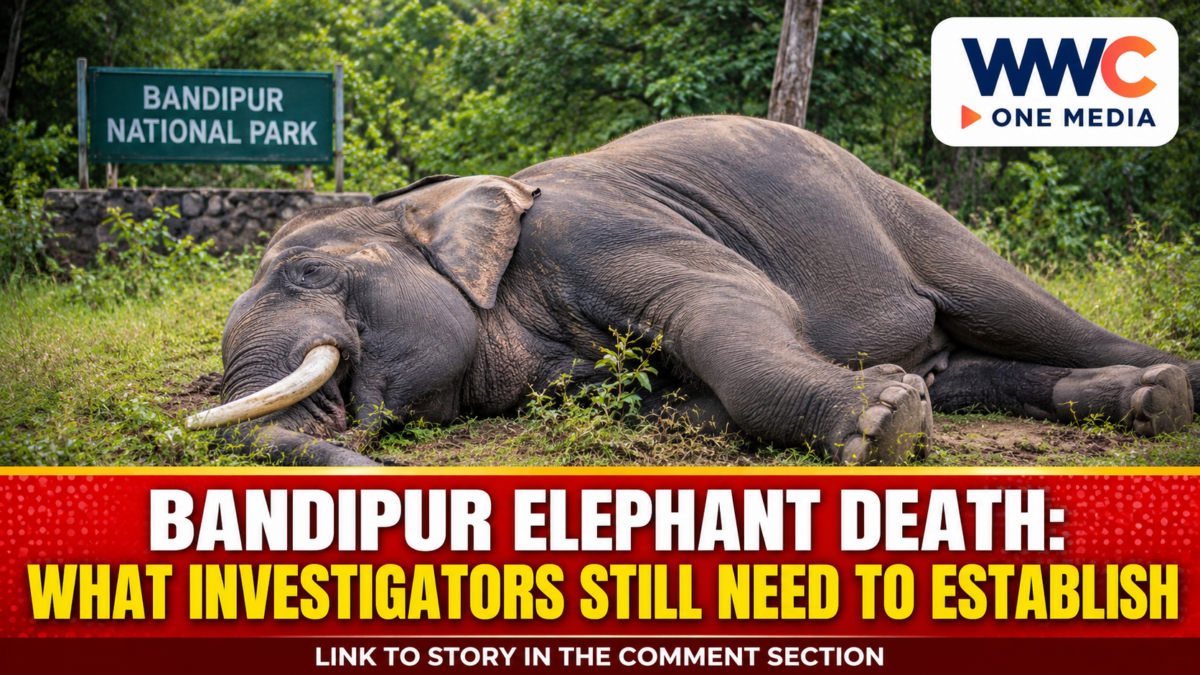
A reported death of a male elephant inside Karnataka’s Bandipur Tiger Reserve has raised questions about wildlife health and the importance of veterinary investigations in protected forest areas. The animal’s reported cause of death remains unconfirmed, making the results of any post-mortem examination and laboratory testing essential before conclusions can be drawn.
The incident deserves careful attention not only because of the loss of a wild elephant, but also because determining why an animal dies can help conservation authorities identify possible health or environmental risks.
Why the cause of the Bandipur elephant death matters
A carcass discovery does not automatically establish what killed an animal. Veterinary examination, tissue analysis and laboratory testing may be needed to distinguish disease, infection, poisoning, injury and other possible causes.
For that reason, an apparent absence of external injuries should not be treated as proof that an animal died from illness. Equally, an unusual physical observation cannot establish a specific disease without supporting medical findings.
The distinction is important for wildlife management. An individual death may be an isolated event, or it may point to a wider concern requiring additional monitoring. Authorities need reliable evidence before deciding which explanation applies.
Water conditions and wildlife health
Access to safe water is an important part of wildlife habitat management. Changes in water availability or quality can affect animals and the wider ecosystem, particularly during periods of environmental stress.
However, drought conditions alone cannot establish the cause of an individual elephant’s death. Investigators would need veterinary and environmental evidence before connecting a particular mortality case to water scarcity or contamination.
A useful assessment would examine the animal’s post-mortem findings alongside available information about water sources and other environmental conditions in the surrounding habitat.
WWC has previously examined how elephant movement monitoring and community alerts in India can contribute to wildlife management. Tracking and early-warning systems address movement and human-elephant encounters, while veterinary investigations address animal health. Both require reliable field information.
Why one animal’s death deserves proper documentation
Wild elephants are part of complex forest ecosystems. Recording mortality accurately helps conservation authorities understand where deaths occur, whether incidents share common characteristics and whether additional investigation is necessary.
Useful public information includes the date and location of discovery, the animal’s estimated age and sex, the findings of the veterinary examination, samples collected and the status of laboratory testing.
The publication of such information also helps prevent speculation. A preliminary observation should remain preliminary until qualified professionals establish whether it has diagnostic significance.
WWC’s earlier coverage of Kavantissa’s death in Sri Lanka illustrates why the medical findings surrounding an elephant’s death should be distinguished from wider conservation concerns and policy discussions.
Conservation requires evidence beyond emergency response
Protected-area management involves more than responding after an animal is found dead. It also requires habitat monitoring, veterinary capacity, field patrols and reliable records of wildlife health.
A documented cause of death can help authorities decide whether further checks are needed. If an investigation identifies a disease or environmental hazard, the response may need to extend beyond the individual incident.
But those decisions should follow evidence rather than assumptions.
WWC has also reported on wildlife deaths documented during Indonesia’s 2026 forest fires. That separate case demonstrates why wildlife mortality figures need clear reporting periods, defined locations and documented observations.
What happens next
The essential next step is publication or confirmation of the relevant forest department findings. A veterinary report could establish whether investigators identified injuries, disease or another possible explanation, while laboratory results could provide further evidence where testing was required.
Until those findings are available, no particular illness, water-quality problem or environmental condition should be presented as the established cause.
The responsible approach is to document the death, preserve the distinction between preliminary observations and confirmed findings, and wait for the investigation to establish what happened.
Frequently asked questions
Where was the elephant reportedly found?
The incident was reported within the Bandipur Tiger Reserve in Karnataka, India. The exact location should be confirmed through an official forest department record before publication.
Has the cause of death been established?
No verified post-mortem or laboratory conclusion was available for this draft.
Can drought cause elephant deaths?
Environmental stress and limited access to water can affect wildlife health, but drought cannot be identified as the cause of an individual death without supporting evidence.
Why are laboratory tests important?
Testing can help investigators identify disease, infection, toxins or other biological factors that may not be apparent from an external examination.
What should readers wait for?
The relevant forest department’s incident report and the veterinary or laboratory findings, which would provide a stronger basis for explaining the animal’s death.