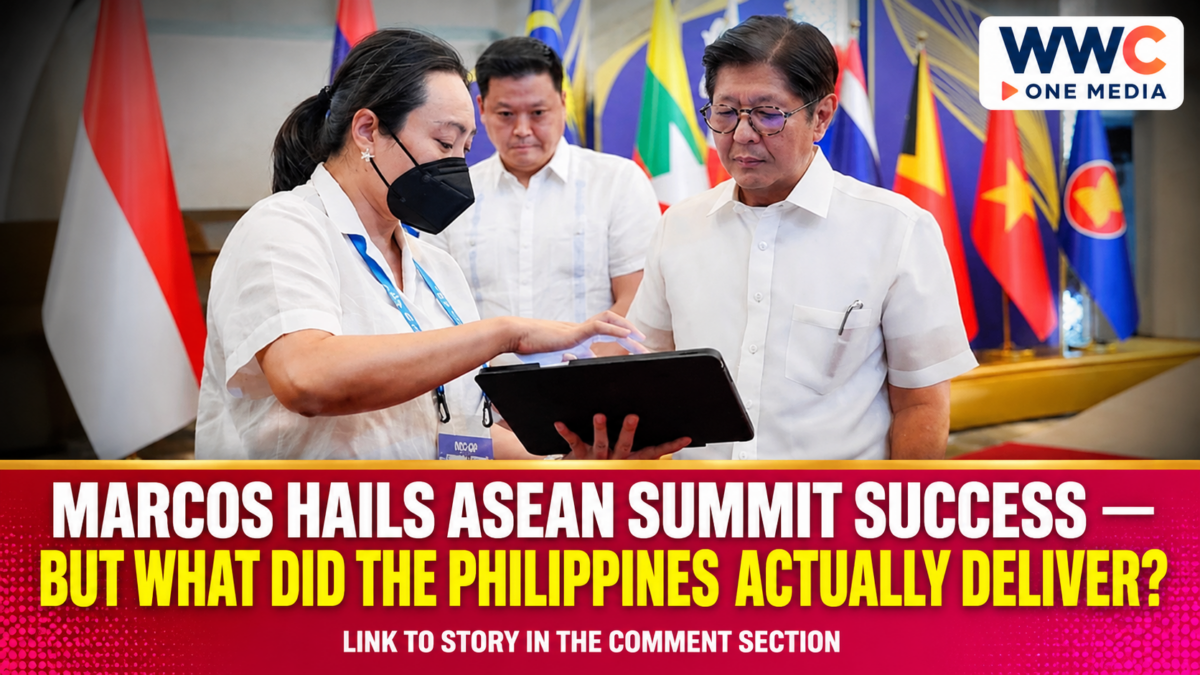
MANILA, Philippines — Nov. 22, 2026. President Ferdinand R. Marcos Jr. has praised the Philippines’ hosting of the 49th ASEAN Summit and Related Summits, thanking the teams that organised the meetings as Manila closed its 2026 chairship on Nov. 17. The event ended with a handover to Singapore and a collection of regional commitments that will face a more demanding test after visiting delegations leave.
The ASEAN Summit 2026 brought diplomatic attention to Manila, but its lasting importance cannot be measured solely by logistics, ceremonies or signed papers. The questions now are which decisions can change cross-border business, improve public protection and sustain cooperation after the Philippines has relinquished the chair.
ASEAN Summit 2026: Marcos Credits a Wider Team
At his Nov. 17 press conference, Marcos described both the organisation of the event and the work completed under the Philippine chairship as successful. He thanked the many people involved across the year rather than presenting the outcome as the achievement of one office.
That distinction matters. A gathering involving national leaders, partner governments and multiple policy tracks depends on diplomatic preparation, transport arrangements, security planning, communications and support services. Good organisation makes negotiation possible; it is not, by itself, proof that every regional problem has been solved.
The Manila meetings were held under the Philippine theme, “Navigating Our Future, Together.” The President had identified peace and security, economic prosperity and people-centred cooperation as chairship priorities. Those objectives provide a fairer way to assess the meeting than the quality of the closing ceremony alone.
A Digital Economy Agreement Is a Concrete Result
One major result highlighted by Marcos was the ASEAN Digital Economy Framework Agreement, or DEFA. The Philippine chairship helped bring negotiations to a conclusion, and the agreement was presented during the Manila summit programme.
The framework addresses digital trade, cross-border e-commerce, payments, data-related issues and trust in electronic transactions. Its business case is straightforward: a Filipino enterprise selling online could benefit if markets in neighbouring countries become easier to navigate and digital systems work more smoothly together.
However, a regional agreement is not an instant guarantee of higher sales. Businesses still need workable regulations, reliable infrastructure and actual implementation. WWC previously examined the Manila summit’s digital agreement and unresolved regional challenges. The next important reporting question is how the agreed framework changes the cost and complexity of cross-border transactions in practice.
For policymakers, implementation will matter more than announcing an economic opportunity. For small businesses, the useful measures will be clearer rules, practical market access and whether digital trade becomes less difficult.
Maritime Security and Public Protection Remain on the Agenda
Marcos also identified progress on maritime cooperation and protection from online abuse. His closing press conference referred to work on an ASEAN Maritime Center and to a leaders’ declaration concerning the prevention of online child sexual exploitation and abuse in digital and AI-enabled settings.
These developments are significant, but they are different kinds of outcomes. A declaration expresses a shared policy position; a proposed institutional arrangement requires follow-through before its practical contribution can be judged. Neither should be described as a complete solution to an existing regional problem.
On the South China Sea, the distinction is especially important. A separate WWC assessment of the unfinished ASEAN–China Code of Conduct examined why statements of progress should not be mistaken for a final negotiated code. Manila’s diplomatic progress therefore has to be assessed alongside what remains unsettled.
The broader point is that regional diplomacy produces different levels of commitment. Some decisions establish principles, others create working mechanisms, and still others require further negotiations. Readers deserve to know which is which.
Filipinos Also Bore the Cost of Hosting
Marcos’s appreciation for government workers and the public raised another legitimate measure of success: how hosting affected daily life. In the capital, preparations for a major international gathering required adjustments to routines and public services, even while authorities worked to accommodate visiting delegations.
WWC had previously reported on special non-working days declared in Metro Manila for the summit. Such measures illustrate the trade-off between giving an international event operational space and limiting disruption to residents, employees and businesses.
The President’s praise for organisers is compatible with public scrutiny of those trade-offs. A successful international event should invite questions about transport accessibility, security coordination and whether lessons can improve the management of future gatherings.
A full financial judgment would also require verified expenditure and economic-impact records. The official speeches reviewed here do not independently establish a final net economic benefit from hosting, so that claim cannot responsibly be made.
Singapore Inherits Commitments, Not a Blank Slate
At the Nov. 17 closing ceremony, the Philippines handed ASEAN’s chairship to Singapore. Marcos used the handover to emphasise cooperation beyond a single country’s term, including economic opportunity, migrant-worker protection, disaster preparedness and regional resilience.
The transfer matters because ASEAN policy usually depends on continuity. A declaration adopted in one chairship may need technical work, national implementation and further agreement under the next. The political visibility of an announcement can fade quickly; its institutional obligations do not automatically disappear.
For the Philippines, the handover does not end its interest in those commitments. Filipino businesses, overseas workers and coastal communities have reasons to care about the implementation of measures shaped during Manila’s chairship.
What Happens Next
The immediate question after the summit is not whether the Philippines hosted its guests successfully. Marcos has made his assessment clear. The more useful test is whether ASEAN members make demonstrable progress on digital trade arrangements, maritime coordination and protections intended for ordinary people.
Future official updates should show implementation steps, responsible institutions and realistic milestones. Where negotiations remain unfinished, officials should distinguish continuing discussions from adopted agreements.
The Manila summit has ended. Its most important results still have to prove themselves beyond Manila.
Frequently Asked Questions
When was the 49th ASEAN Summit held?
The 49th ASEAN Summit and Related Summits took place in Manila in November 2026, with the Philippines formally handing the chairship to Singapore on Nov. 17.
Why did Marcos call the ASEAN Summit 2026 successful?
Marcos pointed to the organisation of the meetings, cooperation among participating governments and policy work achieved during the Philippine chairship, including progress on the regional digital economy framework.
What is the ASEAN Digital Economy Framework Agreement?
DEFA is a regional framework intended to improve digital economic cooperation, including cross-border commerce and electronic transactions. Its practical benefits depend on implementation.
Did ASEAN finish the South China Sea Code of Conduct in Manila?
The official summit remarks reviewed for this article do not establish a completed Code of Conduct. Maritime cooperation advanced on other tracks, while a final code remained a separate question.
Who chairs ASEAN in 2027?
Singapore takes over the ASEAN chairship following the Philippines’ Nov. 17, 2026 handover.