
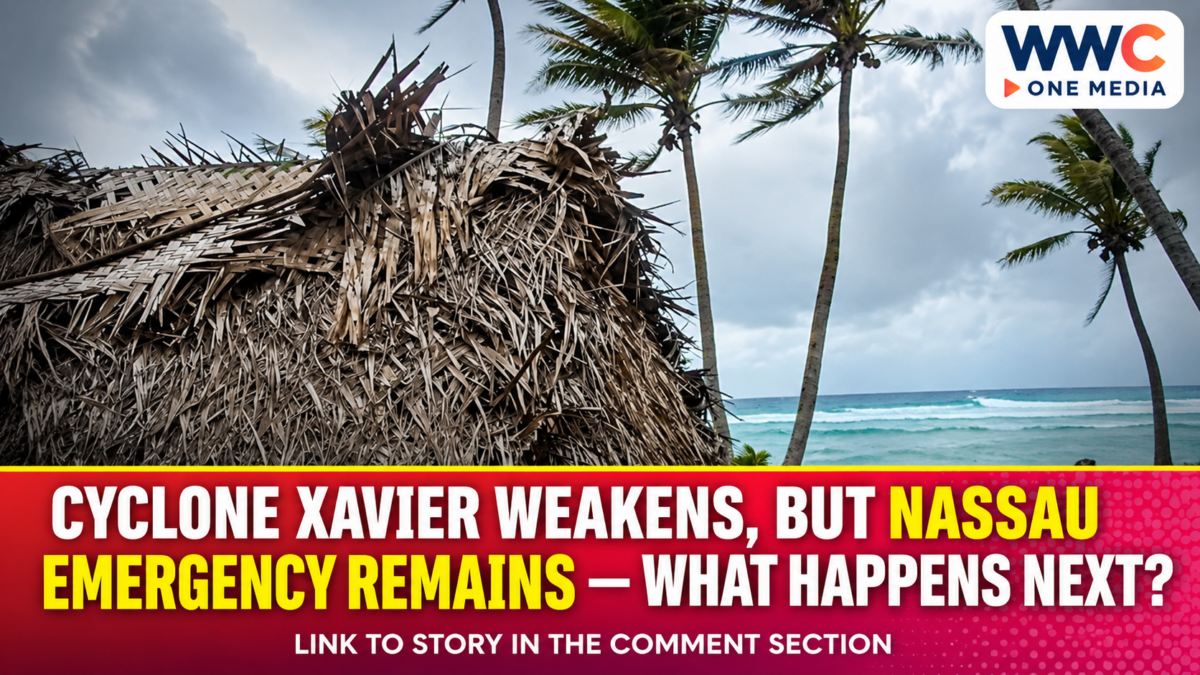
COOK ISLANDS, Nov. 22, 2026 — Prime Minister Mark Brown declared a state of emergency for Nassau effective Nov. 19 as Severe Tropical Cyclone Xavier threatened the northern Cook Islands. By Nov. 20, the government said Xavier had weakened to Category 1, but the emergency remained in force and officials were organising supplies, shipping and damage assessments.
A weaker cyclone does not end the hazards or delivery challenges. The government’s most recent response statement examined for this report was issued Nov. 20, so later deliveries or any revocation of the declaration should not be assumed.
Why Cyclone Xavier triggered an emergency for Nassau
The formal declaration is unusually clear about its legal basis. It identifies Severe Tropical Cyclone Xavier and its potential effects as an emergency requiring a significant, coordinated response under the Disaster Risk Management Act 2007.
The Director of Emergency Management Cook Islands made a written recommendation on Nov. 18. The National Disaster Risk Management Council met at 3 p.m. that day and supported the recommendation. At 4 p.m., the Director determined that an immediate, multi-agency response was required.
Brown’s declaration, signed on Nov. 19, took effect at midnight Cook Islands time that day. It applied to Nassau, not automatically to every island in the country. The geographic limit matters.
A separate official visitor advisory dated Nov. 19 described Xavier as a Category 4 cyclone at that time. That was a historical warning. The later government update reported its downgrade to Category 1 on Nov. 20.
What emergency powers actually change
The declaration did more than warn residents about approaching weather. It required a Response Executive to coordinate action and made the National Emergency Operations Centre operational. Government agencies were directed to comply with the National Controller’s instructions as soon as practicable.
The Pukapuka-Nassau Disaster Risk Management Committee was tasked with implementing Nassau’s disaster risk management plan, with support from government agencies. The Director also had to arrange public notification and report at least daily to the Prime Minister about the response and whether a higher disaster threshold had been reached.
The document says the emergency stays in effect until the Prime Minister revokes it. That means changes in the cyclone’s strength and changes in legal emergency status are two different decisions. The Nov. 20 statement explicitly confirmed the declaration was still in force then; no later revocation was verified for this report.
That coordination challenge echoes a wider question discussed in WWC ONE MEDIA’s coverage of disaster-warning cooperation across Asia: information must translate into decisions and practical support when communities face danger.
What the government reported about residents and damage
On Nov. 20, the Cook Islands government reported that all 84 Nassau residents were safe and sheltering in two safe houses. It said heavy swells had caused coastal damage on Nassau, but no building damage had been reported at that stage.
Pukapuka residents were also sheltering at emergency centres, while some damage to a seawall on the island’s south-eastern coast had been reported. Emergency authorities were following up on food supply concerns in Manihiki and Rakahanga.
These are dated initial reports, not a comprehensive final assessment. They should not be treated as proof that every road, coastal structure or essential service escaped harm. The government planned an aerial survey after conditions improved to establish more about the effects on the Northern Group.
Preliminary reports are not final assessments. WWC’s earlier coverage of Philippine communities affected by multiple cyclones also illustrates how disaster-impact figures can change as field validation progresses.
Relief reaches Rarotonga, but Nassau delivery takes another step
The government announced on Nov. 20 that a Royal New Zealand Air Force C-130J Hercules had landed in Rarotonga carrying more than five tonnes of humanitarian supplies provided by New Zealand. The shipment included hygiene and shelter materials, water containers, generators and other recovery equipment.
Landing in Rarotonga did not mean the supplies had already reached Nassau. Officials said items were being sorted by island, and Nassau’s allocation was to travel aboard the Police patrol boat Te Kukupa II when weather permitted.
The same plan called for food, fuel, medical supplies and support personnel to travel aboard the vessel. If conditions allowed, it would then continue to Manihiki and Rakahanga, bringing parts for Rakahanga’s backup diesel generator and Vodafone communications equipment.
Assistance must move safely between remote islands. Even when supplies are available, rough seas and high swells can limit when boats can sail and deliver them.
Why a weakening storm can still disrupt recovery
The Nov. 20 government advisory warned of heavy rain, rough seas, large swells and coastal flooding at high tide even as Xavier weakened. Officials therefore planned flights and shipping around safe weather windows rather than a fixed delivery promise.
That approach also reflects a familiar regional challenge. In WWC’s analysis of the Philippines’ climate-related loss and damage strategy, the practical issue is how emergency support and longer-term recovery can reach affected communities, not merely how a disaster is classified.
Analysis: The available records point to three separate milestones: keeping residents safe, reaching affected islands with essential items, and establishing the full extent of damage. Completing the first does not demonstrate that the remaining two have been completed.
What happens next
The government’s Nov. 20 plan envisaged a Hercules assessment flight over the Northern Group, beginning with Nassau, after the cyclone passed. Officials said subsequent deliveries would depend on the findings and available shipping.
The next decisive records will be confirmation that the patrol boat reached Nassau, results of the aerial damage assessment, updates on supplies and communications in other islands, and any formal decision to revoke Nassau’s emergency declaration. None of those later outcomes is established by the official documents examined here.
For residents and travellers, island-specific instructions remain more useful than an old cyclone category. Any new weather warning or all-clear should be checked against the Cook Islands Meteorological Service and Emergency Management Cook Islands.
Frequently asked questions
When did Nassau’s state of emergency begin?
It took effect at 12:00 a.m. Cook Islands time on Nov. 19, 2026, under a declaration signed by Prime Minister Mark Brown.
Was Cyclone Xavier still Category 4 on Nov. 22?
The official visitor advisory recorded Category 4 conditions on Nov. 19. A later government report said Xavier had weakened to Category 1 by the morning of Nov. 20. This article does not treat either dated observation as a live Nov. 22 bulletin.
Were Nassau residents safe?
The Cook Islands government reported on Nov. 20 that all 84 Nassau residents were safe and sheltering in two safe houses. A more recent population-wide status was not verified in the documents examined.
Had New Zealand’s relief supplies reached Nassau?
The government confirmed their arrival in Rarotonga on Nov. 20. It planned onward shipment to Nassau by patrol boat, weather permitting, but the delivery’s completion was not verified here.










