
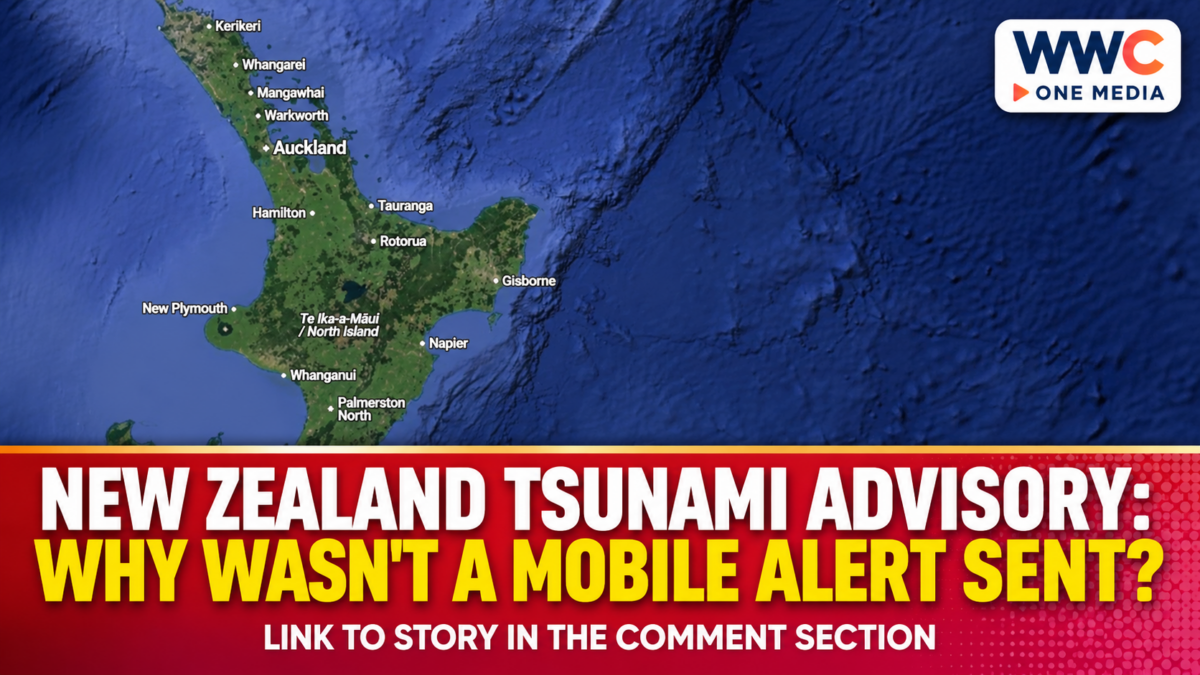
NEW ZEALAND — New Zealand’s National Emergency Management Agency (NEMA) issued a tsunami activity advisory for the east coast of the North Island at 5:38 p.m. on Nov. 18, 2026, after coastal gauges detected unusual activity near Napier and Gisborne. The agency subsequently cancelled the advisory after scientific assessment indicated the immediate tsunami threat had passed.
The episode highlights a question beyond the water-level readings: when does a warning about coastal danger justify an alert pushed directly to mobile phones? New Zealand’s published emergency rules draw a distinction between shoreline hazards and a tsunami expected to flood land. They also allow local emergency authorities discretion to alert people when a coastal threat presents a significant risk to life.
New Zealand tsunami advisory: What happened on Nov. 18?
NEMA’s initial notice warned of unusual currents and unpredictable surges along the North Island’s east coast. Its message asked people to leave the water, beaches and shore areas, and keep away from harbours, marinas, rivers and estuaries.
The agency said coastal flooding was not expected. That limitation matters: the warning concerned people near moving water, not a forecast that sea water would enter residential streets. Residents away from exposed shoreline areas were not instructed to evacuate unless local civil defence officials separately directed them to do so.
The cancellation, announced the same evening, said the assessed threat had passed. At that point, NEMA had not established the cause of the gauge readings. An underwater landslide had been identified as a possibility in the original notice, not a confirmed explanation.
Why a shoreline warning differs from a land-threat alert
New Zealand’s official tsunami guidance recognises two different situations. A tsunami activity advisory is appropriate when unusual currents and surges threaten people in or close to coastal water but land inundation is not expected. A tsunami threat to land and marine areas warning covers circumstances in which flooding of land is expected.
That distinction affects the messaging and the response. A shoreline advisory instructs people to stay clear of exposed coastal areas. A land-threat warning can require people to leave tsunami evacuation zones and move to safer ground.
NEMA’s standing guidance says the national Emergency Mobile Alert system will be used for areas facing a land threat. The published tsunami warning plan also says local Civil Defence Emergency Management groups may send their own mobile alerts during activity advisories when they judge that a significant life-safety risk exists.
The official incident notices examined for this article do not independently establish the delivery status of every local mobile-alert channel on Nov. 18. The policy explains why a national mobile alert is not automatic for every coastal advisory; it does not, on its own, prove what each regional authority transmitted that evening.
Why a short advisory can still matter
The initial warning and subsequent cancellation performed different jobs. The first communicated a potentially dangerous condition while specialists assessed it. The second communicated that the immediate threat no longer justified maintaining the advisory.
A rapid cancellation is not, by itself, evidence that the first notice was improper. It also does not erase the value of the instructions issued while the risk was being evaluated. A person swimming, fishing or standing at a harbour entrance may face danger from strong currents even if nearby homes are not forecast to flood.
This is also why emergency instructions should make the affected location and required action unmistakable. The practical question is not simply whether a message was issued but whether someone exposed to the hazard could find and understand it in time.
WWC ONE MEDIA has previously explored the importance of connecting detection technology with community communication in its report on Japan’s disaster-warning cooperation in Asia.
What the warning system can and cannot deliver
New Zealand’s monitoring network includes deep-ocean tsunami detectors, coastal observations and scientific analysis. The National Geohazards Monitoring Centre provides technical assessments, while NEMA issues national tsunami messages and coordinates with emergency-management partners.
The government has also expanded access to emergency information. In September 2026, ministers announced that official emergency alerts and severe-weather warnings were being added to the Govt.nz app as another way to receive critical information. The announcement said the app complemented, rather than replaced, existing Emergency Mobile Alerts.
Multiple channels matter because no single message can be assumed to reach everyone. Public websites, broadcast media, mobile alerts and local communications each serve different audiences and circumstances. In the Philippines, WWC has examined how emergency warnings on digital television can provide another route for official safety information.
Analysis: A useful review of the Nov. 18 episode would distinguish three questions: whether the risk classification was scientifically justified, whether warning channels operated as intended, and whether the coastal instructions were understood. The available official notices do not establish a communications failure or a complete account of who received which message.
What happens next
The Nov. 18 advisory has been cancelled. The initial and cancellation notices did not confirm the physical cause of the unusual gauge readings, so an earthquake or underwater landslide should not be presented as an established trigger without a later scientific finding.
Any formal review of communication performance would need a timeline of decisions, distribution records for national and local channels, and an explanation of how the mobile-alert threshold was assessed. Those are suggested accountability questions, not findings of wrongdoing.
The wider issue is familiar to disaster-prone communities. WWC’s coverage of Cebu City’s flood-warning preparations has similarly examined the gap between recognising a hazard and giving residents time to act.
For New Zealand coastal communities, the enduring safety rule remains clear: after a long or strong earthquake, or when natural tsunami warning signs appear, move to high ground or inland without waiting for a phone notification. During an official shoreline advisory, stay away from exposed coastal water and follow local civil defence instructions.
Frequently asked questions
Why did New Zealand issue a tsunami advisory on Nov. 18, 2026?
NEMA reported unusual water-level activity on gauges at Napier and Gisborne and warned people to avoid exposed shoreline areas because of potentially dangerous currents and surges.
Was flooding of coastal towns expected?
No. The initial activity advisory expressly said flooding of land near the shore was not expected. It remained a warning about dangers close to coastal water.
Does every tsunami advisory trigger an Emergency Mobile Alert?
No. National mobile-alert procedures focus on land-inundation threats. Local emergency authorities can issue mobile alerts for activity advisories when they judge the risk to life significant.
What caused the unusual coastal readings?
The initial and cancellation notices did not identify a confirmed cause. An underwater landslide was described as one possibility, not a final scientific finding.
What should coastal residents do if they experience natural tsunami warning signs?
After strong or prolonged earthquake shaking, sudden unusual sea-level changes, or alarming sounds from the sea, move promptly to high ground or inland. Do not wait for a formal mobile alert.










