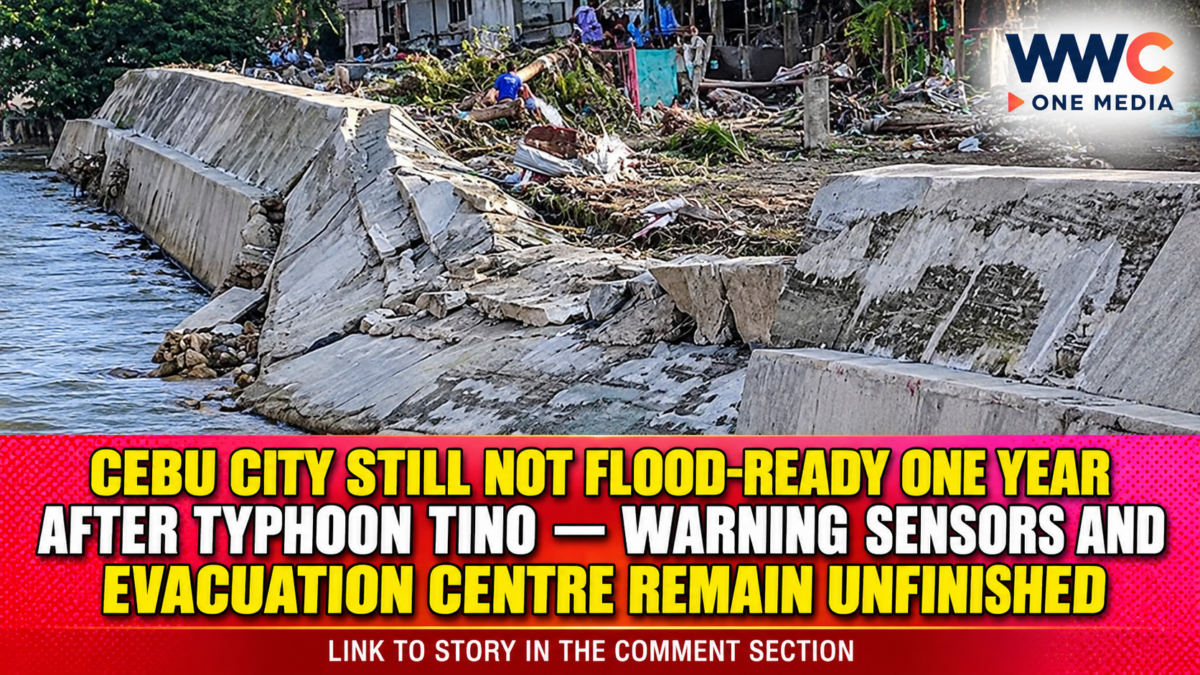
CEBU CITY, Philippines — November 5, 2026 — One year after Typhoon Tino unleashed deadly flooding across Cebu, Cebu City is still working to strengthen its flood-warning systems, improve emergency response and build a dedicated evacuation facility, raising fresh concerns about whether residents will be better protected when the next major storm arrives.
Mayor Nestor Archival acknowledged on November 4 that several disaster-preparedness improvements remain works in progress. These include river-monitoring sensors that could provide earlier warnings to communities, a proposed evacuation centre and additional emergency equipment.
The latest update also reveals a significant gap in the city’s recovery: while livelihood recovery among Tino-affected residents has reached an estimated 95%, housing reconstruction remains only 60% to 70% complete.
The announcement comes as Cebu marks the first anniversary of the November 4, 2025 disaster.
For families still rebuilding their homes and communities exposed to sudden flooding, the concern is no longer simply what happened during Tino. It is whether the city can turn its lessons into functioning protection before another extreme weather event strikes.
River-monitoring sensors planned, but no confirmed launch date
One of Cebu City’s proposed improvements involves installing river-monitoring sensors in coordination with neighbouring local governments, including Liloan and Mandaue City.
The system is intended to monitor rising water levels and alert authorities when rivers approach dangerous conditions.
Earlier warnings could give disaster-response teams more time to notify residents, prepare evacuation operations and deploy emergency personnel before floodwaters reach populated areas.
Archival cited the flooding in Barangay Bacayan during Tino as an example of why the city needs faster detection and better coordination.
However, the mayor did not announce a final budget, installation schedule or date when the monitoring network would become operational.
The proposal also highlights a wider challenge: rivers and watersheds do not follow city boundaries. A monitoring system in one municipality may have limited value if neighbouring local governments do not share information and coordinate their response.
Proposed evacuation centre still has no site or construction timetable
Cebu City is also considering a dedicated evacuation facility for residents displaced by typhoons, fires and other emergencies.
At present, public schools are often used as temporary shelters. This can disrupt classes and leave students and teachers without access to their regular facilities.
The proposed centre would provide temporary accommodation for displaced families, storage for relief supplies and emergency equipment, and backup electricity through generators or solar panels.
It could also serve as a temporary holding facility during major emergencies.
But the project remains at the planning stage. No final location, approved budget or construction timetable has been announced.
The absence of a confirmed schedule means residents cannot yet count on the facility being available during the next major disaster.
In a November 4 report by MYTV, Archival also discussed the city’s need for additional rescue equipment and better emergency-response capabilities. He said some equipment must be transported to mountainous areas during calamities, potentially leaving fewer resources available in the urban centre.
The city is therefore looking at both infrastructure and personnel readiness rather than relying on evacuation buildings alone.
Housing recovery remains far behind livelihood recovery
The most striking difference in the city’s recovery figures is between livelihoods and permanent housing.
Archival estimated that livelihood recovery among Tino-affected residents had reached approximately 95%. However, housing reconstruction was only 60% to 70% complete.
Some families have already received relocation lots but have yet to construct permanent homes.
The mayor did not provide a detailed household count for those still without completed housing or explain the methodology behind the recovery percentages.
The figures nevertheless show that returning to work and restoring income do not necessarily mean families have fully recovered from the disaster.
A household may resume earning money while still living in temporary accommodation or waiting for a permanent home.
This is particularly important for residents displaced from areas beside rivers and other flood-prone locations, where returning to their former properties could expose them to similar dangers.
Relocating families remains one of Cebu City’s biggest challenges
The housing problem is connected to another difficult issue: clearing structures from danger zones and enforcing river easements.
In an October 24 report, SunStar Cebu said Archival acknowledged that relocation efforts remained delayed because of limited suitable land and pending housing arrangements.
The mayor explained that clearing homes from river easements requires the city to provide affected families with somewhere safe to go.
The city has been considering a medium-rise housing development on a property in Barangay Pit-os, potentially in partnership with the Department of Human Settlements and Urban Development and the National Housing Authority.
However, the proposal still needs the necessary arrangements and approvals, and no definite construction timetable was announced.
Archival also raised concerns about reported construction defects in a separate housing development in Lorega-San Miguel, saying engineers needed to assess whether the problems could be corrected.
The relocation issue is therefore not simply about removing houses from waterways. It involves land availability, construction quality, funding and the need to provide displaced residents with safe and realistic alternatives.
For communities living along rivers, the challenge is balancing public safety with the right of families to have secure housing.
Why Cebu floods so quickly: Experts point to a bigger problem
Cebu’s continuing flood-preparedness concerns are part of a wider problem involving urban development, drainage capacity and watershed management.
In its November 3 special report, Cebu’s Flood Test, SunStar Cebu examined why Metro Cebu experienced such destructive flooding during Tino.
The report cited rainfall of approximately 428 millimetres in one day, more than twice the area’s usual monthly average of around 200 millimetres.
Experts interviewed by SunStar identified several contributing factors, including narrowed waterways, accumulated garbage, upland development and drainage infrastructure that has struggled to keep pace with urban growth.
Cebu Institute of Technology-University engineer Felrem Lor explained that concrete surfaces, roofs and roads reduce the amount of rainfall absorbed by the ground. Under certain conditions, as much as 90% to 95% of rainfall can become surface runoff.
That water can move rapidly downhill, particularly across Cebu’s steep terrain.
The report also identified four major watersheds affecting Metro Cebu: Mananga, Butuanon, Cotcot and Cansaga.
Because these waterways cross local government boundaries, flood-control measures in one city can affect communities downstream.
Improving drainage in one area without considering the wider watershed may simply move water more quickly into another community.
The findings suggest that Cebu needs more than isolated drainage repairs. It needs coordinated planning that considers the entire movement of water from upland areas to low-lying neighbourhoods and coastal outlets.
Cebu’s flood-control projects face questions about implementation
The flood crisis has also brought renewed attention to hillside development and the adequacy of stormwater-management systems.
Cebu City previously sent notices to 65 developers, requiring them to provide information about detention ponds, drainage facilities and other flood-mitigation measures.
The city has been checking whether submitted plans correspond with actual conditions on the ground.
WWC One Media previously reported on the scrutiny in Cebu’s flood crisis, where 65 developers were asked to account for their flood-mitigation measures.
Another issue involves claims by developers that their detention ponds can manage stormwater runoff.
In a separate report, WWC examined Monterrazas de Cebu’s claim of zero discharge during heavy rain.
The developer’s statement does not independently establish the cause of flooding in surrounding communities. A wider engineering assessment is needed to determine how individual developments, drainage bottlenecks and downstream waterways interact during extreme rainfall.
For Cebu residents, the important question is whether flood-control systems work under actual heavy-rain conditions, not simply whether plans and technical documents have been submitted.
National government promised faster flood-control rehabilitation
The national government has also been involved in Cebu’s recovery.
On March 26, 2026, the Cebu Provincial Government reported that DPWH Secretary Vincent Dizon and Governor Pamela Baricuatro inspected flood-control structures damaged by Tino, including sections of the Mananga River in Talisay City and the Butuanon River, which passes through Cebu City and Mandaue.
The provincial government said the national government had allotted ₱4 billion for recovery and reconstruction following a series of calamities in Cebu in 2025.
Dizon said the Department of Public Works and Highways had been directed to expedite flood-control projects before the rainy season.
That earlier commitment highlights the importance of implementation. Funding allocations and inspections are important steps, but residents ultimately need completed and functioning infrastructure.
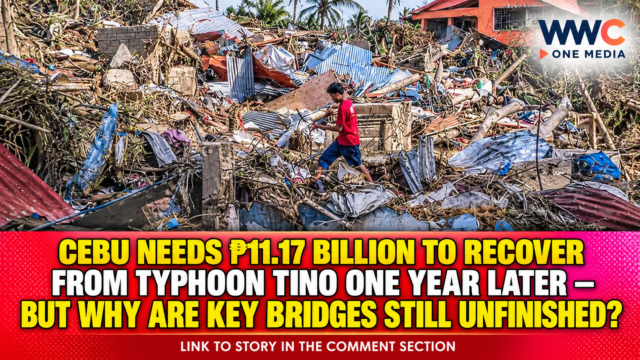
The province’s wider rehabilitation challenge is also substantial. SunStar reported on November 4 that Cebu faced ₱11.174 billion in overall recovery needs following Tino, covering roads, bridges, schools, health facilities and other requirements.
That assessment concerns the wider province and should not be confused with Cebu City’s separate flood-preparedness projects.
WWC One Media has also examined the wider consequences of flooding and severe weather in its report on storm damage in the Philippines reaching ₱12.4 billion.
Residents are being urged to evacuate earlier
Archival also stressed that even improved equipment and warning systems cannot eliminate every disaster risk.
He urged people living near rivers, coastlines and other high-risk areas to follow evacuation instructions before conditions become dangerous.
Some residents are reluctant to leave their homes until floodwaters have already started rising. That can make rescue operations more difficult and expose both residents and emergency personnel to greater danger.
Early evacuation is particularly important in areas where floodwaters can rise quickly.
The city is continuing to improve disaster-response training and equipment, while coordinating with neighbouring local governments and other agencies.
However, preparedness also depends on public awareness, clear evacuation routes, accessible shelters and timely communication.
A warning system is only effective if authorities can issue alerts quickly and residents have a safe place to go.
Cebu’s next test: turning plans into actual protection
One year after Tino, Cebu City has identified several weaknesses that need to be addressed.
The proposed river sensors, evacuation facility, additional emergency equipment and housing improvements could strengthen the city’s ability to respond to another major storm.
But the projects still face practical questions involving funding, land, procurement, construction and implementation schedules.
The broader flood problem also requires coordination beyond Cebu City’s borders. The city’s rivers and watersheds connect communities across Metro Cebu, making a unified approach essential.
The risks extend beyond flooding. Heavy rainfall can also trigger landslides and damage homes built on unstable slopes.
WWC One Media previously reported on a Cebu City house that collapsed after heavy rain, forcing a family to leave their home, highlighting how vulnerable communities can face multiple hazards during severe weather.
For now, Cebu City’s progress will be measured not by the number of plans announced but by whether the warning systems become operational, evacuation facilities are built and affected families finally obtain safe permanent homes.
THE BOTTOM LINE
One year after Typhoon Tino, Cebu City is still working to strengthen its flood-warning network and emergency-response system.
Housing reconstruction remains only 60% to 70% complete, even as livelihood recovery is estimated at 95%. A proposed evacuation centre has no confirmed site or construction schedule, while the planned river-monitoring sensors still lack a publicly announced budget and operational date.
Experts say the city’s vulnerability is tied to a wider combination of narrowed waterways, rapid urban development, increased surface runoff and inadequate drainage coordination.
The next major test will be whether Cebu can turn these lessons into completed projects before another destructive storm arrives.
The question is no longer whether Cebu knows what needs to be improved. It is whether the city can finish the work before the next flood puts its residents at risk again.