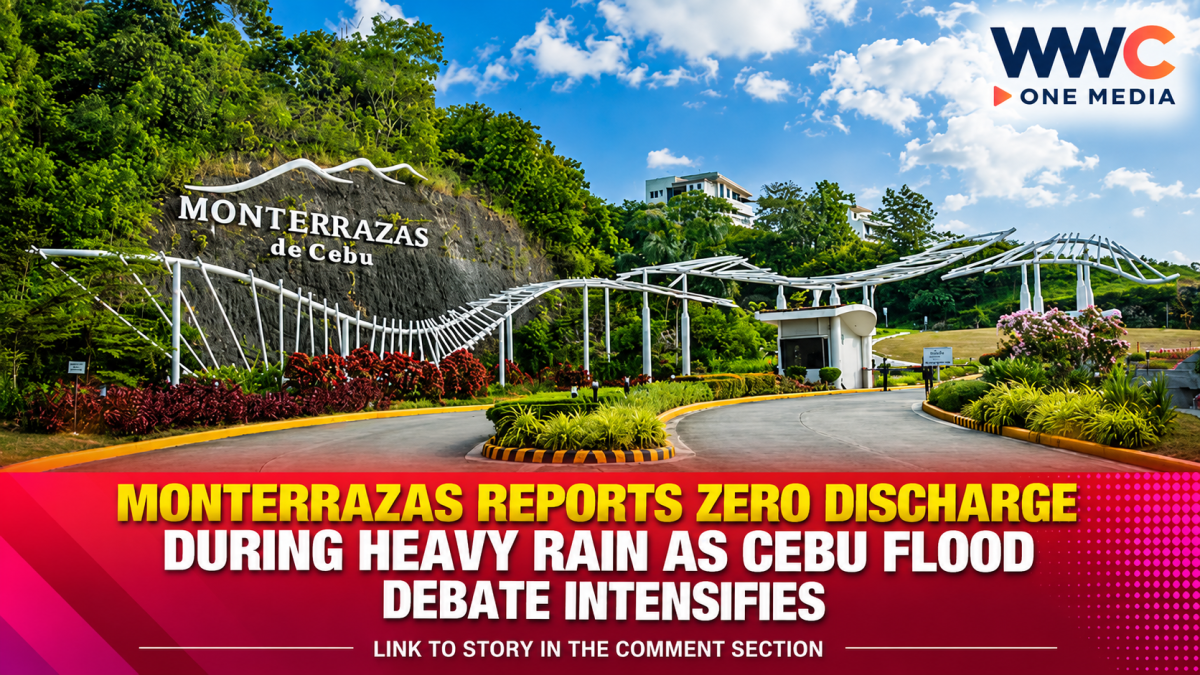
Monterrazas de Cebu said its detention ponds recorded zero discharge during heavy rainfall on July 30, even as flooding affected nearby communities, prompting the developer to call for a wider review of Cebu City’s drainage system and other hillside developments.
Mont Property Group General Manager Marie Camille Bondad said the project’s detention ponds remained within their holding capacity during the downpour, with water levels reportedly still about a meter from the bottom of the basins. The developer said its facilities are monitored through closed-circuit television and post-rainfall inspections, with rainfall data also submitted to government agencies.
The statement comes as residents of Guadalupe Heights and portions of Guadalajara Street continue to raise concerns about flooding. Resident William Medici recently shared footage showing extensive flooding in the subdivision and said floodwaters in the area have previously reached as high as seven feet. The Office of the City Engineer has inspected the area to examine possible solutions.
Monterrazas officials pointed to a remaining 400- to 450-millimeter drainage section along Guadalajara Street as a possible bottleneck. The developer said it had already expanded another portion of the drainage system from 450 millimeters to 1.5 meters, but the remaining section has yet to be upgraded. The claim that the smaller section is the primary cause of the flooding, however, has not been independently established.
The developer also stressed that Monterrazas is part of a much larger watershed. Its 118-hectare property covers 14 catchment areas and contains 24 detention ponds designed to temporarily store and regulate stormwater runoff. For one catchment covering about 20 hectares, the developer said six detention ponds have a combined capacity of 27,483 cubic meters, compared with a cited design requirement of 8,220 cubic meters.
The broader drainage controversy has already prompted additional scrutiny from the Cebu City Government. The city’s Technical Infrastructure Committee previously recommended allowing existing and ongoing Monterrazas projects to continue after reviewing its flood-mitigation measures, but emphasized that its assessment did not definitively determine whether the development contributes to flooding.
The Cebu City Council subsequently returned the committee’s report for further technical review. Council members questioned whether the detention ponds could adequately handle extreme rainfall, with figures presented during the debate showing a major gap between estimated potential runoff and existing detention capacity.
Environmental planner Niceforo Iroy has argued that comparing detention capacity with estimated runoff is not enough to determine the actual flood risk. He called for a complete hydrologic simulation that would trace rainfall through the development’s catchment areas, detention ponds, downstream waterways and drainage network under different rainfall scenarios.
Monterrazas Construction Head Ranel Pelpinosas has maintained that the project’s drainage design considers rainfall intensity, duration and frequency, as well as terrain and runoff from developed and undeveloped portions of the property. He said the system was designed using a 50-year return period and that the project’s drainage capacity exceeds the minimum engineering requirements cited for its permits.
The developer has also said it is open to an independent third-party inspection of its stormwater management system. It is calling for a citywide review so that drainage and flood-control systems surrounding hillside developments can be assessed using consistent standards rather than examining one project in isolation.
The latest developments leave a larger technical question for Cebu authorities: whether the flooding is being driven by limitations in downstream drainage, runoff from multiple developments and catchment areas, or a combination of factors. A broader engineering and hydrologic assessment will be needed to establish the causes and determine what additional flood-control measures may be required.