
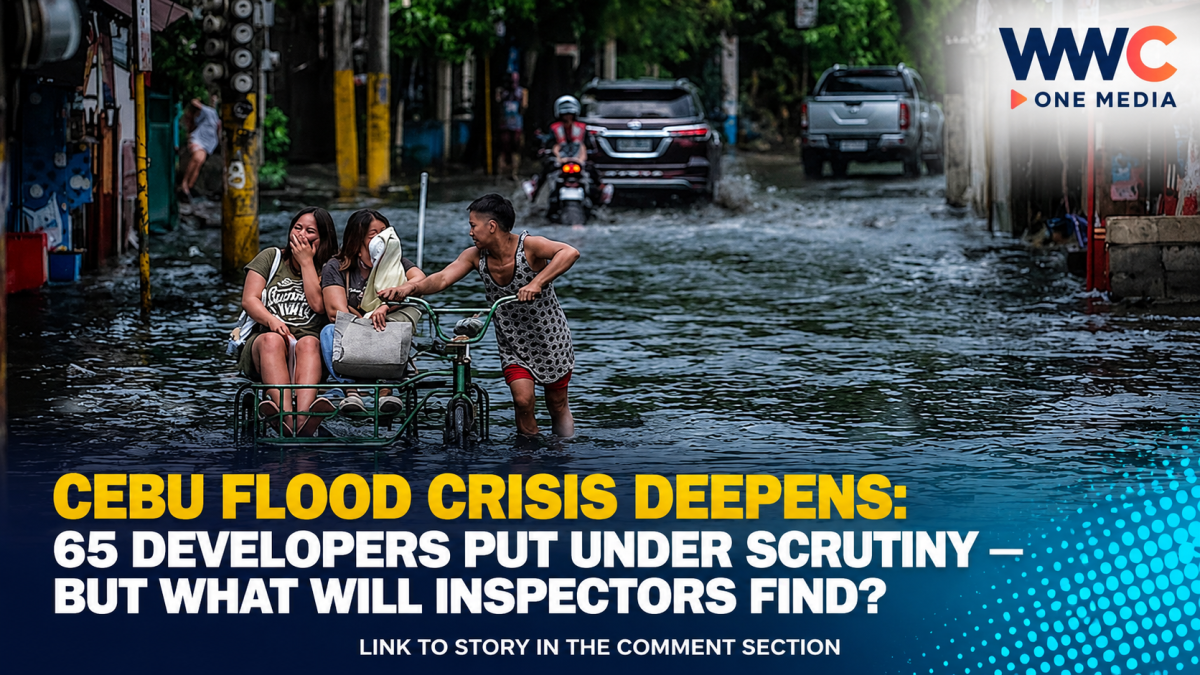
CEBU CITY — Cebu City has intensified its investigation into hillside developments after concerns grew over recurring flooding in communities below the city’s upland areas, putting dozens of property developers under scrutiny for their flood-mitigation measures.
The city government had sent notices to 65 developers in the South District, requiring them to submit information on detention ponds, drainage systems and other measures designed to control stormwater runoff.
At the height of the compliance drive, only four developers had submitted the requested documents by the initial deadline, prompting city officials to warn that non-compliant developers could face legal action.
La Paloma Subdivision, Monterrazas de Cebu, Amari Residences and AppleOne were among the first developers reported to have responded. Several other developers subsequently requested additional time to submit their documents.
But the issue has since moved beyond paperwork.
City inspectors have begun checking submitted plans against actual conditions on the ground, with authorities examining whether flood-control structures exist, whether they comply with approved designs and whether they are functioning as intended.
One of the developments receiving particular attention is Monterrazas de Cebu in Barangay Guadalupe.
According to reports, the developer says the project has 24 operational detention ponds with a combined storage capacity of about 62,710.5 cubic meters. That is more than twice the 26,701 cubic meters required under its approved drainage design.
The Cebu City Council has nevertheless sought a technical evaluation of the developer’s submitted flood-mitigation measures. The review does not itself establish that Monterrazas’ flood controls are inadequate; rather, officials want to determine whether the reported facilities match approved plans and are operating as designed.
During a recent inspection, city officials examined how water moves through Monterrazas’ detention ponds and whether runoff is properly controlled before reaching lower communities.
Other developments have also entered the inspection process, including La Paloma, Amari Residences, AppleOne and several subdivisions in the South District.
The investigation comes after severe flooding affected parts of Cebu City, particularly low-lying communities in areas such as Guadalupe, Tisa and Labangon. City officials are examining not only individual developments but also the wider drainage network, including waterways that have become blocked, narrowed or disconnected.
In one area inspected by city personnel, officials reportedly traced a drainage canal whose connection toward the sea had been obstructed by past construction. Parts of the drainage route had also been covered by structures, raising concerns about how efficiently stormwater can move away from residential communities.
The city has also been clearing and rehabilitating drainage channels while working with the Metropolitan Cebu Water District and other agencies to restore water flow.
Cebu City Mayor Nestor Archival has ordered a broader review of upland developments and drainage outlets following flooding incidents, with authorities seeking to determine whether increased runoff from hillside construction, inadequate drainage or other factors may be contributing to flooding downstream.
The debate has placed Cebu’s rapid hillside development under renewed scrutiny.
In June, Vice Mayor Tomas Osmeña called for a temporary halt to further development activity at Monterrazas until its water-catchment and flood-mitigation facilities were completed and operational. The developer, however, has maintained that its flood-control system exceeds government requirements and has cited its detention ponds and other drainage improvements.
The wider issue is now bigger than any single property project.
Cebu City officials are attempting to determine whether the existing flood-control infrastructure across multiple developments can withstand heavy rainfall and whether runoff is being safely managed before reaching densely populated areas below.
The next critical step is the inspection and technical verification of the developers’ submissions.
For residents living downstream, the question is no longer simply whether developers have submitted flood plans.
It is whether those plans actually work when the rain comes.
WWC ONE MEDIA MJE

Leave a Reply