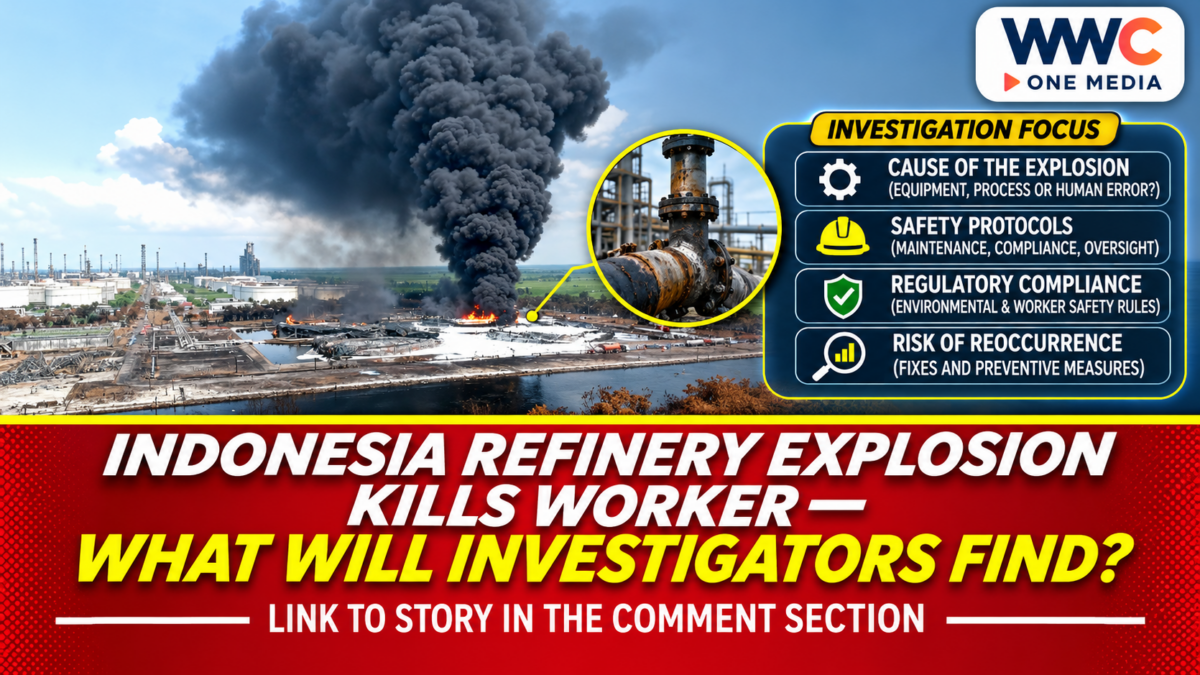
JAKARTA, Indonesia — Nov. 21, 2026. Indonesia’s Ministry of Energy and Mineral Resources is investigating the Cepu refinery explosion of Nov. 18 at Tank T-143 of the PPSDM Migas Cepu refinery in Blora Regency, Central Java, that left one third-party worker dead. The ministry said the blast occurred during planned maintenance and cleaning while the refinery was not operating, and that the subsequent fire had been extinguished.
The unanswered question is what happened during work on the tank. The ministry has confirmed the location, timing and immediate response, but it has not published a final technical cause. That distinction matters for workers, contractors and an institution whose facilities are used to develop oil-and-gas industry skills.
Cepu Refinery Explosion: What the Government Confirmed
The ministry’s Nov. 19 statement placed the explosion at approximately 9:30 a.m. local time on Wednesday, Nov. 18. It identified the affected equipment as Tank T-143 at the Oil and Gas Human Resources Development Centre, known by its Indonesian abbreviation PPSDM Migas, in Cepu.
The injured person was a worker from a third party. The ministry said the worker suffered serious burns and died at approximately 5 p.m. It expressed condolences to the family but did not disclose findings establishing who or what caused the explosion.
The ministry reported that firefighting crews had extinguished the fire and cooled the affected area. Officials described the immediate situation as controlled. That status addresses the emergency response; it does not mean the technical investigation has been completed or the tank cleared for use.
Why Maintenance Status Is Central to the Inquiry
The official statement said the refinery was undergoing a planned turnaround, a period when equipment is taken out of normal service for maintenance. Cleaning was under way at the time, and the refinery was not operating.
A shutdown is not the same thing as a workplace without hazards. Industrial maintenance can involve equipment isolation, access to tanks and assessment of conditions inside or around machinery. The available record does not say which of these activities was directly involved at T-143, or identify an ignition source.
Analysis: Investigators will need to establish the actual sequence of work rather than treat the phrase “under maintenance” as an explanation. Relevant questions include what work had been authorised, which safety checks were completed and what physical evidence survives. These are questions for examination, not findings of procedural failure.
The difference between identifying an incident and determining its cause is familiar in industrial energy investigations. WWC’s coverage of an unresolved fuel-pipeline incident in Bangkok similarly distinguishes observed conditions from an established explanation; that event is unrelated to Cepu.
The Facility Has a Training Role — and Processing Equipment
PPSDM Migas describes its Cepu refinery as a facility for oil-and-gas education, training and competency assessment. Its official profile also identifies an atmospheric crude-distillation unit with installed capacity of 3,800 barrels per day, along with storage tanks and other processing equipment.
This makes two clarifications essential. First, the location is a real processing facility with industrial equipment, not merely a classroom. Second, its institutional role is distinct from assuming a disruption at a major Pertamina-operated fuel refinery. The ministry’s incident announcement does not quantify a loss of commercial fuel production or a change in national supply.
The centre’s broader facilities include laboratories, workshops and technical instruction. Its own description connects practical training with equipment used by the oil-and-gas sector. That context helps explain why lessons from the investigation could be relevant to both operations and instruction.
Analysis: A training facility carries an additional reason to document safety lessons clearly: its procedures and examples can influence how future workers understand industry practices. That is a potential institutional benefit of a rigorous review, not evidence of a specific training deficiency.
Investigators Must Separate Evidence From Assumptions
Indonesia’s energy ministry said its Directorate of Engineering and Environment within the Directorate General of Oil and Gas was investigating alongside law-enforcement authorities. The announced purpose was to determine the cause of the explosion and assess the incident.
No final technical findings were provided in the ministry’s Nov. 19 release. It would therefore be premature to blame a particular worker, contractor, equipment fault, gas accumulation or maintenance procedure. Each explanation requires evidence that the accessible official announcement has not supplied.
The ministry also corrected misleading online imagery. It said some photographs and videos being linked to the Cepu explosion actually showed a separate 2020 fire at the Gundih Central Processing Plant. Publishing those images as if they depicted the Nov. 18 incident would distort the record.
WWC has also addressed the importance of separating identified damage from completed recovery in its report on repair work at a Venezuelan oil upgrader. That separate facility provides an editorial comparison, not evidence about the cause or scale of the Cepu explosion.
What the Incident Means for Workplace Accountability
The casualty involved a third-party worker, according to the ministry. That description establishes the person’s employment relationship in general terms, but it does not identify the contractor or establish any legal responsibility. The government has not published a completed liability finding in the primary record examined here.
Analysis: Effective accountability would mean identifying what happened, documenting the relevant work arrangements and determining whether corrective action is necessary. A factual investigation can support changes to procedures or supervision without prejudging criminal or civil responsibility.
The broader distinction between worker injuries and unresolved structural causes also appears in WWC’s report on a power-transmission tower collapse in Cavite. It concerns a separate industry and incident, but illustrates why initial reports do not establish fault.
What Happens Next
The next meaningful record would be the ministry’s technical findings, including what the investigation determines about Tank T-143, the maintenance activity and any recommended safety action. Any future announcement about resuming the affected equipment’s use should be assessed separately from the confirmation that the fire was extinguished.
For now, the official record supports a fatal workplace incident during a planned shutdown, an emergency brought under control and an investigation still to establish the cause. It does not support claims of sabotage, confirmed negligence, a nationwide fuel shortage or a completed investigation.
Frequently Asked Questions
When did the Cepu refinery explosion happen?
The ministry said the explosion occurred at around 9:30 a.m. local time on Nov. 18, 2026, at Tank T-143 in Blora Regency, Central Java.
How many people died?
The ministry confirmed that one third-party worker died after suffering serious burns.
Was the refinery operating when the explosion occurred?
No. The ministry said it was shut down for planned maintenance and cleaning.
What caused the explosion?
A final cause was not established in the official Nov. 19 statement. Technical and law-enforcement investigations were under way.
Did the explosion disrupt Indonesia’s fuel supply?
The ministry did not establish a national fuel-supply disruption. The Cepu site also serves as an oil-and-gas training and competency facility.