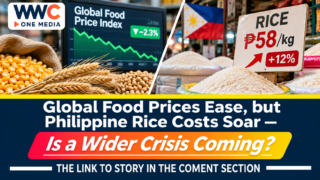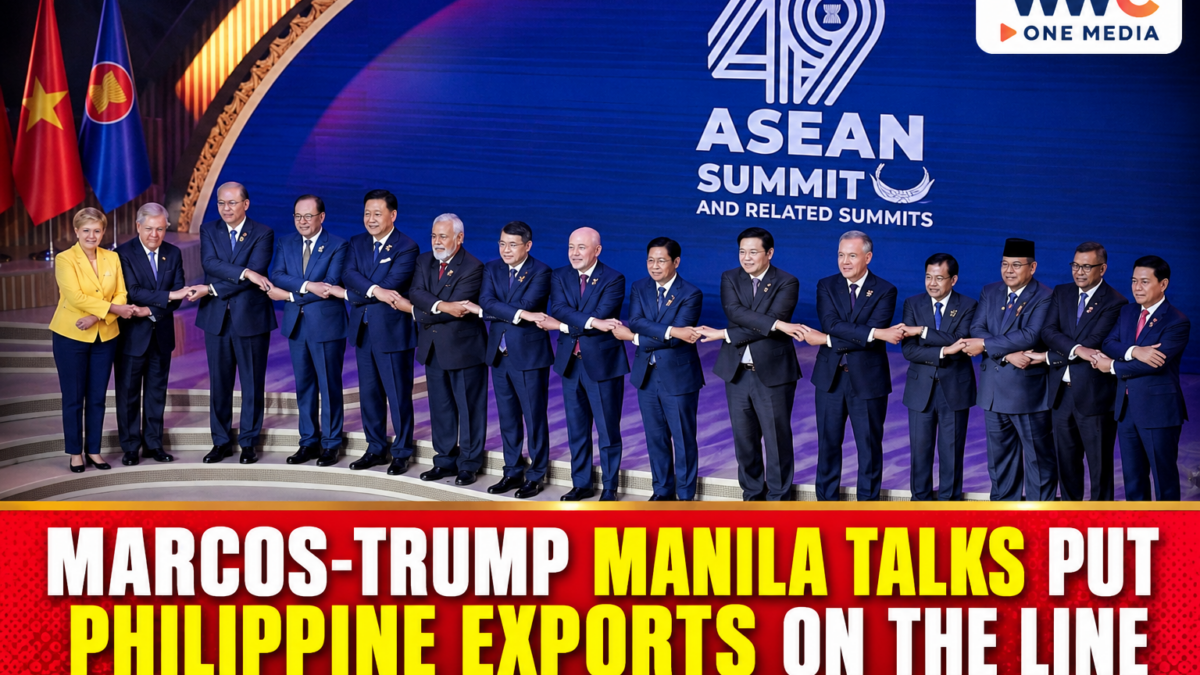
The key issue is not simply whether the Philippines and the United States will announce stronger trade ties at the Manila summit. It is whether President Ferdinand Marcos Jr. can persuade US President Donald Trump to reconsider a 12.5% additional tariff on Philippine goods—a duty that has applied since July 24, 2026, under a US trade action tied to forced-labour import controls.
The bilateral meeting is scheduled for November 18, on the sidelines of the 49th ASEAN Summit and Related Summits. The tariff is already in force, and the official US determination specifically lists the Philippines among the economies subject to the 12.5% rate, with specified product exemptions. That makes the meeting a test of whether Manila’s new enforcement framework can change Washington’s trade position. Federal Register Public Inspection+2
The tariff is tied to a specific US trade-law finding
The additional duty comes from investigations under Section 301 of the US Trade Act of 1974. The Office of the United States Trade Representative examined whether 60 economies had failed to prohibit or effectively enforce restrictions on imports of goods made wholly or partly with forced labour.
In its July 2026 notice, the US government classified the Philippines among 54 economies that had failed to impose and effectively enforce such a prohibition. It then set a 12.5% Section 301 tariff on Philippine products, subject to exemptions listed in the notice. The additional duty applies to covered goods entered for consumption from July 24, 2026. Federal Register Public Inspection+2
The US framework distinguishes between economies that have adopted or committed to enforce an import prohibition and those that have not met that standard. The former category generally receives a 10% rate, while the latter faces 12.5%.
This is not a finding that every Philippine exporter uses forced labour. The US action concerns the Philippine government’s policies and enforcement relating to imports produced through forced labour. The distinction matters because the tariff applies through a country-level trade measure, not an individual finding against every company shipping goods to America.
Manila has introduced its own forced-labour import controls
The Philippines moved to establish a formal enforcement mechanism in July.
The Department of Trade and Industry, Department of Labor and Employment, and Department of Finance signed Joint Administrative Order No. 26-01, Series of 2026, on July 23. The order establishes rules for investigating and prohibiting the importation of goods produced wholly or partly through forced labour. Department of Labor and Employment+1
It creates an inter-agency committee chaired by the DTI, with the DOLE as vice-chair. The Department of Finance, Bureau of Customs, Board of Investments and Philippine Economic Zone Authority are also included.
The committee is tasked with receiving and evaluating information, investigating complaints and recommending appropriate action. The Bureau of Customs is responsible for acting on the committee’s findings and implementing measures to prohibit the entry of goods determined to have been produced through forced labour.
The order is significant because it gives the government a coordinated process rather than leaving investigations to separate agencies operating without a common mechanism.
But issuing an order and demonstrating effective enforcement are different things. Washington’s standard refers not only to the existence of a prohibition but also to whether it is effectively enforced.
That is where the November discussions become important. Manila needs to show that its framework can identify suspect shipments, investigate complaints and produce enforceable outcomes. A regulation on paper may be a necessary first step, but it is not the same as a demonstrated enforcement record.
US market exposure makes the negotiations economically important
The stakes are visible in the Philippines’ latest trade figures.
The Philippine Statistics Authority reported that merchandise exports reached US$9.87 billion in September 2026, up 35.6% from the same month a year earlier. The United States was the country’s largest export destination, receiving US$2.63 billion, equivalent to 26.6% of total exports. Philippine Statistics Authority+1
That makes the US market difficult for Philippine exporters to replace quickly.
The figures do not mean that every shipment to America automatically incurs the additional 12.5% duty. The US notice contains product exemptions, and the applicable customs treatment depends on the goods involved. Nevertheless, an additional tariff on covered products can affect pricing, margins and the ability of Philippine suppliers to compete with exporters from economies facing lower rates.
Electronics are particularly important to the country’s export base. The PSA recorded US$6.92 billion in electronic product exports in September, accounting for 70.1% of total merchandise exports. That does not mean all those electronics went to the United States, but it demonstrates how much the Philippine export economy depends on manufacturing and international supply chains. Philippine Statistics Authority+1
WWC has examined the wider manufacturing opportunity in its report on ASEAN supply-chain shifts and the Philippines’ ability to attract investment. The tariff dispute adds another consideration for companies deciding where to manufacture, source components and send finished products.
ASEAN cooperation cannot replace a bilateral tariff solution
The Manila summit also places the tariff dispute within a larger regional trade discussion.
President Marcos has organised the Philippines’ 2026 ASEAN chairship around three priorities: Peace and Security Anchors, Prosperity Corridors and People Empowerment. In his November 15 summit speech, he described the Prosperity Corridors agenda as an effort to strengthen connectivity across markets, energy systems, infrastructure, technology and finance.
He also identified the completion of all 19 priority economic deliverables by the end of 2026, including the signing of the ASEAN Digital Economy Framework Agreement. Philippine Coast Guard
Those priorities matter because Southeast Asian economies are exposed to trade-policy changes beyond their own borders. A shift in US tariffs can affect sourcing decisions, investment plans and the movement of goods across regional production networks.
However, ASEAN-wide cooperation cannot by itself cancel a US tariff imposed under American domestic trade law. The Philippines must address its own trade dispute directly with Washington while continuing to work with neighbouring economies on market access and supply-chain resilience.
That is why diversification remains relevant. The United States is still the Philippines’ largest export destination in the September data, but Asian markets already absorb a substantial share of Philippine goods. WWC’s coverage of Asia’s growing role in Philippine trade examines why expanding alternative markets can reduce dependence on a single destination.
The country’s record export performance also shows why maintaining competitiveness matters. The challenge is not simply to find another buyer, but to build reliable access to multiple markets while keeping production costs and standards competitive. Philippine Statistics Authority+2
What a successful meeting would—and would not—mean
A reduction in the tariff would provide relief to exporters whose products fall within the measure. It could also improve the Philippines’ competitive position against suppliers from countries that receive a lower additional duty.
But a diplomatic announcement would not necessarily mean that the tariff changes immediately. Any adjustment would need to be reflected in the relevant US trade measures and customs implementation. Exporters would need clear guidance on the affected product categories, effective dates and documentation requirements.
The government also faces a domestic responsibility. If the Philippines wants its enforcement framework to carry weight internationally, agencies must demonstrate that investigations are properly conducted and that goods produced through forced labour can be identified and stopped from entering the country.
Analysis: The strongest negotiating position would combine a clear legal framework with evidence that the framework works. That means transparent procedures, coordinated inspections, credible investigations and consistent enforcement—not simply assurances that the country opposes forced labour.
What happens next?
The planned November 18 bilateral meeting between Marcos and Trump is the immediate diplomatic opportunity to address the tariff. The Philippines has confirmed Trump’s participation in the Manila summit, while the government’s trade officials have identified the additional duty as an issue for discussion. Presidential Communications Office+2
The key outcome to watch is whether the two governments announce a concrete process for reviewing the tariff, a commitment to further technical consultations or a change in the applicable rate.
Until an official US measure changes the treatment of Philippine goods, exporters should work on the basis of the existing 12.5% additional duty for covered products, while checking the applicable exemptions and customs requirements.
For Manila, the objective is clear: protect access to a major export market without weakening the country’s commitment to preventing forced labour in international supply chains.
The summit may strengthen political and economic ties. But for Philippine businesses, the real test will be whether those discussions produce a trade arrangement that changes the cost of getting Filipino products into the American market.