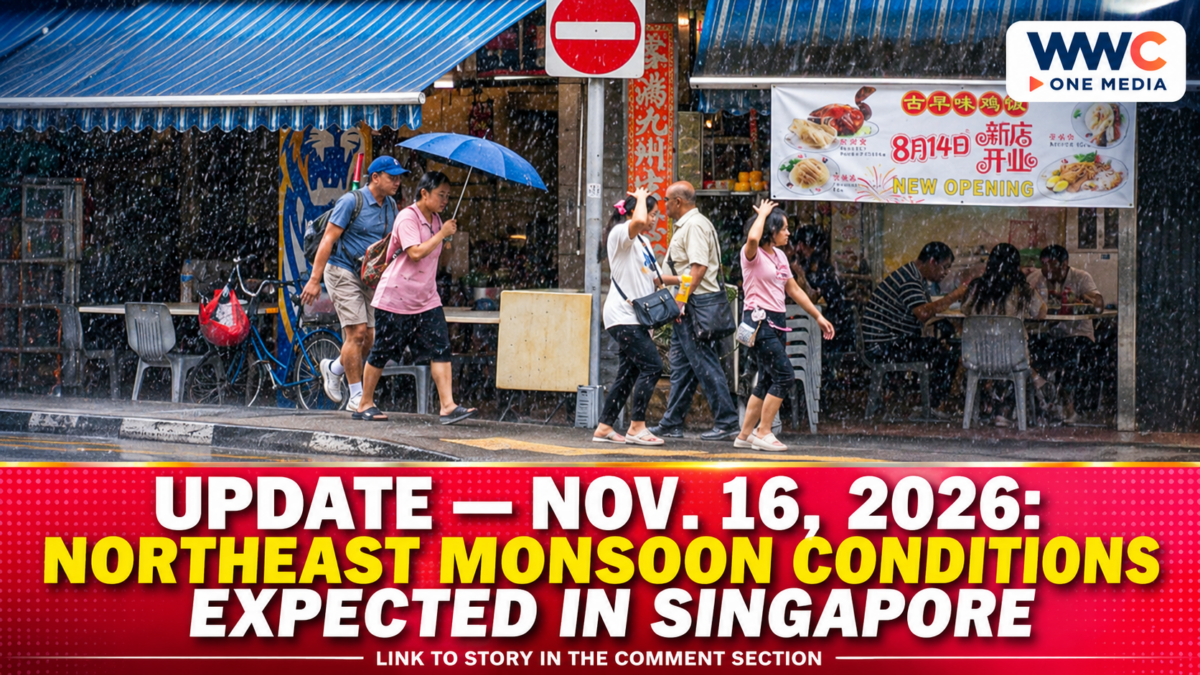
UPDATE — Nov. 16, 2026: Northeast Monsoon conditions expected in Singapore
Singapore is preparing for a shift in its seasonal weather pattern, with Northeast Monsoon conditions expected to develop during the second half of November, bringing more frequent thundery showers and the possibility of widespread heavy rain.
The National Environment Agency’s Nov. 16 advisory says winds are expected to strengthen gradually and shift towards the northeast or northwest. The Northeast Monsoon season typically extends to March.
Short-duration thundery showers are expected over parts of Singapore during the afternoon on most days in the second half of November. Some showers may continue into the night, while thunderstorms could become widespread and heavy on certain days.
The agency forecasts total rainfall for the second fortnight to be slightly above the long-term average over most parts of the island.
Daily maximum temperatures are expected to range from 32°C to 34°C on most days, with readings potentially rising slightly above 34°C on a few days. On some rainy days, temperatures could fall to around 23°C.
What happened during the first half of November?
The latest advisory also reviews conditions from Nov. 1 to 15, when inter-monsoon weather prevailed and winds remained generally light and variable.
Thundery showers affected parts of the island during the late morning and afternoon on most days. On Nov. 6, widespread moderate to heavy showers affected many areas, with 94.2 millimetres recorded around Rivervale Drive — the highest daily rainfall total for the first half of the month.
The highest temperature during that period was 35.4°C, recorded at Paya Lebar on Nov. 4.
Rainfall distribution was uneven. About half of Singapore recorded above-average rainfall, while the area around Somerset registered rainfall 44% above average and the area around Tanjong Katong recorded rainfall 65% below average.
Why the forecast matters
The transition is important because seasonal conditions can influence how often rain develops, how winds behave and how residents plan outdoor activities.
However, a seasonal outlook does not mean that every part of Singapore will experience continuous rain. Thunderstorms can be localised, and rainfall amounts may differ considerably between neighbourhoods.
The Meteorological Service Singapore provides updated forecasts, observations and weather warnings through its official portal. Residents should check current advisories rather than rely solely on a forecast issued earlier in the day.
The latest outlook therefore points to a wetter second half of November, but the timing and intensity of individual storms will still depend on changing weather conditions.