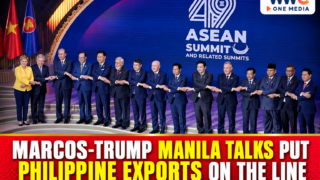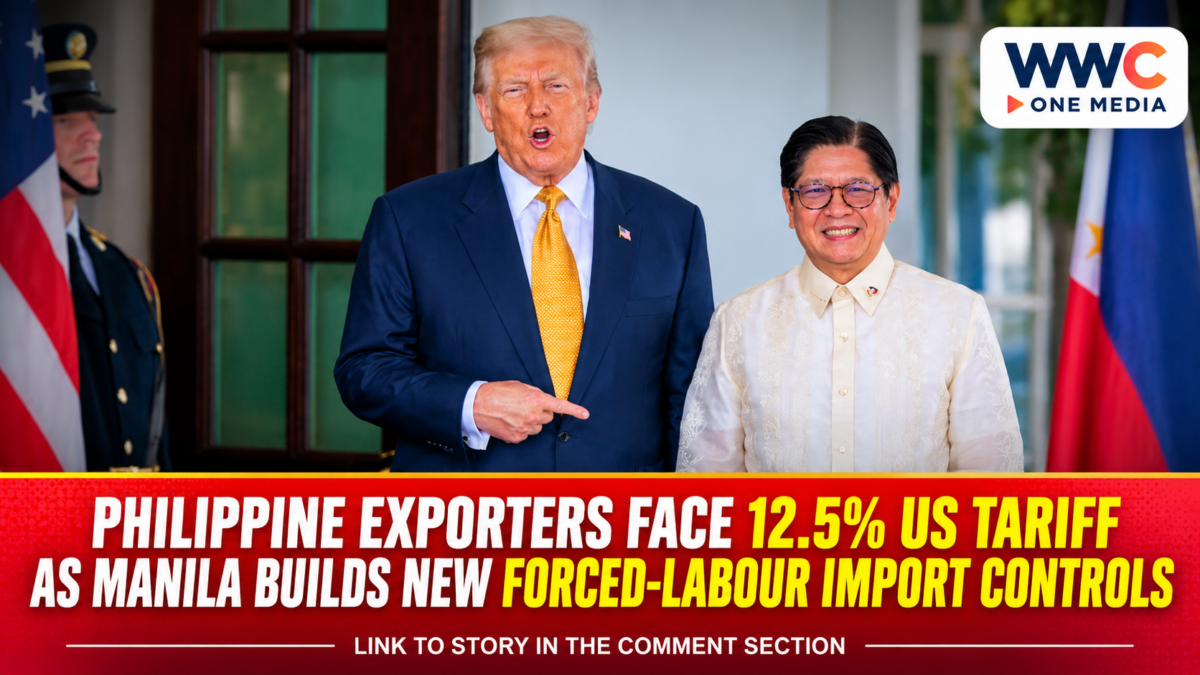
Philippine products entering the United States remain subject to an additional 12.5% tariff under a trade measure that took effect on July 24, 2026, placing continued pressure on exporters seeking to maintain access to one of the country’s major overseas markets.
The Philippines has since established a new inter-agency mechanism to investigate and prevent imports produced through forced labour, but the US tariff determination published in July still places Philippine goods under the higher duty category.
The issue extends beyond diplomatic relations. It raises questions about export competitiveness, supply-chain compliance and the ability of Philippine businesses to meet increasingly demanding international trade requirements.
The US Tariff Is Already in Effect
The additional duty comes from investigations conducted under Section 301 of the US Trade Act of 1974.
The Office of the United States Trade Representative examined whether 60 economies had failed to establish or effectively enforce prohibitions against importing products made wholly or partly through forced labour.
The July 28, 2026, Federal Register notice formalised the resulting trade actions. Its country-specific determination expressly places Philippine products under a 12.5% tariff, subject to the exemptions identified in the notice.
The additional duty applies to qualifying goods entered for consumption, or withdrawn from warehouse for consumption, beginning July 24, 2026, subject to transitional provisions for goods already in transit. Federal Register+1
This is an important distinction for Philippine exporters: the measure is not simply a proposal awaiting approval. It is an implemented trade action.
The US determination also does not mean that every Philippine product is automatically subject to the same treatment regardless of classification. The published notice contains specific product exemptions.
Manila Establishes a New Forced-Labour Import Mechanism
The Philippine government has responded by strengthening its domestic framework for addressing goods suspected of being produced through forced labour.
On July 23, 2026, the Department of Trade and Industry, Department of Labor and Employment, and Department of Finance signed a joint administrative order establishing a coordinated mechanism to investigate such imports.
The Department of Trade and Industry leads the initiative, bringing together government agencies responsible for trade, labour protection and customs administration.
The mechanism is designed to receive complaints, investigate information concerning suspected imported goods and recommend appropriate action. Department of Labor and Employment
This represents an important development in Philippine trade administration.
Rather than treating forced-labour concerns exclusively as a workplace issue, the mechanism connects labour protection with import regulation and customs enforcement.
It also gives authorities a formal structure for examining complaints involving products entering the domestic market.
However, establishing an administrative mechanism and demonstrating effective enforcement are two different things.
For international trade partners, the existence of a government policy may not be sufficient. Its implementation, investigation procedures and ability to prevent prohibited goods from entering the market are equally important considerations.
Why the 12.5% US Tariff Matters to Philippine Businesses
The tariff creates another consideration for businesses competing in the American market.
An additional import duty can affect the landed cost of covered products. Depending on commercial arrangements, importers and exporters may have to reconsider pricing, contractual terms and supply-chain decisions.
The extent of the impact will vary by product, applicable exemptions, existing duties and the ability of businesses to absorb or pass on additional costs.
For Philippine exporters, the challenge is maintaining competitiveness while dealing with a trade environment in which compliance requirements are becoming increasingly important.
Companies involved in manufacturing, sourcing and international distribution also have reasons to strengthen documentation concerning their suppliers and production processes.
This issue connects with a wider international movement towards responsible sourcing. WWC ONE MEDIA previously examined the ILO and Canada’s initiative to strengthen Philippine efforts against forced labour, which highlights the growing importance of labour standards in international supply chains.
The commercial implications are not limited to exporters selling directly to American buyers. Businesses supplying components, materials and services to export-oriented manufacturers may also face stronger compliance expectations from their customers.
The Timing Reveals an Important Policy Gap
One of the most significant details emerges from comparing the dates of the two governments’ actions.
The Philippine joint administrative order was signed on July 23. The US presidential memorandum directing the tariff measures also carries a July 23 date.
Five days later, on July 28, the final Federal Register notice retained the 12.5% rate for Philippine products.
The sequence demonstrates that the creation of the Philippine mechanism did not result in an immediate exemption under the published US determination. The White House+2
It would be premature, however, to conclude from those dates alone that Washington has rejected the Philippine mechanism permanently or that future tariff adjustments are impossible.
The more relevant question is whether the Philippine government can demonstrate that its system meets the requirements Washington considers necessary.
For businesses, this means the policy challenge is not simply announcing new rules. Authorities must be able to demonstrate that those rules operate effectively.
The distinction also matters when assessing the broader US-Philippines economic relationship. Cooperation in infrastructure and investment can continue while separate trade disagreements remain unresolved.
For example, WWC ONE MEDIA has previously examined US-backed infrastructure development around Subic Bay and the Luzon Economic Corridor, illustrating the wider commercial relationship between the two countries.
Export Diversification Becomes More Important
The American market remains an important consideration for Philippine companies, but exposure to any single overseas market carries risks.
Exporters may therefore benefit from examining opportunities in other destinations while maintaining compliance with the requirements of their existing customers.
The recent conclusion of negotiations on the Philippines-Canada free trade agreement provides another development worth watching.
As discussed in WWC ONE MEDIA’s coverage of Canada’s expanding trade opportunities for Philippine businesses, improved market access could eventually offer additional commercial opportunities once the necessary legal procedures and implementation arrangements are completed.
However, alternative markets are not an automatic replacement for American demand.
Businesses must still assess transportation costs, product standards, competition, rules of origin and the commercial conditions of each destination.
For the Philippine government, the broader objective should be to improve both market access and the reliability of domestic trade enforcement.
What Happens Next?
The next important developments will involve the implementation of the Philippine joint administrative order and any formal response from the United States concerning the country’s compliance efforts.
Several issues deserve attention:
- Whether the Philippine inter-agency committee receives and processes complaints effectively.
- Whether investigations lead to documented findings and appropriate customs action.
- Whether Washington formally recognises any Philippine enforcement improvements.
- Whether the United States announces a change to the applicable tariff rate or product exemptions.
- Whether Philippine exporters receive clearer guidance on products covered by the measure.
Until a new official US determination is published, businesses should not assume that the existing 12.5% additional duty has been reduced or withdrawn.
The central challenge for Manila is to translate its new regulatory framework into demonstrable enforcement while protecting the country’s access to international markets.
For Philippine exporters, the outcome could influence how they plan their contracts, production costs and overseas market strategies.
Frequently Asked Questions
1. What is the current US tariff on Philippine products under the forced-labour investigation?
The US has imposed an additional 12.5% Section 301 duty on Philippine products covered by the measure, subject to specified exemptions. It took effect on July 24, 2026.
2. Why did the United States impose the tariff?
The US Trade Representative determined that the Philippines had failed to impose and effectively enforce a prohibition on importing goods produced wholly or partly through forced labour. This is the US government’s trade-law finding, not proof that every Philippine exporter uses forced labour.
3. What did the Philippine government do in response?
The DTI, DOLE and DOF signed a joint administrative order on July 23, 2026, establishing an inter-agency mechanism to investigate complaints involving imported goods suspected of being produced through forced labour.
4. Has the Philippine government already secured a reduction in the US tariff?
The reviewed US determination retains the 12.5% rate for Philippine products. No subsequent official tariff reduction was established by the records reviewed for this article.
5. Will the tariff affect all Philippine exports to the United States?
The measure covers Philippine products subject to its provisions, but the Federal Register notice provides specific exemptions. The actual treatment depends on the product classification and applicable customs rules.