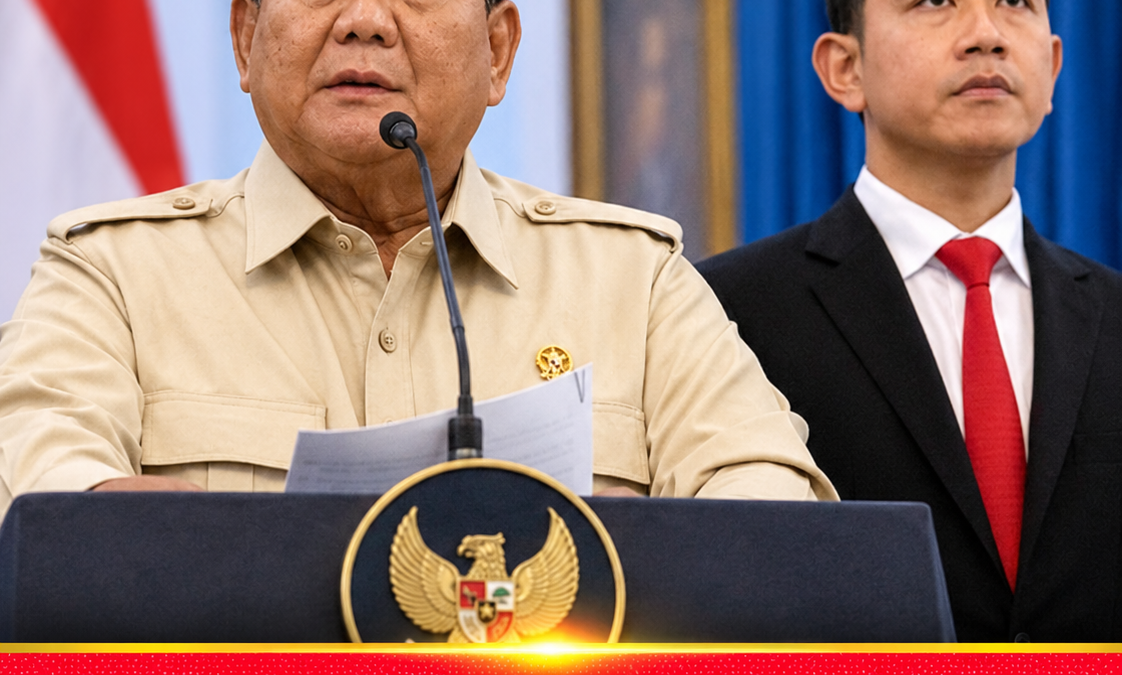
Indonesia’s President Prabowo Subianto has instructed his government to ensure that at least 70% of the proceeds from managing mining permits benefit the state, placing the country’s mineral and coal sector under a new policy spotlight.
The instruction was delivered on Nov. 14, 2026, during an event in Palu, Central Sulawesi, where Prabowo addressed the Tanwir meeting and 114th anniversary celebrations of Muhammadiyah. He also called for stronger oversight of mineral exports and said state control of mining-company shares could be considered where necessary. presidenri.go.id+1
The announcement matters because Indonesia is a major supplier of minerals used in industrial production and energy-related supply chains. But the 70% mining benefits target should not be confused with an already implemented tax rate, a universal 70% equity stake or a final production-sharing formula. The government still needs to explain how the target will be calculated and applied.
What Prabowo’s 70% Mining Benefits Instruction Actually Says
The presidential statement identifies the Ministry of Energy and Mineral Resources as a key agency responsible for carrying out the instruction. Prabowo said all mining permits, including IUP licences, should deliver at least 70% of their benefits to the state.
The official presidential account describes the target as at least 70% of the proceeds from managing mining permits. The speech transcript also says that, where necessary, shares could be brought under state control. It adds that private capital may still participate, with investors recovering their investment before the majority of subsequent profits goes to Indonesians. presidenri.go.id+1
That distinction is important for investors and mine operators. The announcement establishes the administration’s policy direction, but it does not provide a detailed formula defining the revenue base, allowable costs, treatment of capital recovery or how the state’s share would be calculated across different types of mining agreements.
Without those details, it would be premature to report that every mining company must immediately surrender 70% of its equity or output.
Indonesia’s Mining Sector Already Generates Significant State Revenue
The policy comes as Indonesia’s mining authorities report substantial contributions from the mineral and coal subsector.
The Energy and Mineral Resources Ministry reported that non-tax state revenue from the mineral and coal subsector reached Rp135.16 trillion in 2025. Revenue through August 2026 stood at Rp108.13 trillion.
The same ministry release reported mining-sector investment of US$6.7 billion in 2025 and 685,724 workers in the subsector as of the first half of 2026. esdm.go.id
These figures help explain why the government is focusing on how mining wealth is collected and distributed. The sector contributes not only to public revenue but also to investment and employment.
However, the revenue figures do not establish how much additional money the new 70% instruction would generate. That calculation would require the government to define the policy’s coverage and publish its implementation rules.
Export Controls Are Part of the Wider Policy Push
Prabowo’s announcement also addressed how Indonesia records mineral exports.
In his Nov. 14 speech, he called for exports to pass through a single channel designated by the government. The stated purpose was to make reported export volumes correspond more closely with the quantities actually shipped. presidenri.go.id+1
This is a separate but related part of the administration’s resource-governance agenda. A higher state share of mining proceeds would concern how the value generated by mining is distributed. Stronger export monitoring would concern whether the government has reliable information about what leaves the country.
For a resource-producing economy, accurate shipment records can matter for tax and royalty collection, regulatory oversight and trade statistics. But the presidential announcement alone does not establish which agency will operate the proposed single-channel system, what technology it will use or when the system will become mandatory.
Indonesia has also been pursuing greater influence over strategic commodity markets. In August, the Cabinet Secretariat reported that Prabowo had discussed establishing a domestic exchange for minerals and strategic commodities, with the stated aim of giving Indonesia a larger role in determining commodity prices. Sekretariat Kabinet Republik Indonesia
What the Policy Could Mean for Investors and Mining Companies
The announcement creates questions for companies holding mining permits, potential investors and businesses that rely on Indonesian mineral supplies.
If the government eventually changes how mining proceeds are shared, companies may need to reassess project economics, financing arrangements and expected returns. The effect would depend on the final rules, including whether they apply to existing permits, new projects or both.
That is why the distinction between a presidential instruction and an enforceable regulation matters. Investors need published rules that specify the calculation method, implementation dates, approval process and treatment of existing contractual obligations.
WWC’s coverage of new bidding rules and the future of the Semirara coal contract illustrates how government decisions about mining rights can affect operators, public revenue and energy supply. Indonesia’s policy is a different national framework, but the broader lesson is that the terms governing access to mineral resources can have consequences well beyond the mining site.
The announcement may also attract attention from companies involved in mineral processing and manufacturing. Indonesia’s decisions can matter to regional supply chains, particularly where minerals are inputs for industrial production. WWC has previously examined the pressure on copper processing and global concentrate supply.
For the Philippines, the development is relevant as a regional example of how governments approach public returns from natural resources. The country’s own debate over mining rehabilitation and environmental obligations highlights another part of the equation: public benefit must be assessed alongside environmental safeguards and the responsibilities of operators.
The 70% Target Raises Questions About Local Communities
A larger state share does not automatically show how much mining communities will receive.
The presidential statement focuses on benefits to the state and the national interest. It does not set out a specific allocation for producing provinces, local governments, workers or communities affected by mining operations.
That question matters because mining activity takes place in particular locations, where communities experience both economic opportunities and environmental pressures. A policy that increases national revenue would still need transparent mechanisms to show how local areas benefit and how impacts are managed.
Indonesia’s existing mining laws and regulations provide a legal framework for permits, state revenue and the distribution of certain mining receipts. The 2020 amendment to the Mineral and Coal Mining Law, for example, sets out provisions on central and regional government shares for specified special mining business permits. jdih.esdm.go.id+1
Those statutory provisions should not be treated as identical to the new 70% instruction. The government will need to explain how the announcement fits with existing laws and regulations.
What Happens Next
The next step to watch is the publication of implementing measures by the Energy and Mineral Resources Ministry and other relevant agencies.
Those measures would need to clarify what counts toward the 70% target, how investment recovery is handled, whether state equity participation will be used, and how the policy applies to existing and future mining permits.
The government’s proposed export-monitoring arrangement also needs more detail, including the designated agency, reporting requirements and implementation schedule.
Until those documents are released, the 70% figure is best understood as a presidential policy instruction rather than a fully specified operating rule for every mine.
Frequently Asked Questions
1. What is Indonesia’s 70% mining benefits target?
President Prabowo instructed the government to ensure that at least 70% of the proceeds from managing mining permits benefit the state.
2. Does the policy mean the government will own 70% of every mining company?
No such universal ownership requirement is established in the presidential announcement. It says state control of shares may be considered where necessary.
3. Does the 70% target mean the government will receive 70% of all mineral production?
The official presidential statement describes the target in terms of proceeds from managing mining permits. It does not establish a universal 70/30 division of physical output.
4. How much revenue did Indonesia’s mineral and coal sector generate?
The Energy and Mineral Resources Ministry reported Rp135.16 trillion in non-tax state revenue from the mineral and coal subsector in 2025.
5. When will the new policy take effect?
The President announced the instruction on Nov. 14, 2026. The detailed implementing rules and timetable were not specified in the presidential statement reviewed.