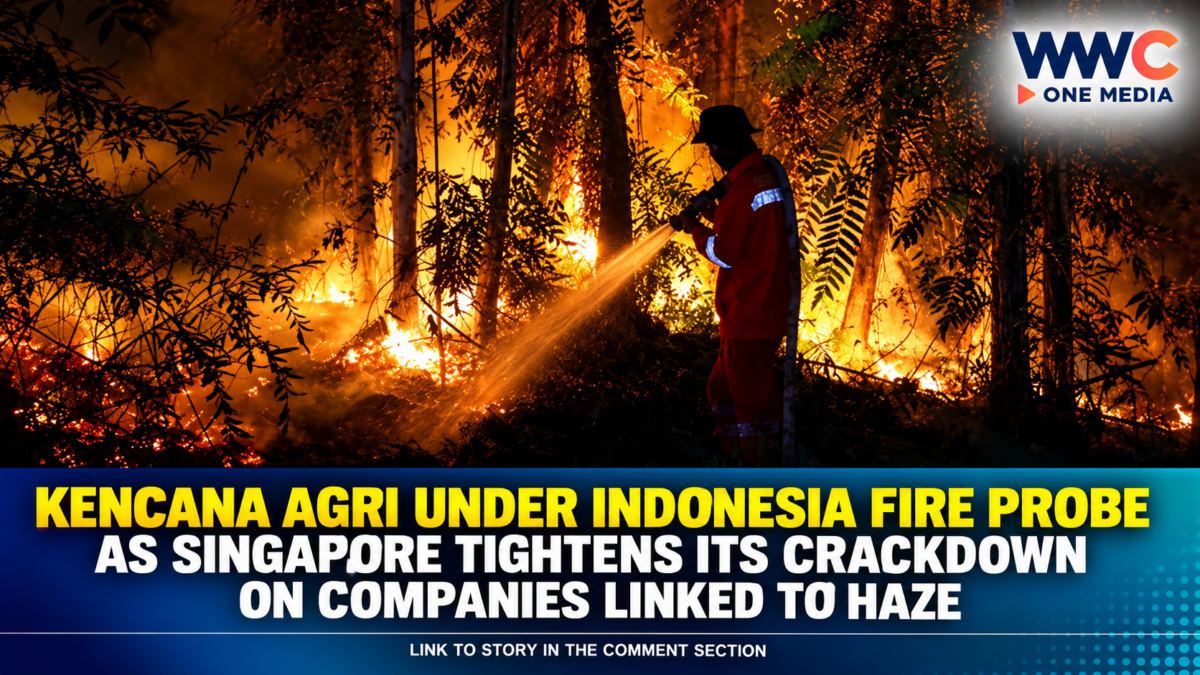
A Singapore-listed palm oil company is facing increased scrutiny after Indonesian authorities launched a preliminary investigation into a forest fire incident involving one of its subsidiaries in North Kalimantan, raising fresh concerns about corporate accountability as devastating wildfires continue to spread haze across Southeast Asia.
Kencana Agri disclosed the investigation on October 16, following inquiries from Singapore Exchange Regulation (SGX RegCo) concerning recent forest and peatland fires in Indonesia and their contribution to the worsening transboundary haze.
The investigation centres on suspected land clearing through burning in an affected area situated along the boundary between land operated by Kencana Agri’s subsidiary and an adjacent third-party property.
However, the company has denied that its operations were responsible for starting the fire.
In its response to the Singapore Exchange, Kencana Agri said information currently available indicates that its subsidiary did not conduct land clearing or land preparation through burning in the affected location.
Indonesian investigators reportedly inspected the site in September, and the subsidiary has already provided information requested by authorities. The company stressed that the investigation remains ongoing and that it is cooperating with the relevant agencies.
The disclosure comes as Singapore and neighbouring countries intensify efforts to identify businesses potentially connected to Indonesia’s worsening forest fire crisis.
Kencana Agri Reports Fires Affecting 62 Hectares
Although Kencana Agri maintains that its operations did not initiate the fires, the company acknowledged that incidents occurred within concession areas operated by its subsidiaries in North and East Kalimantan.
According to its disclosure, the affected areas cover approximately 62 hectares, representing less than 0.09 per cent of its total planted area of around 67,862 hectares.
The company operates plantations and mills across Sumatra, Kalimantan and Sulawesi.
Based on preliminary internal assessments, Kencana Agri said the fires appeared to have originated outside its operations before spreading into areas under its management.
Its subsidiaries deployed firefighting teams alongside local authorities and surrounding communities to contain the incidents.
The response included the use of drones and fire observation towers to identify active fire locations and coordinate ground operations.
Kencana Agri said the incidents were under control, although monitoring and precautionary measures remain in place.
The company also reiterated its zero-burning policy, which prohibits the use of fire for land clearing and plantation preparation.
Despite these assurances, the ongoing Indonesian investigation means the circumstances surrounding the North Kalimantan incident have yet to be conclusively established.
Other Palm Oil Giants Also Face Questions Over Indonesia’s Fires
Kencana Agri is not the only Singapore-listed plantation company responding to questions about the forest fires.
Golden Agri-Resources and Wilmar International have also addressed concerns raised by Singapore Exchange Regulation.
Golden Agri-Resources said it was not aware of information indicating that its operations contributed to the recent fires or resulting haze.
The company highlighted its zero-burning policy, introduced in 1997, and its no-peat policy, implemented in 2010. These policies also extend to its suppliers.
Wilmar International, meanwhile, reiterated its strict no-burning policy, which has been in place since 2006.
The company acknowledged that fires had been detected in small areas of some Indonesian concession areas but said its field investigations indicated that they originated outside its boundaries or on community-farmed land before spreading into areas under its management.
First Resources and Bumitama Agri have also attributed some incidents to fires originating outside their operational boundaries, while pointing to unusually dry conditions associated with the 2026 El Niño event.
Environmental group Greenpeace had previously identified First Resources, Bumitama Agri and First Borneo Plantations in an October 5 report examining companies associated with plantation concessions contributing to Indonesia’s haze crisis.
These disclosures highlight the growing scrutiny facing plantation operators as authorities investigate the origins of the fires.
Importantly, the existence of a fire within a company’s concession does not automatically establish that the company started it or violated environmental regulations.
Singapore Moves Towards Stronger Action Against Companies Linked to Haze
The investigation involving Kencana Agri comes as Singapore steps up its response to the worsening environmental crisis.
Prime Minister Lawrence Wong said Singapore was examining which companies could be responsible for the forest and peatland fires in Indonesia.
He also indicated that Singapore could pursue legal action under its Transboundary Haze Pollution Act and explore cooperation with other countries.
The legislation, which took effect in 2014, provides Singapore with the ability to take action against companies responsible for causing or contributing to haze pollution in the country, even when the activities occur outside Singapore.
On October 16, Singapore’s National Environment Agency announced that it had issued preventive measure notices to seven Indonesian companies following investigations indicating that smoke from fires on land held through their concessions could have reached Singapore.
The seven companies are:
- PT Bumi Andalas Permai
- PT Bumi Mekar Hijau
- PT Paramitra Mulia Langgeng
- PT Sumatera Alam Anugerah
- PT SBA Wood Industries
- PT Hutan Lestari Raya
- PT Bangkanesia
The notices require the companies to deploy firefighting personnel, prevent or stop burning activities and submit action plans explaining how they intend to extinguish fires and prevent future incidents.
Kencana Agri was not among the seven companies named in this particular announcement. Its separate Indonesian investigation should not be confused with Singapore’s preventive notices.
Singapore’s move signals a more aggressive approach towards businesses potentially responsible for cross-border air pollution.
Indonesia’s Forest Fire Crisis Becomes a Regional Emergency
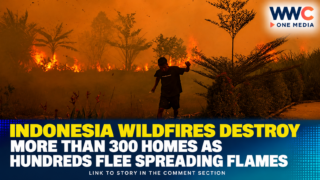
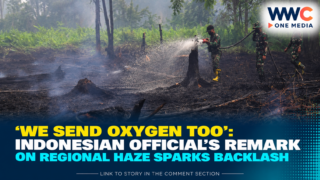
The growing investigation into plantation operators comes against the backdrop of one of Southeast Asia’s most serious haze episodes in recent years.
According to Reuters reporting on October 15, prolonged forest and peatland fires, particularly across Sumatra and Borneo, have caused widespread environmental damage and deteriorating air quality.
The situation has been aggravated by prolonged dry conditions associated with El Niño, making vegetation and peatland more vulnerable to fires.
The consequences extend beyond Indonesia.
Singapore and Malaysia have experienced worsening haze conditions, while smoke pollution has affected other parts of Southeast Asia.
Reuters also reported a sharp increase in respiratory illnesses in Indonesia, with more than 283,000 cases recorded across seven provinces.
Indonesia has deployed thousands of personnel and firefighting resources to combat the blazes, but the scale of the crisis continues to challenge authorities.
Meanwhile, Indonesian police have identified 223 individuals and nine companies as suspects in separate forest and land fire investigations, involving thousands of hectares of burned land.
These developments demonstrate that the authorities are increasingly examining not only individual fire incidents but also the potential involvement of businesses in the country’s broader environmental crisis.
Corporate Accountability Under Growing Pressure
For Kencana Agri, the immediate issue is the outcome of the preliminary investigation in North Kalimantan.
The company maintains that its subsidiary did not initiate the fire and says it has implemented measures to prevent, detect and contain fires across its plantation operations.
However, the investigation places renewed attention on how plantation companies manage land concessions, monitor fire risks and enforce environmental policies.
For Singapore, the issue also carries significant implications for environmental enforcement and corporate responsibility, particularly when the activities of companies operating overseas affect the health and environment of people across national borders.
As Indonesia continues battling widespread wildfires and neighbouring countries demand stronger accountability, plantation companies are facing increasing pressure to demonstrate that their environmental commitments are being properly enforced.
The outcome of the Kencana Agri investigation could become another important development in the region’s escalating battle over forest protection, corporate accountability and transboundary haze pollution.