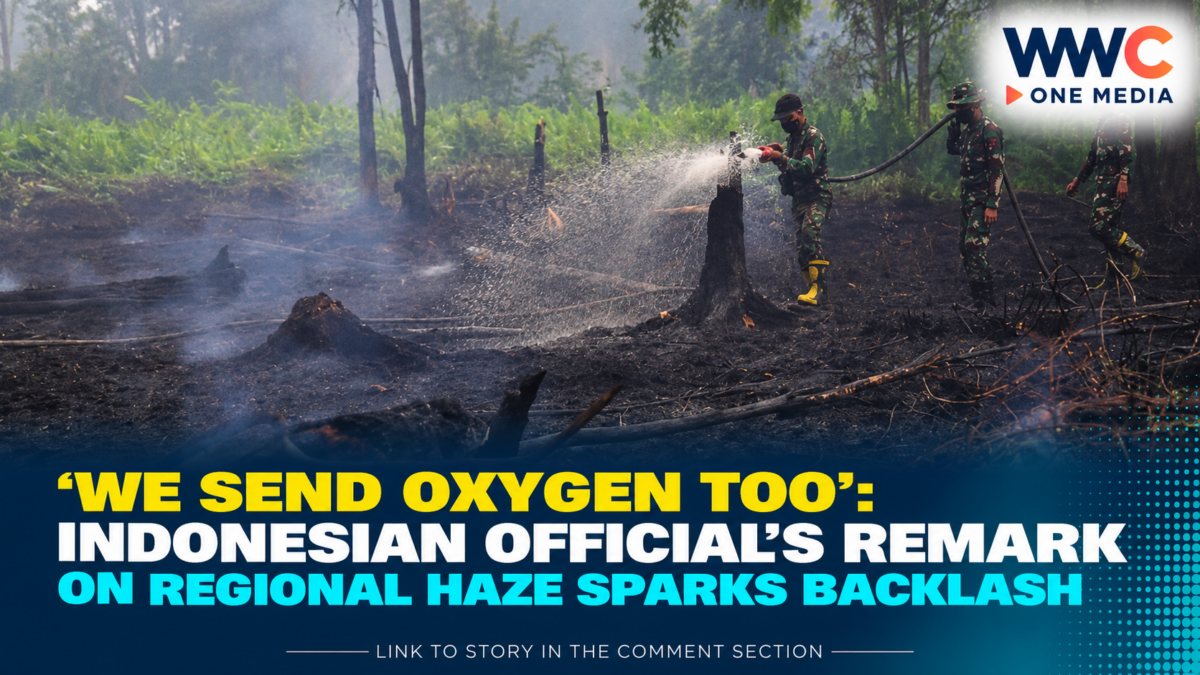
An Indonesian government communications official has drawn criticism after responding to concerns from Singapore and Malaysia over smoke haze from forest fires by saying Indonesia also supplies its neighbours with oxygen.
Syahganda Nainggolan, head of Indonesia’s Government Communications Agency, made the remarks as smoke from fires across parts of Indonesia continued to affect air quality in neighbouring countries.
“We’re not just sending over the haze. When there’s no haze, we send oxygen,” he was quoted as saying by Indonesian news outlet Kompas on Saturday (Oct 10).
He also reportedly asked whether the oxygen in Singapore and Malaysia came from Indonesia’s forests.
His comments quickly attracted attention online, with critics questioning the comparison and arguing that it did little to address the health and environmental consequences of transboundary haze.
Official says forest fires are a natural phenomenon
Nainggolan also acknowledged that neighbouring countries were concerned about the haze but described forest and land fires as a natural phenomenon.
“We hope our neighbours understand that this is beyond human error; this is truly nature,” he reportedly said.
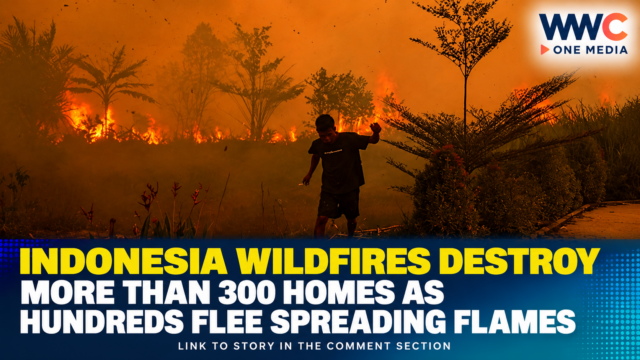
The remarks come as Indonesia faces renewed scrutiny over fires that have sent smoke across parts of Southeast Asia. Although dry weather and other environmental conditions can contribute to the spread of fires, land-clearing practices and human activities are also recognised causes of forest and peatland fires in the region.
The comments have raised questions about how governments should address the causes of haze, rather than focusing solely on the natural conditions that can make fires more severe.
Singapore and Malaysia face worsening air quality
The haze has affected parts of both Singapore and Malaysia, with air pollution reaching unhealthy levels in some areas.
Malaysia has faced particular pressure as several states experienced elevated pollution levels, prompting school closures in affected areas the previous week.
Regional monitoring by the ASEAN Specialised Meteorological Centre also reported moderate to dense transboundary smoke haze over parts of Peninsular Malaysia, Singapore, Kalimantan, Sarawak and Sumatra.
Dry conditions across much of the southern ASEAN region have complicated efforts to contain the fires, while smoke and cloud cover have made it difficult to determine the full extent of some hotspots.
Malaysia pushes for regional cooperation
The issue has also prompted calls for greater regional coordination.
Malaysian Foreign Minister Mohamad Hasan said on Oct 12 that Southeast Asian foreign ministers would discuss tackling transboundary haze ahead of the ASEAN summit scheduled for next month in the Philippines.
Malaysia has previously offered assistance to Indonesia in fighting the fires. However, firefighting operations have faced challenges, including poor visibility, difficult access to affected areas and unsuitable conditions for cloud seeding.
The discussions are expected to focus on how countries can cooperate more effectively to address a recurring regional problem.
A long-running environmental challenge
Transboundary haze has been a recurring issue in Southeast Asia for decades, affecting public health, transport, education and economic activity.
Fine particles in smoke can worsen respiratory and cardiovascular conditions, particularly among children, older adults and people with existing health problems.
While Indonesia’s forests play an important role in regional ecosystems, critics argue that neighbouring countries need concrete action to prevent fires and reduce smoke pollution, rather than remarks that risk downplaying their impact.
With dry conditions expected to persist across parts of the region, the immediate challenge remains containing fires and protecting communities from deteriorating air quality.
The controversy surrounding Nainggolan’s comments has added a diplomatic dimension to an environmental crisis that continues to require cooperation across national borders.