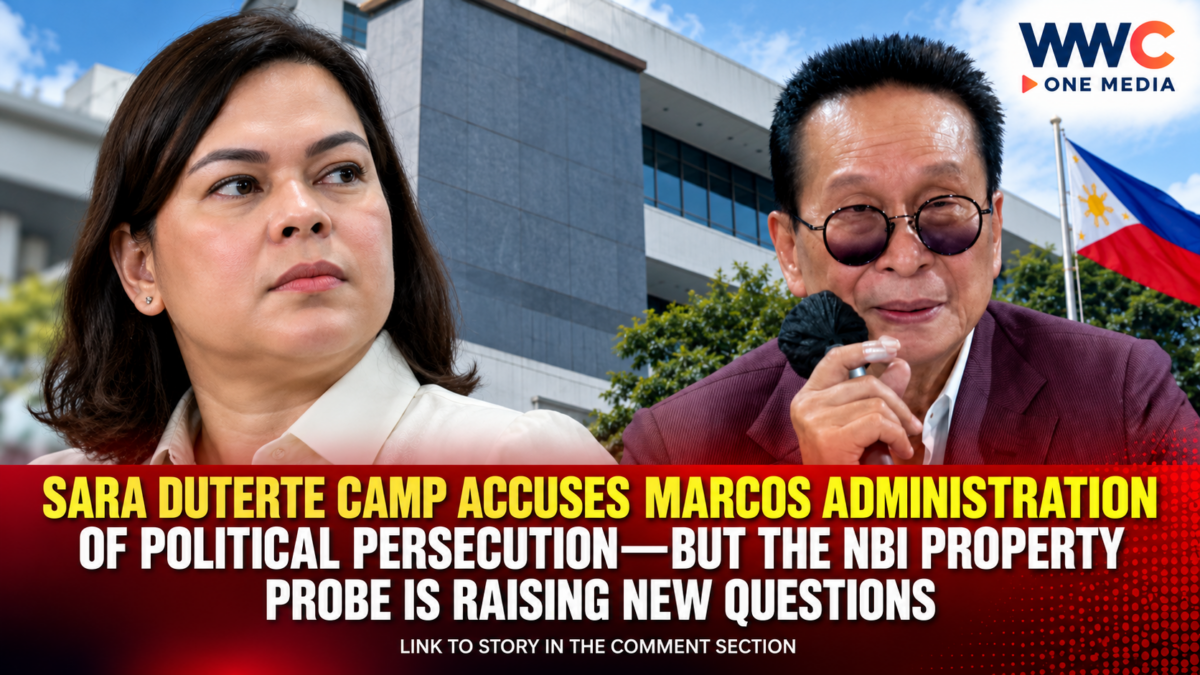
The camp of Vice President Sara Duterte has accused the administration of President Ferdinand Marcos Jr. of political persecution, escalating a dispute over an NBI investigation into alleged discrepancies in property declarations involving the Vice President and members of her family.
Duterte’s spokesperson, Salvador Paolo Panelo Jr., described the investigation as a “shameless smear campaign,” questioning why NBI Director Melvin Matibag publicly discussed the bureau’s findings before, according to the camp, Duterte had been formally notified and given an adequate opportunity to respond.
The dispute puts the spotlight on the handling of evidence, the independence of government investigators and the questions surrounding the Vice President’s Statements of Assets, Liabilities and Net Worth (SALNs).
Duterte camp questions NBI chief’s impartiality
Panelo argued that the NBI’s public announcements undermined the agency’s duty to conduct a fair and impartial investigation. He also questioned Matibag’s impartiality, citing what the camp described as a conflict of interest.
The Vice President’s legal team had previously challenged Matibag’s role in investigating allegations made by dismissed police officer Rodulfo Gracioso Jr., who claimed to have delivered suitcases of cash to Duterte and other members of her family on instructions from former House Speaker Lord Allan Velasco.
These claims remain allegations and should not be treated as proof of wrongdoing.
Panelo also questioned why the NBI’s findings were not presented by the prosecution during Duterte’s impeachment proceedings, arguing that the evidence could have been scrutinized and challenged by the defense in that forum.
NBI says its findings are based on official records
The NBI has maintained that its investigation is based on documentary evidence rather than speculation.
According to reports by Philstar.com and GMA News, investigators examined SALN declarations and land-title records obtained from the Land Registration Authority, conducted site inspections and used other verification methods to assess the properties in question.
The NBI has reported examining properties linked to Duterte and her brother, Davao City 1st District Representative Paolo Duterte. Earlier reporting by Philstar.com said the bureau was looking into 121 properties linked to the Duterte family, of which 24 were declared in the Vice President’s SALN. These are figures reported by the NBI and do not, by themselves, establish that any property was illegally acquired or improperly declared.
Among the properties discussed by investigators was agricultural land in Barangay Catigan, Davao City. The NBI questioned the declared value of the land and cited differences between the reported declaration and its preliminary estimates. The figures remain part of the agency’s investigative claims and have not, in themselves, established liability.
NBI challenges claims of political bias
Matibag has pushed back against accusations that the investigation is politically motivated. In a report published by Philstar.com on October 16, he challenged Duterte’s camp to file a case if it believed he was biased.
He also said the investigation relied on records and verification work, and rejected the characterization of the inquiry as trial by publicity.
The Palace has separately defended the NBI. According to the Philippine News Agency, Palace Press Officer Claire Castro said attacks on an investigator’s character do not answer allegations and that the proper response is to present evidence. She also stressed that no one should be judged without evidence or a court ruling.
Ombudsman to evaluate the NBI referral
The NBI has referred its findings concerning the alleged SALN discrepancies to the Office of the Ombudsman for evaluation and appropriate action.
The Ombudsman has said the referral and supporting documents will undergo an initial assessment to determine whether further investigation or other action is warranted. It has also assured the public that the matter will be handled in accordance with established procedures and without political considerations.
That step is important: a referral for evaluation is not the same as a finding of guilt. The allegations must still be assessed by the appropriate authorities, and any person implicated must have the opportunity to respond through the applicable legal process.
A politically sensitive investigation
The controversy comes amid Duterte’s ongoing impeachment trial and the breakdown of the political alliance between her and Marcos. The Senate, sitting as an impeachment court, approved prosecutors’ request on October 13 to drop three of four impeachment charges so proceedings could focus on the remaining allegation involving unexplained wealth and undisclosed business interests. Duterte has denied the allegations against her.
The latest dispute therefore carries implications beyond the investigation itself. It raises questions about how public officials’ financial disclosures are scrutinized, how investigative findings should be communicated and whether government agencies can maintain public confidence while handling politically charged cases.
For now, the central issues remain unresolved: Duterte’s camp insists the probe is politically motivated, while the NBI says its findings are grounded in official records. The Ombudsman’s evaluation and any subsequent proceedings will be critical in determining what, if anything, the evidence establishes.