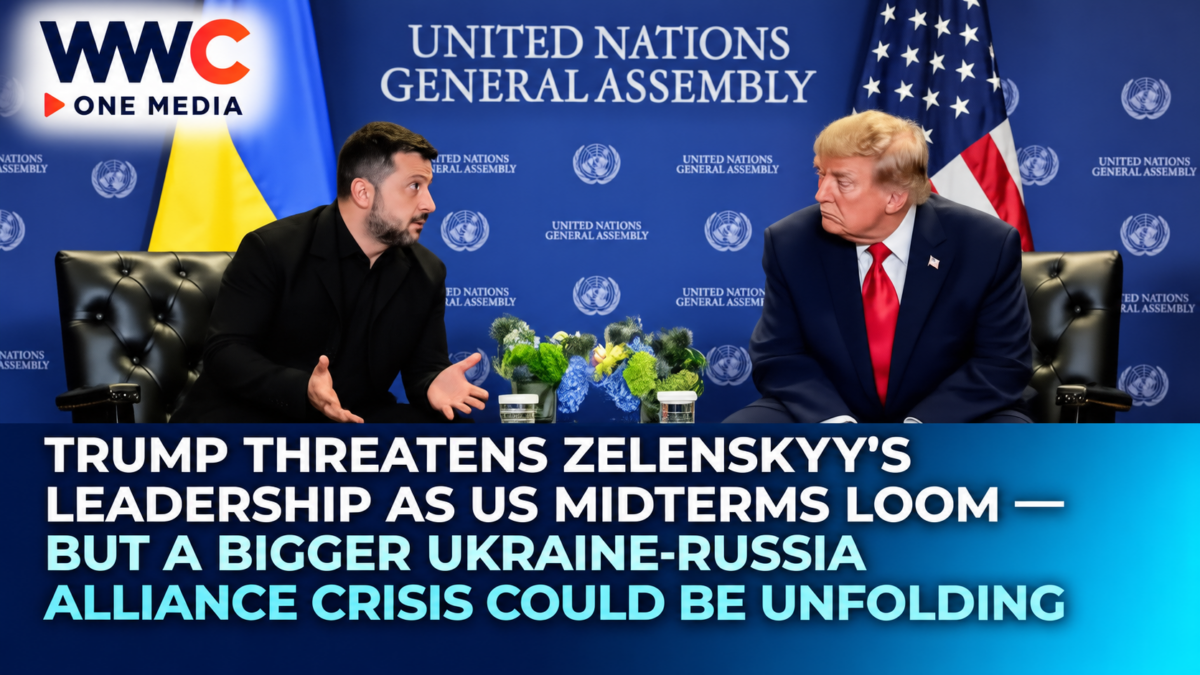
KYIV, Ukraine — October 12, 2026 — Ukrainian President Volodymyr Zelenskyy is facing one of his most difficult diplomatic confrontations with US President Donald Trump as rising fuel prices and the approaching American midterm elections create new tensions over Ukraine’s war against Russia.
The dispute escalated after Trump demanded that Ukraine stop attacking Russian oil refineries, defended a controversial arrangement involving Russian diesel exports and unexpectedly announced an energy ceasefire between Moscow and Kyiv.
But Ukraine has not confirmed that such an agreement is in effect.
Instead, Zelenskyy says Kyiv is prepared to suspend strikes against Russian energy infrastructure only if Moscow also stops attacking Ukrainian power facilities.
The standoff highlights a growing conflict between Washington’s domestic economic priorities and Ukraine’s military strategy as Russia’s full-scale invasion continues into its fifth year.
According to Bloomberg’s October 12 report, Zelenskyy now risks a serious rupture with Trump at a time when Ukraine still depends on US intelligence and American-made weapons financed by NATO allies.
The central question is whether Trump will continue supporting Ukraine’s ability to defend itself — or use Washington’s military and intelligence leverage to pressure Kyiv into concessions before American voters go to the polls.
Trump Announces Energy Ceasefire That Ukraine Had Not Confirmed
On October 11, Trump announced that Russia and Ukraine had agreed to an immediate ceasefire covering attacks against energy infrastructure.
The statement appeared to offer a potential breakthrough in efforts to reduce the economic damage caused by attacks on oil refineries, power stations and other facilities.
But the announcement quickly created confusion.
Zelenskyy said Ukraine was waiting for details from the United States and emphasized that Russia must also comply.
Moscow had not publicly confirmed the arrangement at the time of reporting.
Reuters and the Associated Press reported that Russian attacks on Ukrainian energy facilities continued after Trump’s announcement.
The development raised questions about whether the proposed agreement was based on finalized commitments or an expectation that the parties would accept the plan.
For Ukraine, a unilateral suspension of attacks could leave Russian forces free to continue targeting its infrastructure.
That is why Zelenskyy has insisted on reciprocity.
A genuine energy ceasefire would require agreement on which facilities are protected, when restrictions take effect and how violations are monitored.
Without those safeguards, a public announcement does not guarantee a reduction in hostilities.
Trump Demands an End to Ukrainian Strikes on Russian Oil Refineries
The dispute centers on Ukraine’s campaign against Russian oil infrastructure.
Ukrainian forces have targeted refineries and energy facilities as part of their strategy to disrupt logistics and reduce resources available to Russia’s war effort.
Oil revenues remain important to the Russian economy and public finances.
But the attacks have also become a source of tension with Washington because disruptions to petroleum production and refining can affect international energy markets.
Trump has argued that Ukraine’s attacks on Russian refineries are contributing to higher fuel costs.
His administration has been seeking ways to increase diesel availability as US consumers and businesses contend with expensive transportation fuel.
The Ukrainian government disputes the suggestion that Kyiv is chiefly responsible for the global price surge.
Zelenskyy has pointed instead to the Middle East conflict and its effects on international petroleum supplies.
Both factors can influence energy markets, but attributing the full increase in diesel prices to Ukraine’s strikes would oversimplify a market also affected by shipping disruptions, refining capacity and geopolitical uncertainty.
US-Russia Diesel Agreement Sparks Backlash
The latest confrontation intensified after Washington reached an arrangement intended to increase supplies of Russian diesel.
Reuters reported that Trump had agreed with Russian President Vladimir Putin on the release of more than 300,000 metric tons of diesel to help reduce fuel-market pressure.
The administration also temporarily relaxed restrictions affecting selected Russian fuel transactions.
The measures were designed to improve supply availability at a time of elevated energy prices.
However, they drew criticism from lawmakers in both US political parties and from several European supporters of Ukraine.
Critics argue that allowing additional Russian fuel sales could increase Moscow’s revenues while its military continues attacking Ukrainian territory.
Supporters of the approach argue that increased petroleum supplies may provide relief to consumers facing high fuel costs.
The financial and strategic effects remain disputed.
The actual impact will depend on the volumes delivered, prices paid, applicable sanctions arrangements and the broader international oil market.
For Kyiv, the decision raises an especially difficult question: whether Washington’s efforts to lower fuel prices are beginning to outweigh its previous economic pressure on Moscow.
Trump’s Call for a New Ukrainian President Deepens the Rift
The tensions became more personal when Trump openly criticized Zelenskyy’s leadership.
On October 10, the US president suggested that Ukraine needed a different leader who could negotiate an agreement with Russia.
The statement followed disagreements over Ukraine’s continued attacks on Russian energy facilities.
It also came as Washington’s representatives were discussing possible diplomatic arrangements with Ukrainian officials.
Zelenskyy rejected the suggestion that an outside government should determine Ukraine’s political leadership.
He emphasized that Ukrainians must decide who governs their country.
The exchange represents a serious deterioration in personal relations between the two presidents.
But Trump’s statement does not amount to a formal change of government in Ukraine or establish that the United States has ended its recognition of Zelenskyy as president.
It is a public expression of political pressure that could affect future negotiations.
Zelenskyy Offers Elections if Russia Accepts a 60-Day Ceasefire
Zelenskyy also responded directly to criticism surrounding Ukraine’s delayed presidential election.
In an interview with ABC’s This Week, he said he would be prepared to organize elections if Russia agreed to a comprehensive 60-day ceasefire.
Ukraine has not held a presidential election since the full-scale invasion began in 2022 because the country remains under martial law.
Wartime legal restrictions and practical security concerns make nationwide voting extremely difficult.
Millions of Ukrainians have been displaced, and large areas of the country remain exposed to military attacks.
Organizing voting would require adequate arrangements for soldiers, displaced civilians, overseas voters and people living in threatened regions.
Zelenskyy’s offer was therefore conditional.
It was not an announcement that a presidential election had already been scheduled.
The proposal also does not mean Ukraine’s existing election laws have been amended.
A durable pause in hostilities and appropriate legal arrangements would be necessary before a credible election could proceed.
Miami Talks Expose Disagreements Over Ukraine’s Military Strategy
The dispute intensified during diplomatic discussions in Miami.
According to Bloomberg, US negotiators led by special envoy Steve Witkoff and Trump’s son-in-law Jared Kushner urged Ukrainian representatives to stop strikes on Russian oil refineries.
The US side argued that Ukraine should avoid actions that could worsen fuel prices for American consumers.
Ukrainian officials were concerned that the proposed restrictions did not impose equivalent requirements on Russia.
Bloomberg reported that Ukrainian negotiators cut short their talks after the announcement of the Russian diesel arrangement.
The Financial Times separately reported warnings that the United States could restrict elements of its support if Kyiv continued targeting Russian energy facilities.
These accounts highlight the growing mistrust between the two sides.
However, threats reported during negotiations should not be confused with confirmed implementation of a complete intelligence or weapons cutoff.
As of October 12, no comprehensive termination of US assistance to Ukraine had been established.
Ukraine’s Dependence on US Support Creates Serious Risks
Although European governments have increased support for Ukraine, Washington remains important to Kyiv’s military capabilities.
American intelligence can assist Ukraine in monitoring threats and planning operations.
US-produced weapons and ammunition remain important components of Ukrainian defense.
Some NATO allies now finance purchases of American-made military equipment for transfer to Ukraine.
That arrangement allows European governments to help sustain Kyiv’s military supplies while relying on US production capacity.
A major disruption to these arrangements could create operational difficulties.
The severity would depend on which intelligence services, weapons deliveries or procurement channels were affected.
This dependence gives Washington considerable leverage.
But using military assistance as negotiating pressure could also generate tension with European allies who view Ukraine’s defense as important to their own security.
US Midterm Elections Are Reshaping Trump’s Priorities
The timing of the dispute is especially significant.
Americans are scheduled to vote in midterm elections on November 3, 2026.
Republican candidates face pressure over inflation and higher transportation costs, including diesel and gasoline.
Expensive diesel affects trucking, agriculture, logistics and the delivery of goods.
Higher fuel expenses can therefore influence household budgets even when consumers do not personally purchase diesel.
The Financial Times reported that Republicans are facing competitive races as concerns about the cost of living intensify.
Trump’s attempt to secure additional Russian fuel supplies reflects the administration’s focus on lowering energy costs before the elections.
However, the financial effect of any single fuel agreement remains uncertain.
Global energy prices are shaped by supply disruptions, refining capacity, shipping conditions and demand.
A relatively limited increase in diesel availability may not be sufficient to reverse broader market pressures.
Iran War Complicates the Russia-Ukraine Conflict
The Middle East war has created additional pressure on global energy markets.
Disruptions involving the Persian Gulf and Strait of Hormuz have affected petroleum supplies and shipping costs.
The impact has been felt internationally, including in the United States.
The conflict has also complicated Washington’s relations with Russia.
By seeking additional Russian diesel supplies, the administration is attempting to address one energy problem while managing sanctions originally intended to constrain Moscow’s war-financing capacity.
For Ukraine, the overlap of the two conflicts creates diplomatic risks.
Kyiv wants continued international pressure on Russia.
Washington wants relief from expensive fuel.
Those priorities are not necessarily incompatible, but they can come into conflict when the administration seeks to increase Russian petroleum exports.
This is one reason the October 12 dispute has significance beyond the personal relationship between Trump and Zelenskyy.
European Allies Push Back Against Pressure on Kyiv
The US-Russia diesel arrangement and Trump’s criticism of Zelenskyy have prompted concern across Europe.
The Washington Post reported that officials and lawmakers in the United States and Europe questioned whether the policy could undermine sanctions against Moscow.
European leaders have emphasized continued support for Ukraine and the need for any ceasefire to be meaningful and reciprocal.
For governments bordering Russia or closely involved in Ukraine’s defense, a weakened Kyiv could create broader security risks.
They also have an interest in maintaining predictable coordination with Washington.
But European assistance cannot instantly replace every category of American military and intelligence support.
That limits the options available to Kyiv if its relationship with Trump deteriorates further.
Could the Energy Ceasefire Lead to Real Peace?
An agreement to halt attacks on energy infrastructure could reduce suffering if both countries implement it.
Ukraine has experienced repeated strikes on power facilities, creating hardship for civilians and placing pressure on essential services.
Russia has also faced attacks affecting its refineries and energy operations.
Protecting these facilities could reduce some economic damage.
However, an energy ceasefire would not automatically end the wider war.
Russian and Ukrainian forces would still face unresolved disagreements over territory, security guarantees and the terms of any eventual settlement.
Without broader commitments, either side could continue military operations against other targets.
Diplomatic progress therefore needs to be assessed by what is agreed and implemented, rather than by announcements alone.
Why the Dispute Matters to Asia and the Philippines
The consequences of the confrontation extend beyond Europe.
Global petroleum markets respond to disruptions affecting Russia and the Middle East.
For Asian countries that import large quantities of fuel, prolonged supply uncertainty can contribute to higher transportation, manufacturing and electricity costs.
The Philippines is particularly exposed to international petroleum-price movements.
Higher diesel and gasoline prices can affect logistics, food distribution and household expenses.
A credible reduction in attacks on Russian energy facilities could potentially reduce one source of market uncertainty.
But any benefit to Philippine consumers would depend on global oil prices, refining and shipping costs, exchange rates and domestic fuel pricing.
The political dispute also matters for regional security because it affects perceptions of US reliability toward international partners.
However, the confrontation over Ukraine does not automatically imply any specific change in Washington’s commitments in the Indo-Pacific.
The Bigger Question: Can Zelenskyy Defend Ukraine Without Alienating Trump?
The relationship between Trump and Zelenskyy has entered another uncertain phase.
Ukraine is defending itself against a continuing Russian invasion while depending on international military and financial assistance.
The United States is seeking to reduce energy prices and manage domestic political pressure ahead of the midterms.
Russia stands to benefit politically if disagreements weaken coordination between Ukraine and its supporters.
But the outcome is not predetermined.
A credible reciprocal ceasefire could help reduce attacks on essential infrastructure and create space for further negotiations.
A unilateral arrangement, by contrast, could leave Ukraine exposed while providing benefits to Moscow.
The challenge for Zelenskyy is maintaining enough support from Washington without agreeing to restrictions that Ukraine believes would weaken its defenses.
For Trump, the issue is whether efforts to reduce fuel prices can be pursued without undermining a broader diplomatic strategy toward Russia.
For Europe, the priority is preventing transatlantic disagreements from weakening support for Ukrainian security.
And for civilians in Ukraine, the immediate concern is whether the latest diplomacy will produce a genuine reduction in attacks.
Trump’s midterm pressure is pushing Washington toward a confrontation with Zelenskyy over Russian oil and energy attacks — but the bigger question is whether America’s search for cheaper fuel could trigger a lasting rupture with Ukraine at a critical stage of the war.