SINGAPORE, October 12, 2026 — Global copper prices extended their rally on Monday as investors responded to easing expectations of further interest rate increases and a deadly mining incident in Chile, the world’s largest copper-producing country.
The combination of improving financial market sentiment and renewed concerns over mining disruptions pushed the industrial metal higher, underscoring its growing importance to the global economy.
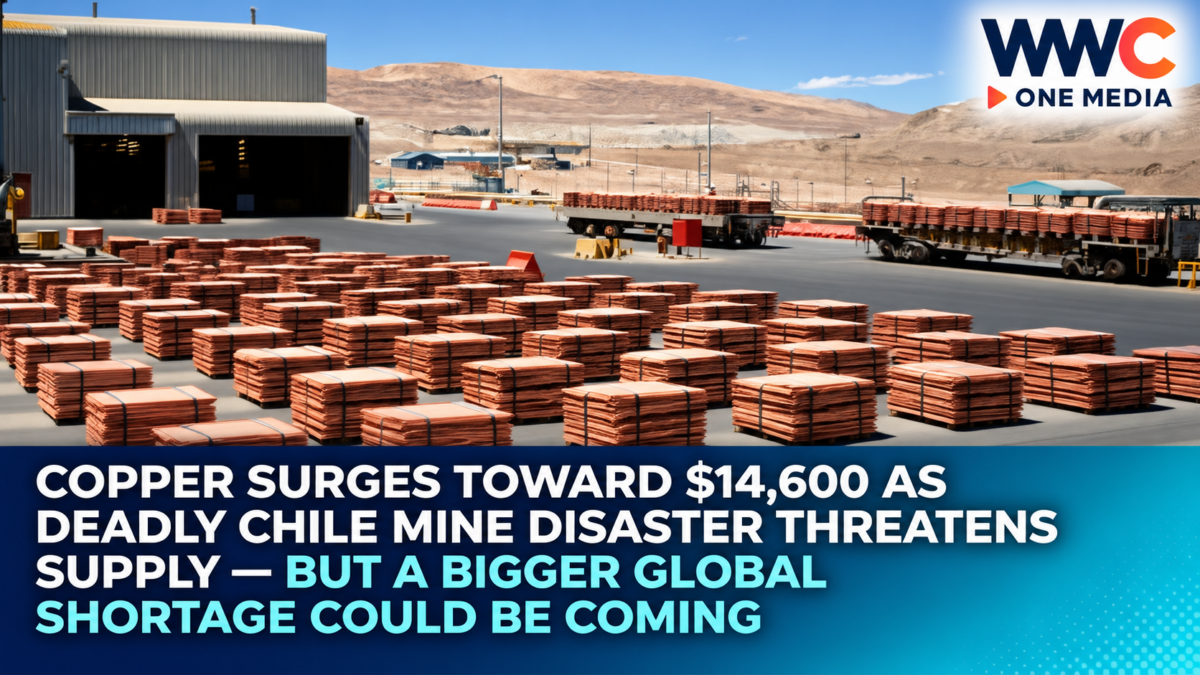
Benchmark copper on the London Metal Exchange climbed 0.5% to $14,618 per metric ton as of 11:54 a.m. Singapore time, after rising as much as 0.6% earlier in the session, according to Bloomberg.
The latest advance followed a gain of almost 2% during the previous week.
But behind the price increase lies a much more serious supply concern.
Two workers died after an avalanche or landslide struck Chilean state-owned mining company Codelco’s El Teniente copper operation on October 11, adding to concerns over disruptions in the world’s most important copper-producing nation.
The incident comes as global demand for copper continues to expand across electricity networks, renewable energy projects, electric vehicles and artificial intelligence data centers.
For commodity investors and industrial manufacturers, the central question is whether the latest disruption represents a temporary setback or another warning of deeper supply challenges confronting the global copper industry.
Copper Rises as Interest Rate Hike Expectations Ease
One of the immediate drivers of copper’s rally was a shift in expectations surrounding global interest rates.
Investors became more optimistic that central banks might avoid further borrowing-cost increases after international oil prices retreated.
The decline in oil prices followed US President Donald Trump’s announcement of a proposed Russia-Ukraine energy ceasefire and arrangements that could increase Russian fuel supplies.
Lower energy prices can reduce some inflationary pressures, potentially giving central banks more flexibility when setting interest rates.
That matters for copper because higher borrowing costs can weaken economic activity and discourage investment in construction, manufacturing and infrastructure.
Lower interest rates, or expectations that further increases will be avoided, can improve the outlook for industrial metals by reducing financing costs and supporting economic demand.
Copper gained as much as 0.6% during Monday’s trading as investors reassessed the possibility of additional monetary tightening.
However, market optimism remains fragile.
Traders are awaiting important US inflation figures scheduled for October 14, which could influence expectations for the Federal Reserve’s next policy decisions.
Stronger-than-expected inflation could revive concerns about further interest rate increases and place renewed pressure on copper and other commodities.
Deadly Avalanche Hits Chile’s El Teniente Copper Mine
The rally also followed a serious mining incident in Chile.
On October 11, heavy rainfall triggered a landslide at the open-pit operation of Codelco’s El Teniente copper mine.
Reuters initially reported that three workers were affected, with one rescued and two others located while emergency teams continued their response.
Bloomberg subsequently reported on October 12 that two workers had died.
The incident added to operational difficulties at El Teniente, where open-pit mining activities had already been halted because of severe weather conditions.
El Teniente is one of Codelco’s major copper-producing operations and plays an important role in Chile’s mining sector.
Any prolonged interruption could affect output, although the full production impact from the latest incident has not yet been established.
It is important to distinguish a temporary suspension of open-pit operations from a complete shutdown of the entire mining complex.
The available reporting does not establish that every part of El Teniente has stopped producing copper.
Nevertheless, the tragedy highlights the operational and safety challenges faced by large mining companies as extreme weather and difficult mining conditions threaten continuity.
Chile’s Copper Industry Faces Multiple Supply Disruptions
The El Teniente incident comes during an increasingly difficult period for Chile’s copper industry.
The country is the world’s largest producer of the metal, making disruptions to its mines particularly significant for international supply.
In late September, BHP suspended operations at its massive Escondida mine following a fatal workplace accident.
Escondida is the world’s largest copper mine, and any prolonged operational interruption can raise concerns about the availability of supply.
Meanwhile, labor disputes have created additional challenges.
On October 7, workers at Antofagasta Minerals’ Centinela copper mine began a strike after negotiations involving labor unions and management failed to produce an agreement.
Reuters reported on October 9 that union representatives expected the strike to affect production more severely in November if the dispute remained unresolved.
Union officials suggested output could decline by approximately half during that period, although the company maintained its existing production guidance.
The possible reduction remains a union estimate, not an independently confirmed production outcome.
Taken together, the incidents are intensifying investor attention on Chile’s ability to maintain reliable copper output.
China’s Copper Buyers Signal Stronger Import Demand
China, the world’s largest copper consumer, is another important factor behind the market’s recent strength.
According to Bloomberg, Chinese copper inventories remained relatively low following the country’s weeklong national holiday.
At the same time, an indicator of China’s demand for imported copper reached its highest level in four years during the preceding week.
The development suggests buyers could be preparing to replenish inventories after the holiday period.
When domestic copper availability tightens, Chinese importers may be willing to pay higher premiums to secure shipments from international suppliers.
Stronger Chinese demand can influence global prices because the country accounts for a substantial share of international refined copper consumption.
However, a rise in import premiums does not automatically guarantee a sustained increase in industrial demand.
Traders must still assess manufacturing activity, property-sector conditions, infrastructure spending and actual purchasing volumes.
For now, the combination of relatively tight inventories and renewed import interest is providing support to copper prices.
Why Copper Has Become Critical to the AI Boom
Beyond short-term trading developments, copper is attracting increasing attention because of its importance to modern technology infrastructure.
The metal is widely used in electrical wiring, power transmission equipment, transformers, motors and industrial machinery.
These applications make copper essential to the expansion of electricity networks and increasingly sophisticated computing facilities.
Artificial intelligence data centers require reliable power supplies, extensive electrical connections and supporting infrastructure.
As technology companies invest in larger computing facilities, demand for electricity distribution systems and related materials can increase.
Copper is also important to electric vehicles, charging networks, renewable energy installations and grid modernization.
The International Energy Agency has warned that copper supply could become an increasingly significant constraint on global electrification if mining investment fails to keep pace with projected demand.
However, copper demand from artificial intelligence cannot be separated entirely from broader electricity infrastructure and economic development.
The scale of future consumption will depend on technology choices, investment levels, efficiency improvements and the pace of construction.
IEA Warns of a Potential 25% Copper Supply Shortfall by 2035
One of the most significant concerns facing the industry is the possibility that future copper supply will be insufficient to meet expected demand.
The International Energy Agency has warned that the global market could face a substantial supply shortfall by 2035 under current mining and project development trends.
In its assessment, the potential gap could reach approximately 25% of projected primary copper demand.
This is a forward-looking scenario rather than a confirmed shortage already occurring today.
The challenge reflects several structural difficulties.
New copper mines can require many years of exploration, permitting, financing and construction before entering commercial production.
Existing mines may also face declining ore grades, meaning companies must process larger quantities of material to recover the same amount of copper.
In some jurisdictions, producers confront additional obstacles involving water availability, energy costs, environmental requirements and local community concerns.
These factors can limit the speed at which mining companies respond to higher commodity prices.
Even when copper becomes more expensive, new supply cannot necessarily enter the market quickly.
Rising Copper Prices Could Affect Global Manufacturing Costs
A prolonged increase in copper prices could have consequences across multiple industries.
Manufacturers use copper in electrical products, power equipment, vehicles, electronics and construction materials.
Higher raw material costs can increase production expenses, particularly for businesses that depend heavily on copper components.
Electric utilities and renewable energy developers may also face higher equipment costs when expanding power networks or installing new generation capacity.
However, the impact on final consumer prices depends on contracts, inventories, competitive conditions and the ability of companies to absorb or pass through higher costs.
Copper prices alone do not determine the total cost of an electric vehicle, building or data center.
Nevertheless, sustained supply tightness could complicate infrastructure expansion during a period of rising global electricity demand.
US Tariff Uncertainty Adds Another Complication
International copper markets are also dealing with uncertainty surrounding US trade policy.
Earlier proposals involving tariffs on refined copper encouraged some traders and businesses to move additional metal into US warehouses.
Such stockpiling can alter the distribution of available copper between regions.
It may create localized surpluses even when supply conditions elsewhere are relatively tight.
The distinction is important because copper prices can be influenced by where inventories are stored, not simply by how much metal exists worldwide.
Changes in tariff expectations could reverse these trading patterns and generate additional price volatility.
For investors, understanding regional inventory movements is therefore becoming increasingly important.
Copper’s Near-Term Outlook Depends on Inflation and Chilean Production
The immediate direction of copper prices will likely depend on several developments.
US inflation figures could influence Federal Reserve expectations and broader investor sentiment.
Chinese purchasing activity will help determine whether stronger import indicators translate into sustained physical demand.
Developments at Chile’s El Teniente, Escondida and Centinela mines will also be closely watched for evidence of further disruptions or improving output.
Meanwhile, the escalation of conflict in the Middle East and changes in oil prices remain important sources of macroeconomic uncertainty.
A weaker global economy could reduce demand for copper even if mine supply remains constrained.
Conversely, stronger industrial activity combined with extended production disruptions could provide additional support to prices.
The market is therefore facing a complicated balance between long-term supply concerns and short-term economic risks.
What the Copper Rally Means for Asia and the Philippines
Copper’s growing strategic importance has implications beyond major mining economies.
Asian manufacturers rely heavily on the metal for electronics, power equipment, transportation systems and industrial machinery.
For the Philippines, copper is important both as a mineral resource and as a material used in electrical and infrastructure development.
Higher global prices could potentially benefit domestic copper producers and exporters, depending on their output, costs and sales arrangements.
But they could also raise expenses for businesses purchasing copper-intensive equipment or materials.
The Philippines’ energy transition, transmission expansion and infrastructure modernization require substantial investment in electrical systems.
That makes international copper prices relevant to project economics.
However, global price increases do not automatically translate into equivalent changes in local retail or construction costs.
Exchange rates, supply agreements and other input prices also matter.
The Bigger Question: Is the World Heading Toward a Copper Supply Crisis?
Copper’s October 12 rally demonstrates how quickly commodity prices can respond to changes in monetary policy expectations and disruptions in major producing countries.
The immediate gain was relatively modest, but the forces shaping the market are significant.
Chile is dealing with workplace accidents, severe weather and labor disputes.
China is showing signs of renewed import demand.
At the same time, the global expansion of electricity infrastructure, renewable energy and advanced computing continues to increase copper’s strategic importance.
These developments are drawing attention to whether the mining industry can deliver enough new supply in the coming years.
But investors should distinguish between current market conditions and projections of future shortages.
The possibility of a major supply gap by 2035 does not mean copper prices must rise continuously or that short-term corrections cannot occur.
Economic slowdowns, inventory changes and financial market volatility can still push prices lower.
The latest rally shows that copper remains highly sensitive to both global monetary conditions and disruptions at major mines. But the bigger concern is whether years of underinvestment and operational challenges will leave the market unable to meet future demand.
For Chile, the immediate priority remains worker safety and the restoration of reliable mining operations.
For manufacturers, the challenge is managing increasingly uncertain supply costs.
And for investors, the central question is whether today’s elevated prices reflect a temporary shortage premium or the beginning of a longer period of structural supply pressure.
Copper is rising as markets respond to lower rate-hike expectations and another Chilean mining disaster — but the real test may come when the world’s electricity, AI and industrial ambitions collide with the limits of global mine production.