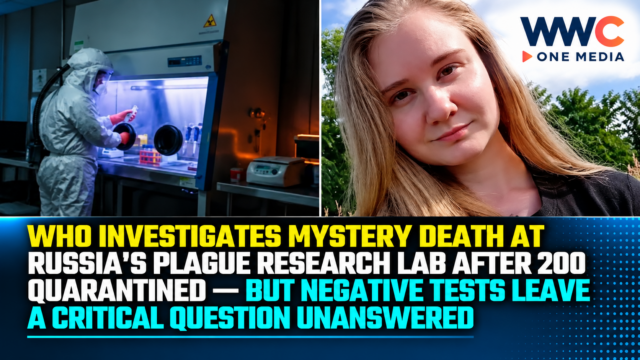
MOSCOW, RUSSIA — The unexplained death of a 28-year-old researcher at a Russian institute studying dangerous infectious diseases has triggered international concern, precautionary quarantines and demands for greater transparency. But as health authorities investigate the mysterious pneumonia that killed Darya Shipilova, scientists are drawing attention to another long-term danger beneath Siberia’s frozen ground: ancient microorganisms preserved in permafrost that could become exposed as the Arctic warms.
The sudden death of a young laboratory worker in Siberia has revived fears surrounding dangerous pathogens, biological research facilities and the possibility of future infectious disease emergencies.
Darya Shipilova, 28, worked at the Irkutsk Anti-Plague Research Institute, a facility in southeastern Siberia that studies serious infectious diseases, including plague, cholera and anthrax.
She died on October 2 after developing severe pneumonia of an unidentified cause.
Early reports suggested that Shipilova might have contracted pneumonic plague, a potentially fatal respiratory form of the disease caused by the bacterium Yersinia pestis.
However, Russian health authorities have denied that a plague infection has been confirmed.
The World Health Organization has also stated that the cause of her illness remains undetermined and that there is no verified evidence of an ongoing plague outbreak.
Despite those reassurances, the circumstances surrounding her death have raised questions about laboratory safety, public-health communication and international cooperation.
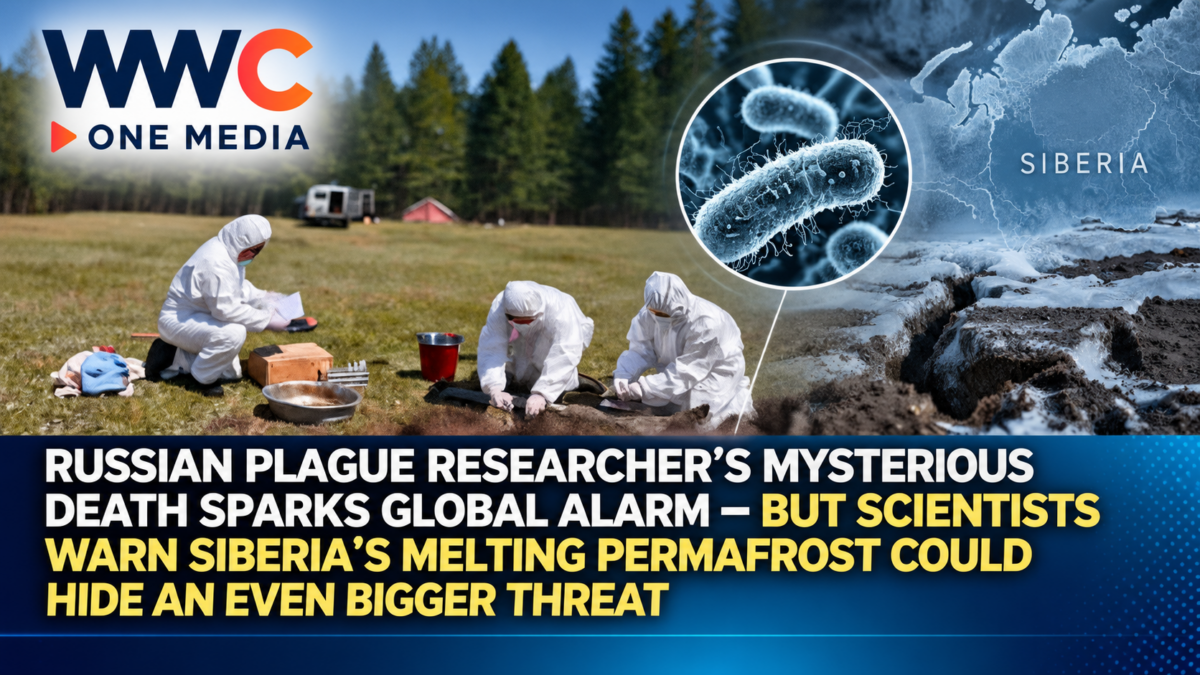
And beyond the immediate investigation, scientists have been warning about a separate environmental concern: the gradual thawing of Siberia’s permafrost, which can expose biological material preserved for thousands of years.
Russian Researcher Dies After Developing Unexplained Pneumonia
According to Reuters, Shipilova died on October 2 after a rapidly developing illness.
She worked at the Irkutsk Anti-Plague Research Institute, an institution established in 1934 to investigate infectious diseases and support disease surveillance.
Because the facility handles or studies dangerous pathogens, news of her death prompted speculation about possible occupational exposure.
Some initial media reports suggested that she may have contracted pneumonic plague following a laboratory incident.
Other unconfirmed accounts raised the possibility of exposure during fieldwork.
But neither explanation has been independently established.
Russia’s public-health regulator, Rospotrebnadzor, said investigators had not detected microorganisms connected to Shipilova’s work in her body.
Officials also reported no confirmed laboratory accident involving dangerous pathogens.
The actual cause of the fatal pneumonia remains unresolved.
That uncertainty makes continued investigation essential, but it does not justify describing the death as a confirmed plague infection or laboratory leak.
Nearly 200 Contacts Placed Under Precautionary Quarantine
Russian authorities responded by isolating and monitoring people who may have had contact with Shipilova.
Approximately 200 individuals were placed under precautionary quarantine or medical observation.
The measures included contacts associated with the research institute and healthcare facilities involved in the response.
Reuters reported on October 10 that Russian authorities had conducted thousands of diagnostic tests without detecting a plague case.
The Associated Press separately reported that more than 5,500 tests had been performed.
According to the available official information, none of the monitored contacts had developed symptoms establishing transmission of plague from Shipilova.
Russian authorities also disputed unverified reports suggesting that a second person had contracted the disease.
These findings are reassuring.
However, a negative result for a particular pathogen does not necessarily identify the organism or medical condition that caused the original illness.
The distinction matters because confirming the absence of one disease is not the same as resolving an unexplained death.
World Health Organization Says Cause of Death Remains Unknown
The World Health Organization has been monitoring the incident and requesting additional information from Russian authorities.
Its central concern is establishing an accurate clinical, laboratory and epidemiological account of what happened.
Early uncertainty surrounding the reporting prompted calls for more complete and timely information sharing.
WHO Director-General Tedros Adhanom Ghebreyesus emphasized the importance of transparency under the International Health Regulations.
These international rules establish obligations for countries to assess and report certain public-health threats.
The WHO has stated that the risk of a wider plague epidemic appears low based on the information available.
However, the organization continues to emphasize that the underlying cause of Shipilova’s pneumonia needs to be clarified.
As of October 10, Russian authorities had reported no registered plague cases associated with the incident.
The information does not establish that a new epidemic has begun.
What Is Pneumonic Plague, and Why Is It Feared?
Pneumonic plague is the most serious respiratory form of infection caused by Yersinia pestis, the bacterium responsible for historical plague epidemics.
The disease can develop when the bacterium infects the lungs.
It may spread between people through infectious respiratory droplets during close contact with an infected individual.
Symptoms can include fever, weakness, chest pain, coughing and rapidly developing respiratory illness.
Without prompt treatment, pneumonic plague can be fatal.
However, modern antibiotics are effective when treatment begins early.
The existence of effective treatment is an important difference between present-day plague risks and the devastating pandemics associated with earlier centuries.
Plague still occurs naturally in some animal populations and regions around the world.
But isolated suspected cases do not automatically indicate an epidemic.
In Shipilova’s case, laboratory confirmation of plague has not been reported, and Russian officials have stated that testing did not detect the pathogen.
Financial Times Warns Against Panic Over Laboratory Death
Additional analysis published by the Financial Times emphasized the importance of distinguishing legitimate concern from unsupported speculation.
The publication noted that Shipilova’s death has generated considerable attention because of the institute’s work and the experience of the COVID-19 pandemic.
However, the evidence available does not establish a laboratory release, deliberate wrongdoing or a new plague outbreak.
The Financial Times also emphasized that plague remains a known and generally treatable infectious disease when diagnosed and treated promptly.
Historical associations with the Black Death can make the word plague particularly alarming.
But the scientific assessment of modern disease threats depends on transmission, diagnosis, treatment availability and public-health conditions.
The immediate priority is therefore obtaining a reliable explanation for Shipilova’s death, rather than assuming the most frightening scenario.
CNA Commentary Highlights Another Threat Beneath Siberia
While the laboratory investigation has attracted international attention, a separate concern is emerging from the Siberian environment.
In an October 11 commentary published by Channel NewsAsia and originally written for Bloomberg Opinion, columnist Lara Williams argued that melting permafrost deserves greater attention as a potential biological hazard.
Permafrost is ground that remains frozen for at least two consecutive years.
In parts of Siberia and the broader Arctic, frozen soil has preserved organic matter, animal remains and microorganisms for extremely long periods.
As temperatures rise, previously frozen material can become exposed.
Scientists are studying whether thawing ground might release viable microorganisms, including some with the potential to affect animals or humans.
The concern is scientifically plausible, but the magnitude of the human disease risk remains uncertain.
Not every microorganism preserved in permafrost can infect humans, and finding ancient genetic material does not demonstrate that an infectious organism remains viable.
Scientists Have Revived Ancient Viruses From Frozen Soil
Research involving Arctic permafrost has demonstrated that some viruses can retain infectivity after remaining frozen for extraordinary periods.
Scientists have successfully revived certain ancient viruses from permafrost samples under controlled laboratory conditions.
Some of these viruses had been preserved for tens of thousands of years.
However, an important distinction is frequently overlooked.
The best-known revival experiments involved giant viruses that infect single-celled amoebas.
These experiments did not demonstrate that the recovered viruses could infect humans or cause a human pandemic.
The research nevertheless shows that freezing can preserve biological activity over long periods.
That finding supports further investigation into the environmental consequences of thawing permafrost.
Scientists are particularly interested in understanding the survival of microorganisms, the potential movement of pathogens into new environments and the conditions required for transmission.
The mere discovery of ancient microorganisms is not evidence that a new human infectious disease emergency is imminent.
Traces of Smallpox and Influenza Have Been Found in Preserved Remains
Scientists have also detected remnants of historic pathogens in frozen human remains.
Researchers identified smallpox-related viral DNA in centuries-old preserved material.
Genetic material associated with the 1918 influenza pandemic has also been recovered from historical remains preserved in frozen environments.
These findings have helped researchers study the biology and evolution of important infectious diseases.
However, detecting viral DNA or RNA is different from recovering a complete, infectious pathogen.
Genetic fragments may remain detectable even when the organism is no longer capable of causing disease.
That distinction is essential when discussing the possibility of ancient pathogens emerging from melting permafrost.
Historical microbial remains can provide valuable scientific information without necessarily representing an active threat.
The 2016 Siberian Anthrax Outbreak Shows Why Thawing Matters
One of the strongest real-world examples of disease risk associated with Arctic environmental change occurred in Siberia in 2016.
An anthrax outbreak in Russia’s Yamal region killed a 12-year-old boy and more than 2,300 reindeer.
The outbreak followed unusually warm weather that contributed to thawing conditions.
Scientists and public-health officials have discussed the possibility that warming exposed anthrax spores associated with infected animal remains.
Anthrax is caused by the bacterium Bacillus anthracis.
Unlike many microorganisms, its spores can survive for long periods under suitable environmental conditions.
The incident illustrates a credible pathway through which environmental change may affect disease exposure.
However, the exact chain of events in the outbreak remains a subject of scientific study, and it should not be assumed that every period of permafrost thaw will produce similar consequences.
The 2016 event demonstrates the importance of environmental surveillance, livestock vaccination and timely disease detection in vulnerable regions.
Arctic Warming Is Accelerating Permafrost Thaw
Climate change is increasing concern about frozen ecosystems across the Arctic.
Scientific research indicates that the Arctic has warmed substantially faster than the global average in recent decades, with some estimates approaching four times the global rate over particular periods.
This faster warming can affect permafrost stability, landscapes, infrastructure and ecosystems.
When frozen ground thaws, it can release stored carbon, alter water systems and expose previously buried organic material.
These changes are already creating engineering and environmental challenges for Arctic communities.
Roads, buildings and pipelines built on frozen ground may be affected by subsidence.
Changing ecosystems can also alter the movement of animals, water and microorganisms.
From a health perspective, researchers want to understand whether previously isolated pathogens or reservoirs could become more accessible to humans and wildlife.
The evidence supports continued monitoring.
It does not establish that melting permafrost is about to unleash an unknown pandemic.
Could Antibiotic-Resistant Bacteria Also Be Released?
Another area of scientific concern involves antibiotic resistance.
Researchers have identified genes associated with antimicrobial resistance in bacteria and environmental samples from permafrost.
Such genes can exist naturally, including in microorganisms from environments with little or no modern human activity.
Their presence is scientifically important because it reveals that some resistance mechanisms existed long before widespread clinical antibiotic use.
However, identifying resistance genes does not automatically mean those genes will transfer to dangerous human pathogens.
For a public-health threat to develop, several conditions would need to occur, including organism survival, exposure and potentially successful transmission.
Researchers are continuing to study these processes.
The broader lesson is that permafrost contains complex microbial communities whose behavior under changing environmental conditions is not yet fully understood.
Growing Industrial Activity Could Increase Exposure
Climate change is not the only factor shaping biological risks in Siberia.
Mining, energy development, infrastructure construction and increasing human activity in remote Arctic areas can disturb frozen soil.
As more people enter previously isolated locations, opportunities for contact with environmental microorganisms may increase.
Workers may also travel between remote industrial sites and more populated communities.
This creates a reason for stronger occupational safety practices, environmental monitoring and disease surveillance.
However, increased access to remote areas does not necessarily mean that dangerous pathogens will spread.
The level of risk depends on whether viable pathogens are present, whether exposure occurs and whether those organisms can infect or transmit between hosts.
Careful monitoring and transparent reporting can help identify genuine hazards without encouraging unnecessary alarm.
Russia’s Scientific Isolation Complicates International Research
CNA’s commentary also raises concerns about the geopolitical challenges affecting Arctic scientific research.
Russia contains extensive areas of the world’s permafrost.
Studying these environments requires access to remote locations, long-term environmental records and collaboration among scientific institutions.
International partnerships have become more difficult following Russia’s invasion of Ukraine.
Restrictions on cooperation, funding and information exchange can complicate research involving climate change, Arctic ecosystems and infectious disease surveillance.
This matters because environmental and health risks do not necessarily stop at national borders.
Scientists benefit from comparing findings across regions, sharing laboratory methods and maintaining access to reliable data.
Limited collaboration can create uncertainty about environmental changes taking place in difficult-to-monitor areas.
The concern is about gaps in scientific visibility, not proof that Russia is concealing an ancient-pathogen outbreak.
The United States Demands Greater Transparency
The unexplained laboratory death has also attracted attention from Washington.
US officials have sought additional information about the circumstances surrounding Shipilova’s illness.
President Donald Trump publicly expressed interest in discussing the incident with Russian President Vladimir Putin.
Secretary of State Marco Rubio also emphasized the need for reliable information.
According to international reporting, American officials raised concerns about the timeliness and completeness of Russia’s communication with health authorities.
Russian authorities maintain that they have conducted extensive testing and provided relevant information through appropriate channels.
The disagreement highlights how questions surrounding public-health transparency can become politically sensitive during periods of international tension.
Scientific investigation remains the appropriate basis for determining what caused the researcher’s death.
Could Ancient Siberian Pathogens Trigger Another Pandemic?
The possibility of ancient microorganisms emerging from permafrost has attracted significant media attention.
Sometimes these organisms are described sensationally as zombie viruses.
That language refers to microorganisms that may remain dormant or preserved for long periods before being studied or reactivated.
It does not mean they possess unusual intelligence, supernatural properties or an inherent ability to infect humans.
For a newly exposed pathogen to cause a widespread human outbreak, it would need to overcome numerous biological barriers.
It must remain viable, reach a susceptible host, cause infection and, for an epidemic, spread effectively.
Many microorganisms cannot satisfy those requirements.
Researchers therefore caution against treating every ancient microbial discovery as evidence of a future pandemic.
The real concern is uncertainty surrounding the environmental consequences of rapid warming.
That uncertainty justifies scientific study, preparedness and surveillance rather than claims that a catastrophic outbreak is inevitable.
What the Situation Means for Asia and the Philippines
Although the laboratory death occurred in Russia, the wider discussion carries lessons for governments across Asia.
Infectious diseases can cross national borders through human travel, trade and other forms of movement.
Countries therefore benefit from reliable disease surveillance, early reporting and cooperation with international health organizations.
For the Philippines, strong laboratory biosafety practices, public-health monitoring and transparent communication remain important components of preparedness.
Climate change can also influence disease risks through changing rainfall patterns, temperatures, ecosystems and human exposure.
However, there is no verified evidence that the Siberian laboratory incident has created a plague threat to the Philippines or Southeast Asia.
Nor has a new pandemic arising from thawing Russian permafrost been confirmed.
The appropriate response is informed vigilance, not public panic.
The Bigger Picture: Siberia’s Mystery Death Exposes Two Different Scientific Challenges
The death of Darya Shipilova has raised important questions about laboratory safety and disease investigation.
Russian authorities report that extensive testing has not identified plague or another high-threat pathogen responsible for the incident.
The World Health Organization continues to seek a clear explanation of the fatal pneumonia.
That is the immediate public-health issue.
Separately, scientists are examining how climate change could alter biological risks in the Arctic as previously frozen environments become exposed.
Research involving ancient viruses and the experience of the 2016 anthrax outbreak show why the subject deserves sustained attention.
But the scientific evidence does not support claims that a prehistoric human pathogen has already escaped into the population.
The challenge is to investigate genuine risks without confusing possibilities with confirmed events.
The unexplained death of a Russian plague researcher has placed Siberia under international scrutiny, even as health officials report no confirmed plague outbreak.
But a potentially larger long-term concern lies beneath the region’s thawing permafrost, where ancient biological material is being exposed by a rapidly warming climate.
The world does not know whether this process will produce a significant new human disease threat. What scientists do know is that better environmental monitoring, transparent disease reporting and international research are essential to understanding the risks before a genuine emergency develops.