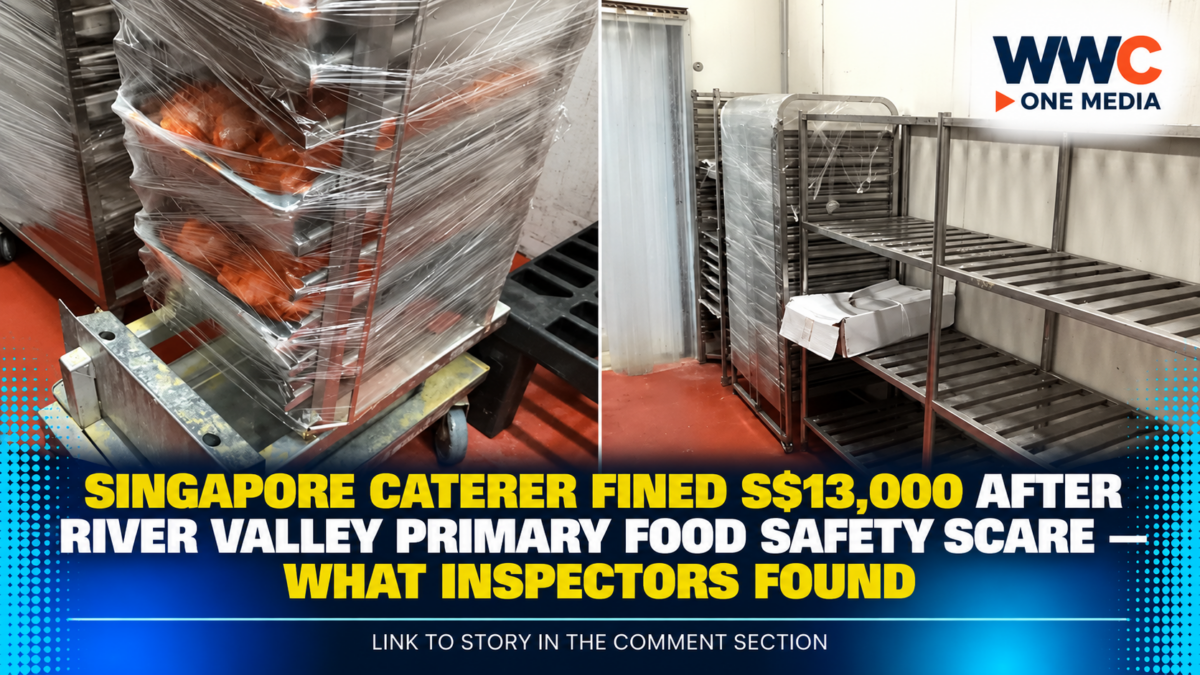
A Singapore school caterer has been fined S$13,000 after inspections uncovered multiple food-safety lapses following a gastroenteritis incident involving pupils at River Valley Primary School.
Gourmetz, which operated the school’s canteen under Singapore’s central kitchen meal model, pleaded guilty to three charges in the State Courts on October 9, 2026. Three additional charges were taken into consideration during sentencing.
The case follows reports of pupils falling ill in January after consuming school meals. The incident prompted scrutiny of food preparation, storage and hygiene practices at the caterer’s premises.
The fine brings a legal consequence for the company, while raising broader questions about the safeguards needed when one food operator supplies meals to school communities.
Dirty Equipment and Chiller Maintenance Problems Found
Joint inspections by the Singapore Food Agency (SFA) and the Communicable Diseases Agency (CDA) uncovered several shortcomings at Gourmetz’s premises at 1 Enterprise Road.
During an inspection on January 16, officers found a damaged rubber gasket on the meat chiller room door, a defect that could compromise the room’s temperature control and affect the meat stored inside.
A built-in rack in the seafood chiller room was also dirty, with accumulated scum. The ceiling of the vegetable chiller room had black spots.
Further inspection findings on January 28 included raw marinated chicken stored on dirty plastic pallets and frozen pastries left uncovered in a raw-material freezer.
These findings highlighted weaknesses in the maintenance of food-storage areas and the handling and protection of ingredients.
False Bento Labels Also Featured in the Case
Food storage was not the only concern.
Inspectors found that bento sets carried labels stating the meals were ready by 8.30am, although the food had actually been packed and was ready at about 6.48am.
Accurate food labelling and proper handling procedures are important in commercial catering, particularly when meals are prepared in advance and distributed to schools.
The case therefore involved not only the cleanliness of the premises but also the accuracy of information recorded on prepared meals.
How Many Pupils Were Affected?
The gastroenteritis incident occurred in January 2026, shortly after River Valley Primary School adopted the central kitchen meal model.
The Straits Times reported that authorities received reports affecting 45 pupils. CNA’s coverage of the case described 60 students as having fallen ill. The published accounts therefore differ on the number affected.
The incident led authorities to investigate, while the school and relevant agencies took steps to monitor pupils’ well-being and reinforce hygiene measures.
The reported illness should be distinguished from the individual food-safety offences addressed in court: the fine was imposed for the offences to which Gourmetz pleaded guilty, and the available reports do not establish that every inspection finding independently caused the outbreak.
Why the Case Matters for Singapore’s School Meal System
Under a central kitchen meal model, a single operator manages a school’s canteen food service rather than relying on multiple individual stallholders.
The arrangement can streamline meal provision, but it also places substantial responsibility on the operator to maintain consistent standards across food preparation, storage, labelling and delivery.
A lapse at a central kitchen can potentially affect many meals prepared for distribution. That makes equipment maintenance, temperature control, clean storage areas and reliable food-handling procedures especially important.
Following the case, the Ministry of Education said it had strengthened oversight of Gourmetz and reinforced food-safety requirements while keeping school meal arrangements running. The ministry has also said student safety and well-being remain priorities.
What Happens Next?
The S$13,000 fine marks the outcome of the charges dealt with on October 9. The wider issue is whether strengthened monitoring and compliance measures can help prevent similar incidents.
For parents, the case is a reminder of the importance of transparent communication when students become unwell after school meals. For schools and food operators, it underscores the need for consistent hygiene controls and prompt action when shortcomings are identified.
The Bottom Line
Gourmetz was fined S$13,000 after pleading guilty to three food-safety charges linked to lapses identified following a gastroenteritis incident at River Valley Primary School. Inspectors found problems involving chiller maintenance, dirty storage equipment, uncovered food and inaccurate bento labels. The case places renewed focus on how Singapore monitors food safety under its central kitchen meal model.
WWC ONE MEDIA G,A