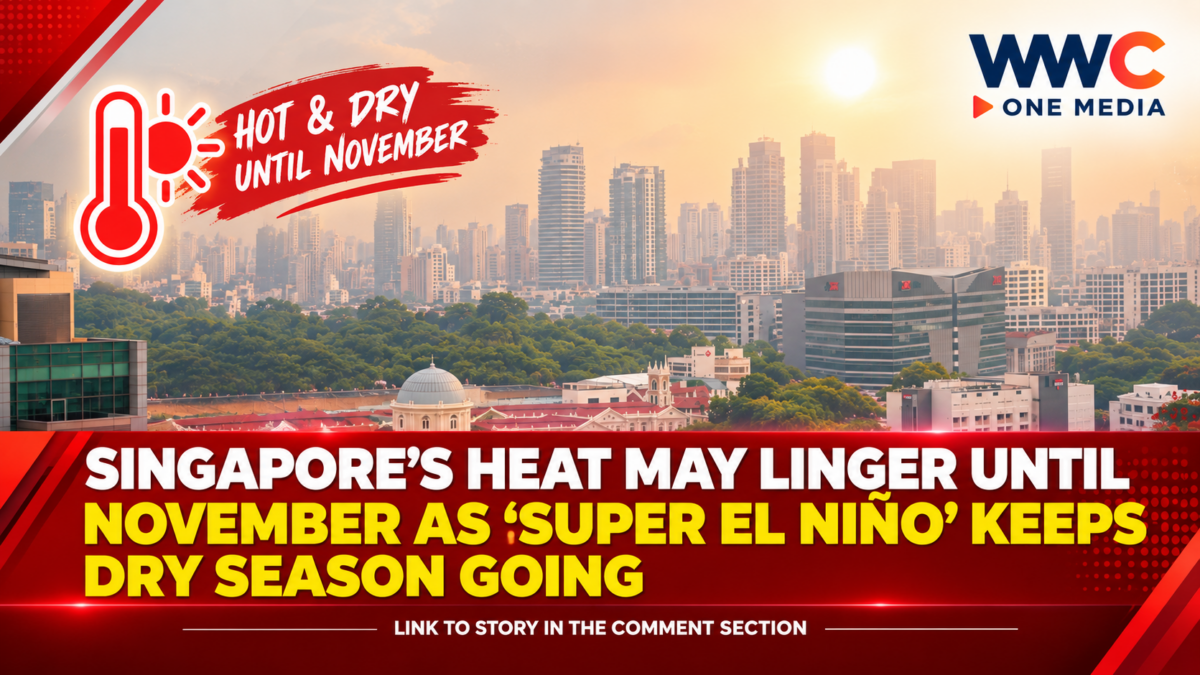
SINGAPORE — Singapore may have to wait until late October or early November for a meaningful break from the heat, as a strong El Niño event continues to delay the retreat of the region’s dry season.
The Meteorological Service Singapore (MSS) said the transition out of the dry conditions is now expected later than in the previous two years, with El Niño contributing to hotter, drier conditions across Singapore and parts of Southeast Asia.
The extended dry spell also comes with another concern: transboundary haze from fires in neighboring Indonesia.
Why Singapore’s Dry Season Is Lasting Longer
Singapore’s usual Southwest Monsoon dry season generally begins easing by September, while the wetter Northeast Monsoon typically develops around late November.
But strong El Niño events can delay that transition by reducing cloud cover and rainfall across the region.
MSS said the 2026 event has intensified the normally dry conditions experienced across equatorial Southeast Asia. Indonesia has also experienced severe wildfires, with winds carrying smoke toward Singapore and pushing air quality to unhealthy levels at times in September.
Earlier in the year, MSS had already warned that El Niño could make Singapore’s 2026 dry season more intense and potentially extend it into October.
October Could Still Feel Hot and Dry
The immediate outlook offers little sign of a quick change.
MSS said the first half of October is expected to be drier than the previous fortnight, with daily maximum temperatures generally reaching 34°C to 35°C and potentially exceeding 35°C on some days.
Some late-morning and afternoon thunderstorms are still expected, but rainfall overall is forecast to remain below average across most of the island during the first half of the month.
The combination of high temperatures, humidity and limited rainfall could keep heat discomfort elevated even when brief thunderstorms occur.
Haze Relief May Take Even Longer
While a shift toward wetter weather could eventually help, meteorologists say substantial relief from haze may not arrive until late December or early January, when stronger monsoon rains reach Indonesia and help suppress fires.
Weather expert Koh Tieh Yong said those rains should help contain and extinguish fires contributing to the haze.
However, another expert warned that the improvement could be weaker and shorter than normal because a strong El Niño can suppress rainfall and affect the timing and strength of monsoon conditions.
The Bigger Climate Picture
The effects of El Niño are not limited to a single month.
Historical MSS data show that strong El Niño events have been associated with lower rainfall and higher temperatures in Singapore during certain periods, including October and November.
The agency also noted that more recent El Niño events tend to occur against a warmer background climate, meaning temperatures can be higher than during comparable events decades ago.
Singapore had already been warned in May that El Niño and a possible positive Indian Ocean Dipole could produce a warmer, drier and more prolonged dry season, increasing the risk of transboundary haze.
For now, Singapore residents should expect more hot and relatively dry days through October, with the broader transition toward wetter conditions potentially taking until late October or early November.
And even when the rain finally arrives, forecasters caution that the relief may not last as long as usual.
WWC ONE MEDIA G,A