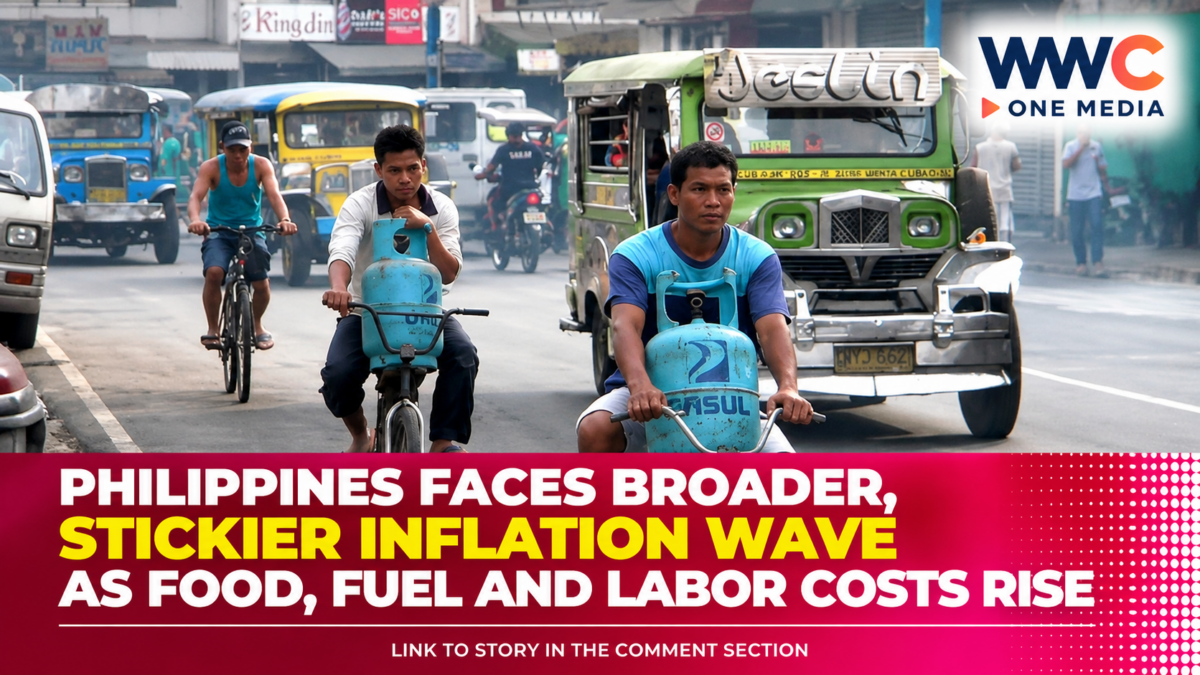
The Philippines could be heading into a second wave of inflation that is broader and more persistent than the fuel-driven price surge seen earlier this year, as food costs, transportation fares, wages and other expenses begin putting renewed pressure on consumers and businesses.
Bank of the Philippine Islands Lead Economist Emilio Neri Jr. said inflation could accelerate sharply in the coming months, with September potentially marking the beginning of a second inflation peak. He estimated that headline inflation may have climbed to 6.9 percent in September, which would end four consecutive months of easing and represent the fastest pace since April.
Inflation had reached 7.2 percent in April before gradually easing to 6.8 percent in May, 6.4 percent in June, 6.2 percent in July and 6.1 percent in August. The expected September rebound would therefore mark a significant reversal in the recent downward trend.
Neri said the latest increase differs from the earlier inflation episode because it is no longer being driven primarily by fuel. Food, labor costs and other domestic pressures are expected to contribute to the next phase, potentially making the increase more difficult to reverse.
Food prices were likely a major contributor in September after monsoon rains and flooding disrupted the supply and transportation of agricultural products. Vegetables, fruits and fish were among the commodities affected, while rice prices also remained elevated.
The weather-related disruptions came at a time when the country was already facing increased risks from extreme weather and the developing El Niño phenomenon. Interruptions to agricultural production and distribution can quickly translate into higher retail prices, particularly for perishable goods.
Transport costs also added pressure. Fuel prices initially provided some relief early in September, but successive increases during the second half of the month reversed part of that benefit as renewed tensions in the Middle East pushed international oil prices higher.
The impact of higher transportation fares could become more visible in the October inflation figures. Fare increases that took effect on September 28 are expected to filter through the economy as commuters and businesses adjust to higher transportation costs.
Wage increases could create another source of pressure. Unlike temporary movements in fuel prices, higher wages and transport fares are generally less likely to reverse quickly. As businesses face higher labor and operating expenses, some of those costs can eventually be reflected in the prices of goods and services.
This creates the possibility of broader second-round effects, in which an initial increase in transportation, wages or energy costs feeds into other parts of the economy. The result could be an inflation environment that takes longer to return to lower levels.
The central bank had already warned that September inflation could accelerate significantly. Its forecast placed the month’s inflation rate within a range of 6.4 percent to 7.4 percent, with the upper end representing the fastest pace in more than three years, or since March 2023 when inflation reached 7.6 percent.
The central bank also expects inflation to peak during the fourth quarter of 2026, with El Niño and base effects among the factors influencing the outlook. A stronger-than-expected weather shock could put additional pressure on food production, water resources and energy costs.
Several other risks could push inflation higher. These include volatile global oil prices caused by geopolitical tensions, a weaker peso that makes imported goods and energy more expensive, and possible adjustments in electricity rates.
The pending decision on the electricity rate reset is another factor being monitored. Any significant increase in utility costs could add to household expenses and raise operating costs for businesses.
The combination of food, transportation, wages, energy and imported-cost pressures could make the next phase of inflation different from the earlier fuel-led spike. Instead of being concentrated in a single major category, price pressures could become distributed across multiple parts of the economy.
The inflation outlook also has implications for monetary policy. Neri said renewed price pressures and peso weakness could strengthen the case for maintaining a restrictive policy stance as authorities seek to keep inflation expectations anchored.
The Monetary Board raised the policy rate to 5 percent in August, its third consecutive 25-basis-point increase. Further decisions will depend on incoming inflation data, economic activity, financial conditions and the balance of risks facing price stability.
Higher interest rates, however, can also affect households and businesses by increasing borrowing costs. This creates a policy challenge because authorities must balance efforts to contain inflation against the need to support economic activity at a time when growth is already facing supply-side constraints.
Neri also pointed to the importance of measures outside monetary policy, including faster infrastructure implementation, stronger agricultural productivity, improved energy security and structural reforms. These measures can help expand the economy’s productive capacity and reduce some of the supply constraints contributing to price pressures.
For consumers, the coming months could therefore bring continued pressure on essential expenses, particularly food, transportation, utilities and other services affected by higher operating costs.
The extent and duration of the inflation rebound will depend on how global oil prices, weather conditions, food supply, the peso, wages and domestic demand develop. But the latest projections point to a potentially more widespread inflation episode than the one experienced earlier in the year, with several sources of price pressure emerging at the same time.