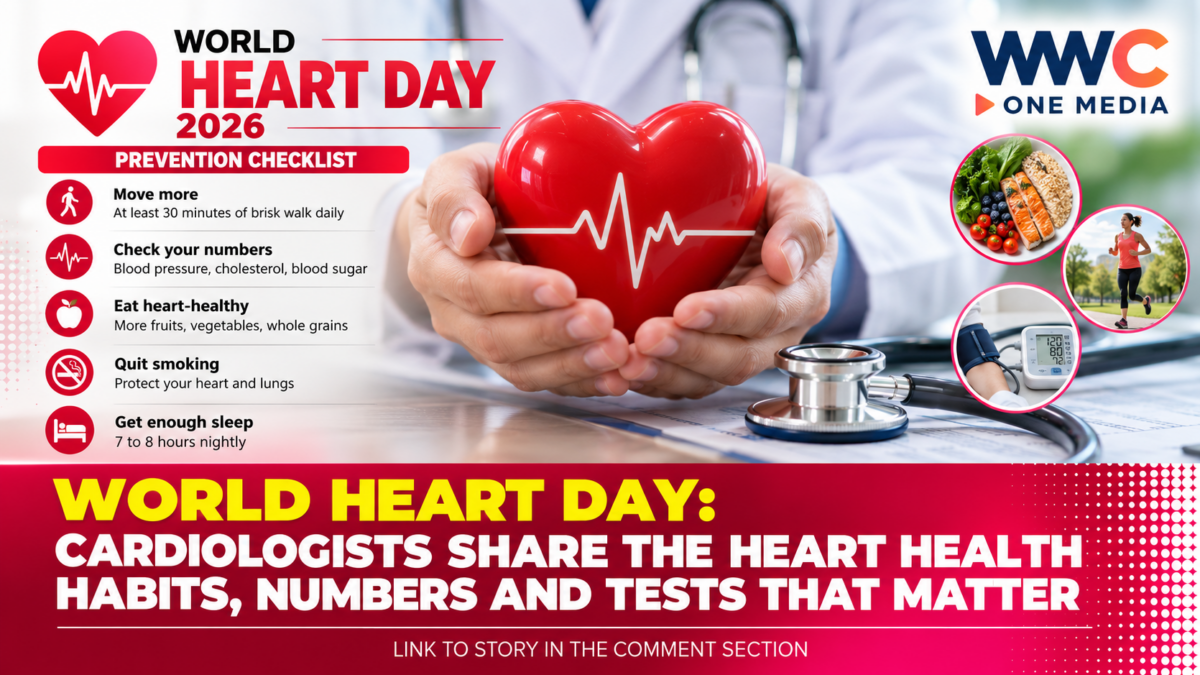
Heart health is not simply about reacting when symptoms appear. Two Bangkok cardiologists say prevention increasingly depends on understanding personal risk, maintaining sustainable habits and knowing which health information is actually useful enough to guide a medical decision.
Dr Suwanna Suwannaphong, a cardiologist specialising in preventive cardiology, keeps a close eye on her own health. She wears both a ring and a wristband around the clock, but despite having access to constant data, she puts exercise ahead of technology.
“Exercise comes first,” she says, with sleep and stress management also high on her list of priorities. Her approach reflects a broader shift in cardiovascular care, where sophisticated monitoring tools are increasingly available but basic prevention remains central.
The World Health Organization continues to identify physical inactivity, unhealthy diets, tobacco use and harmful alcohol consumption as major behavioural drivers of cardiovascular disease. High blood pressure, elevated blood glucose and unhealthy lipid levels are also important risk factors.
For exercise, consistency matters more than perfection. Current recommendations call for adults to complete 150 to 300 minutes of moderate-intensity aerobic activity each week, or 75 to 150 minutes of vigorous activity, along with muscle-strengthening exercises at least twice a week.
Suwanna takes a practical approach to missed workouts. She does not believe an occasional inactive day should become a reason to abandon a routine altogether. Even some physical activity is better than none, and maintaining a sustainable habit can be more useful than pursuing an unrealistic standard.
Sleep is another area where she draws a firmer line. The American Heart Association includes sleep among its Life’s Essential 8 measures of cardiovascular health and recommends that adults generally get seven to nine hours each night. More recent guidance also highlights sleep regularity, timing, quality and satisfaction rather than focusing only on duration.
Stress management is also part of the equation. Suwanna describes having a personal rule against allowing other people to dictate her stress response, highlighting how emotional well-being can form part of a broader preventive-health strategy.
Dental care may also deserve more attention than many people realise. Periodontal disease has been increasingly linked with atherosclerotic cardiovascular disease, including heart attack and stroke. However, current evidence does not establish that gum disease directly causes cardiovascular disease or that treating periodontal disease prevents cardiac events. Shared risk factors may help explain part of the association.
Wearable technology can provide another source of information. Smartwatches, rings and other devices can monitor activity, sleep, heart rate and other measurements continuously. But Suwanna advises looking at longer-term trends rather than becoming overly concerned about every daily fluctuation.
Heart-rate variability is one example. Different devices may calculate the measurement differently, meaning a single number can be difficult to interpret in isolation. Looking at patterns over time and considering a person’s medical history can provide more meaningful context.
There are also situations where a device should not be relied upon. Palpitations or an irregular heartbeat should be assessed by a doctor even if a wearable does not issue an alert. Some devices can screen for atrial fibrillation, but an alert is not itself a diagnosis and still requires proper clinical evaluation.
The same principle applies to medical testing. Advances in cardiovascular medicine have created new ways to assess risk, including genetic testing, proteomics-based research and additional blood markers. Lipoprotein(a), ApoB and coronary artery calcium scoring can provide useful information in selected circumstances when the results can help clarify risk or guide treatment.
But more testing does not automatically mean better healthcare. Suwanna says one of the most important questions to ask before pursuing an additional test is whether its result will actually change what doctors or patients do next.
Testing without a clear purpose can create additional information, follow-up appointments and anxiety without necessarily improving the decision being made. The doctors therefore favour tests supported by evidence and linked to an actionable medical question.
Dr Polakit Teekakirikul, a cardiologist and medical geneticist, takes a similar targeted approach to genetic testing. He says genetic information can be particularly useful when a person’s medical or family history suggests an inherited heart condition, including certain cardiomyopathies and rhythm disorders.
Genetic testing, however, is not designed to predict every future cardiovascular event. Instead, when used in the appropriate setting, it can help doctors understand why a particular heart condition may occur within a family and identify relatives who could potentially be at risk.
Family history itself can be an important starting point. Rather than simply saying that heart disease runs in the family, people should know who was affected, what condition they had and how old they were when it developed.
A parent or sibling who experienced a heart attack at a relatively young age can provide very different information from a distant relative who developed cardiovascular disease much later. A history of unexplained sudden death, cardiomyopathy or inherited rhythm disorders may also prompt more specialised assessment.
The doctors’ broader message is that preventive cardiology is not about collecting every available health metric. It is about identifying information that can lead to meaningful action.
Wearable data may reveal a persistent change worth discussing. Family history may indicate that certain risk factors should be assessed earlier. A specialised test may help clarify a treatment decision. At the same time, familiar measures such as regular exercise, adequate sleep, properly measured blood pressure and appropriate treatment remain fundamental.
As technology continues to expand the amount of information available about cardiovascular risk, the challenge may increasingly be deciding which information deserves attention. For Suwanna and Polakit, the most useful health data are ultimately those that help people and their doctors understand risk and determine what should happen nex