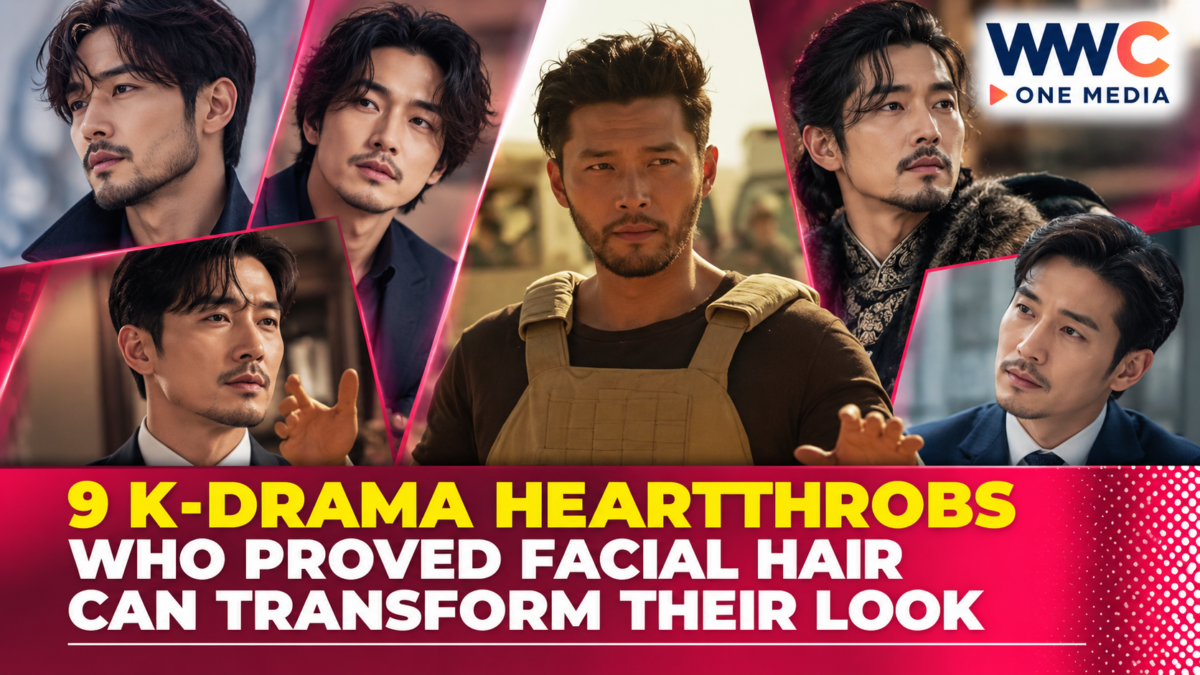
K-drama leading men are often associated with immaculate skin, perfectly styled hair and clean-shaven faces. But every so often, a little stubble, a moustache or a full beard completely changes the equation.
Instead of taking away from their polished appearance, facial hair can give familiar heartthrobs a more rugged, mature or mysterious edge. From historical warriors and aristocrats to spies, gangsters and action heroes, these actors have shown just how dramatically grooming can change a character’s presence.
Hyun Bin is one of the clearest examples. Known for his famously polished appearance, the actor took on a much rougher look as NIS agent Park Dae-sik in the 2023 action film The Point Men.
With a full beard, moustache and slicked-back hair, Hyun Bin looked noticeably different from the immaculate Captain Ri character that made him a household name in Crash Landing on You. The facial hair helped communicate the character’s demanding life and gave the actor a more weathered appearance.
Lee Byung-hun went in a different direction in The Good, the Bad, the Weird. His character Park Chang-yi, a ruthless hitman known as The Bad, wore a thin moustache and chin stubble that complemented the film’s Western-inspired setting.
Combined with long hair, dark clothing and an intimidating expression, the relatively subtle facial hair helped create a character who felt far removed from the polished romantic leads often associated with Korean entertainment.
Kim Nam-gil’s Bidam in Queen Seondeok offered another memorable example. The actor’s dark stubble suited the historical character, whose unpredictable personality and complicated journey made him one of the drama’s standout figures.
Rather than functioning simply as a beauty choice, the facial hair helped reinforce Bidam’s rougher characterisation as he navigated the political and military conflicts of the Silla court.
Jang Hyuk has also embraced rugged facial hair in historical roles. In The Slave Hunters, his character Dae-gil is a former nobleman who becomes a slave hunter, spending much of his life on the road. The scruffy styling fits naturally with the character’s harsh circumstances.
He later adopted a similarly weathered appearance in My Country: The New Age, where he portrayed Yi Bang-won during the turbulent period surrounding the founding of Joseon. In both productions, the facial hair feels integrated into the character rather than simply added for visual effect.
Byun Yo-han took the historical look in a more refined direction in Mr Sunshine. As Kim Hui-seong, a wealthy Joseon aristocrat, he appeared with carefully groomed facial hair that complemented the character’s sophisticated wardrobe.
The moustache and beard did not necessarily make him appear tougher. Instead, they enhanced the aristocratic quality of the character, whose humour and elegance concealed a more complicated personality.
Ji Chang-wook’s facial hair in The Scandal takes the transformation even further. His character Jo Won is a Joseon nobleman known for his romantic exploits, and the Netflix series uses different stages of facial hair as part of his character development.
Rather than maintaining the consistently clean-cut appearance associated with many modern romantic leads, the production gives Jo Won varying amounts of facial hair, including a small goatee. The changes help distinguish different sides of the character throughout the story.
Lee Dong-wook also demonstrated how facial hair can alter an actor’s image in The Fugitive of Joseon. Playing Choi Won, a royal physician who becomes a fugitive, he appeared with a sculpted moustache and goatee.
The period styling gave his usually polished appearance a more authoritative quality while remaining distinctly elegant. His facial hair becomes part of the historical setting rather than overwhelming the character.
Lee Je-hoon underwent one of the more dramatic transformations on the list for Anarchist from Colony. Playing Korean independence activist Park Yeol, the actor appeared with longer hair, tanned skin and facial hair that made him look significantly different from his usual screen image.
The transformation was designed to make the character feel more raw and lived-in. Facial hair played an important role in changing not only his appearance but also the perceived age and energy of the character.
Then there is So Ji-sub in Mercy for None. As former gangster Nam Gi-jun, he wears stubble rather than a full beard, matching the series’ dark and hard-boiled atmosphere.
The character’s appearance is deliberately far removed from the polished romantic-hero image. Combined with dark clothing and the physical toll of the story, the stubble reinforces the impression of a man who has spent years outside an ordinary, comfortable life.
Across these nine performances, the common thread is not simply that facial hair can make a K-drama heartthrob look different. It shows how small changes in grooming can help communicate a character’s age, background, personality and circumstances.
For actors accustomed to appearing impeccably groomed, even a moustache or several days of stubble can create an entirely new screen presence. In historical dramas, the look can establish period authenticity; in action and noir stories, it can suggest a harder life; and in romantic roles, it can add another dimension to an otherwise familiar face.
The clean-shaven K-drama hero may remain a classic, but these performances prove that sometimes the most memorable transformation begins when the razor is simply put away.