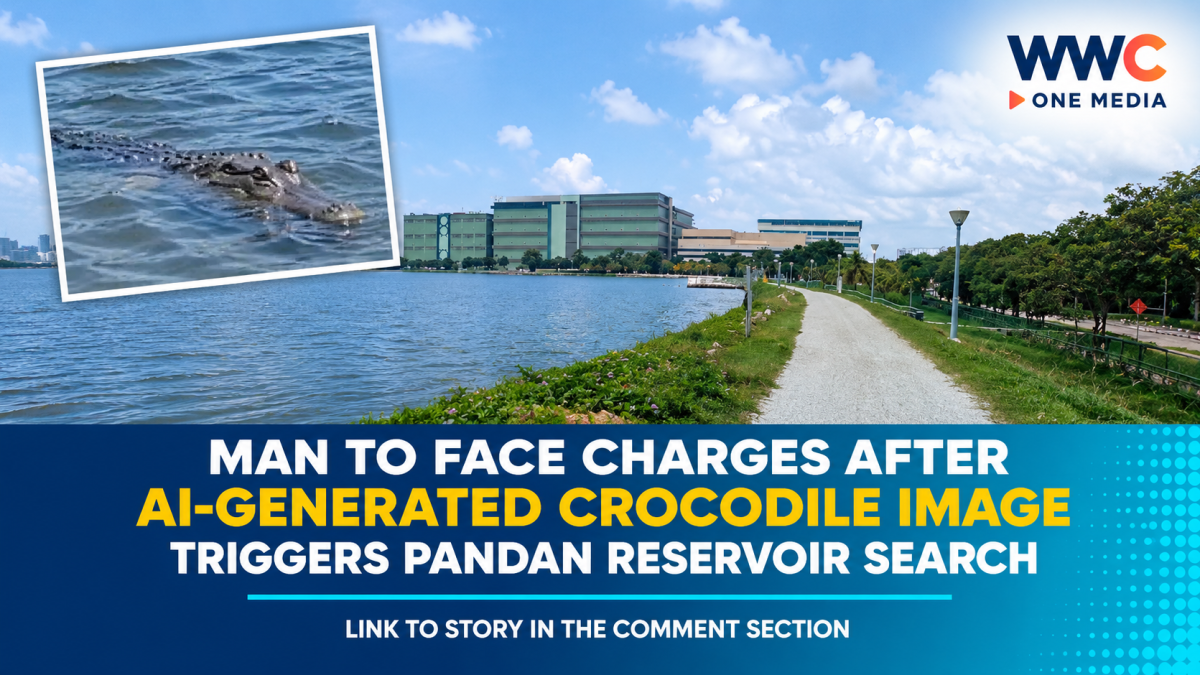
A 30-year-old man is set to be charged in Singapore after an AI-generated image falsely showing a crocodile at Pandan Reservoir triggered a search operation and the temporary suspension of water activities at the site.
The man is due to appear in court on Sept. 29 and will face charges of communicating a false message and obstructing the course of justice.
The incident began on Aug. 20, when Singapore’s national water agency received information about an alleged crocodile sighting at Pandan Reservoir. Authorities subsequently advised members of the public to exercise caution, while resources were deployed to search for and capture the reptile. Water activities at the reservoir were also suspended for two days.
The photograph provided in connection with the reported sighting was later found to be fake. The water agency filed a police report on Aug. 21 after verifying that the image was not genuine.
Police said preliminary investigations found that the man had created the crocodile image using artificial intelligence and sent it to a colleague. He allegedly deleted both the image and the application used to create it in an attempt to conceal what he had done.
The case highlights the growing difficulty authorities face in dealing with fabricated digital material that can appear convincing enough to trigger real-world responses.
The false report did not simply circulate online. It resulted in government agencies deploying personnel and resources to investigate a potential crocodile threat, while water-based activities were temporarily halted as authorities assessed the situation.
If convicted of communicating a false message, the man could face up to three years in jail, a fine of up to S$10,000, or both. The charge of obstructing the course of justice carries a maximum jail term of seven years, a fine, or both.
Authorities have warned the public against submitting fabricated or manipulated information to government agencies while presenting it as authentic. Police also urged people not to circulate false information or edited images that could cause unnecessary alarm.
The incident is particularly notable because crocodile sightings in Singapore are not unheard of. Estuarine crocodiles have previously been spotted in Singapore waters, including around Sentosa, meaning authorities had reason to treat the reported Pandan Reservoir sighting seriously before the photograph was verified as fake.
The case also illustrates how AI-generated content can move beyond online misinformation and create consequences in the physical world. A fabricated image can prompt emergency assessments, public warnings and the deployment of government resources before investigators establish whether the underlying claim is genuine.
The man has not been convicted of the charges and the allegations will be dealt with through the court process.
As the case proceeds, the charges could become an important test of how Singapore’s laws are applied when AI-generated material is used to communicate false information and trigger a real-world official response.