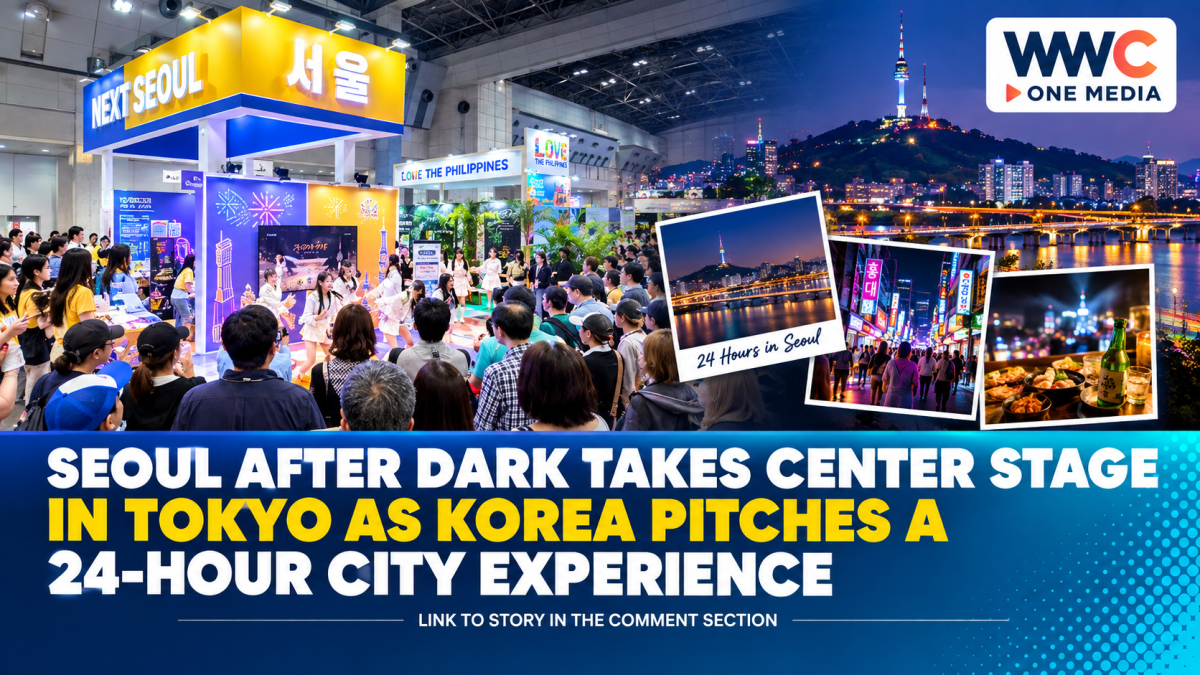
Seoul is turning up the lights — and taking its nighttime tourism ambitions to Japan.
At Tourism EXPO Japan 2026 in Tokyo, the Seoul Tourism Organization placed the capital’s after-dark attractions at the center of its campaign to attract more Japanese travelers, promoting Seoul as a destination where the experience continues long after sunset.
Held at Tokyo Big Sight from Sept. 24 to 27, the tourism expo attracted roughly 130,000 visitors. Seoul operated a dedicated Visit Seoul pavilion under the theme “Day and Night in Seoul for All Ages,” highlighting late-night entertainment, public transportation and the city’s nighttime tourism infrastructure.
The campaign comes as Seoul seeks to strengthen its position as a destination that can offer visitors more than traditional daytime sightseeing.
Seoul Wants Travelers to Stay After Sunset
The pavilion showcased the city’s mix of late-night experiences, from illuminated shopping districts and evening entertainment to food and cultural activities.
Interactive programs allowed visitors to select favorite daytime and nighttime attractions, while the booth also promoted Seoul’s transportation network and the Discover Seoul Pass, which is celebrating its 10th anniversary this year.
Nine Korean tourism companies joined the Seoul pavilion, representing sectors including luxury hotels, duty-free shopping, performing arts and yacht tourism.
During the expo’s business sessions, representatives held more than 140 one-on-one meetings with Japanese travel agencies and industry buyers to explore potential new tour packages. The public-facing booth subsequently attracted approximately 3,200 visitors over the weekend.
Why Japan Matters to Seoul’s Tourism Strategy
Japan remains a major market for Korean tourism, with interest supported by the popularity of Korean entertainment, food and culture.
The Seoul campaign therefore goes beyond promoting individual attractions. It is presenting the city as an experience that can continue throughout the day and into the night.
That message also fits Seoul’s broader nighttime-economy strategy.
Earlier this year, the Seoul Metropolitan Government announced plans to expand nighttime cultural, tourism and commercial activities, including late-opening museums, food markets, nighttime performances and attractions around major landmarks.
The city has identified Dongdaemun Design Plaza, Mount Namsan, Gwanghwamun and the Han River as four major nighttime landmarks, with the goal of encouraging visitors to spend more time exploring Seoul after dark.
A Bigger Push for Seoul’s Nighttime Economy
The strategy is also tied to tourism spending.
According to earlier Seoul government figures reported by The Korea Times, 8.23 million foreign tourists visited Seoul during the first half of 2026, a 21.3 percent increase from the same period a year earlier. Foreign visitors’ credit-card spending in the capital reached 5.6 trillion won, up 56.8 percent.
Seoul’s government has set an objective of generating an additional 5 trillion won in annual nighttime consumption while pursuing a longer-term goal of attracting 30 million tourists within five years.
The push is already visible at Dongdaemun Design Plaza, where the city is developing nighttime programming combining light shows, performances, dining and shopping to encourage visitors to explore the surrounding commercial district.
From K-Pop to Midnight Seoul
For Japanese visitors, Seoul’s appeal is already closely connected with Korean pop culture, television dramas and food.
The latest tourism campaign adds another dimension: the city itself after dark.
Rather than treating nighttime as the end of a sightseeing day, Seoul is increasingly presenting the evening as another part of the itinerary — one filled with food, shopping, culture, entertainment and illuminated cityscapes.
The Tokyo expo campaign shows that Seoul is taking that message directly to one of its most important overseas tourism markets.
And as the city expands its nighttime economy at home, the next question is how far Seoul’s “24-hour destination” vision can take its tourism boom.
WWC ONE MEDIA G,A