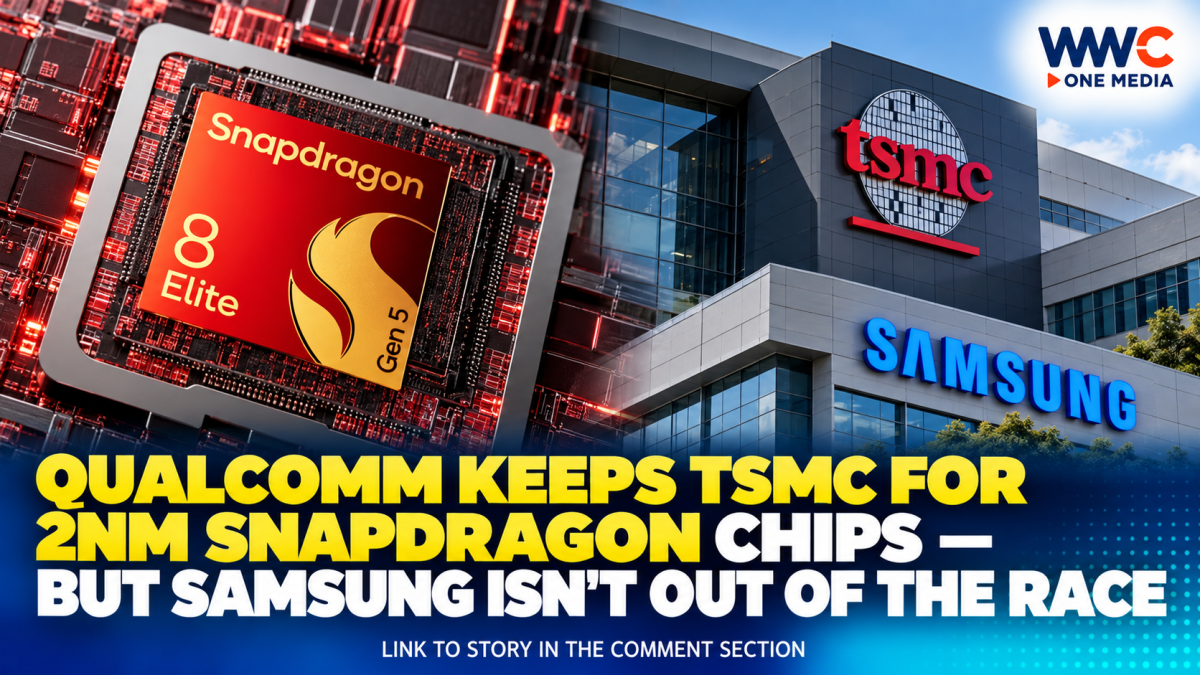
Qualcomm has put the brakes on speculation that Samsung Foundry will immediately join TSMC in manufacturing its newest 2-nanometre Snapdragon processors, but the South Korean chipmaker could still have a role in Qualcomm’s future advanced-chip strategy.
At the Snapdragon Summit 2026 in Maui, Qualcomm confirmed that all of its newly announced 2nm Snapdragon products are currently manufactured by Taiwan Semiconductor Manufacturing Co. (TSMC). That includes the Snapdragon 8 Elite Gen 6 and Snapdragon 8 Elite Extreme Gen 6, Qualcomm’s latest flagship mobile platforms.
The clarification comes days after reports suggested Qualcomm was negotiating with Samsung Electronics to potentially split production of next-generation Snapdragon chips between Samsung Foundry and TSMC. The original reports pointed to Qualcomm seeking a second manufacturing source as advanced semiconductor capacity remains tightly contested.
Samsung Still Has a Door Open
While Samsung did not win production of Qualcomm’s newly announced 2nm flagship chips, Qualcomm has not ruled out working with Samsung Foundry on future advanced processes.
Chris Patrick, Qualcomm’s senior vice president and general manager of mobile handsets, said the company values its partnerships with both Samsung Foundry and TSMC and indicated that strong semiconductor technology could create opportunities for future cooperation.
That leaves Samsung in the picture as it continues expanding its 2nm foundry technology and pursuing major customers for advanced-node manufacturing.
Why TSMC Matters
TSMC currently remains Qualcomm’s manufacturing partner for the newly launched 2nm Snapdragon flagship platforms. Qualcomm’s decision comes as demand for advanced semiconductor manufacturing capacity continues to rise, particularly as AI-related chip demand puts pressure on leading-edge foundries.
For Qualcomm, maintaining access to multiple foundry partners could eventually provide greater flexibility in managing production capacity, costs and supply-chain risks.
Samsung and Qualcomm also have a history of working together. Samsung previously manufactured Qualcomm’s Snapdragon 8 Gen 1 using its 4nm process before Qualcomm shifted subsequent flagship production toward TSMC. The two companies have since continued to maintain broader technology partnerships.
The 2nm Chip Battle Is Getting Bigger
The dispute over who manufactures Qualcomm’s most advanced processors reflects a much larger contest in the global semiconductor industry.
TSMC remains a dominant force in leading-edge chip manufacturing, while Samsung Foundry is pushing its 2nm technology to attract major customers. Qualcomm, meanwhile, has an incentive to maintain relationships with multiple capable foundries as demand for cutting-edge processors grows.
For now, TSMC has secured production of Qualcomm’s newly announced 2nm Snapdragon flagship chips.
But Samsung’s opportunity may not be over.
Qualcomm’s latest comments suggest that if Samsung can demonstrate the technology, capacity and commercial conditions Qualcomm requires, future Snapdragon generations could still bring the two companies back together at the leading edge of chip manufacturing.
WWC ONE MEDIA