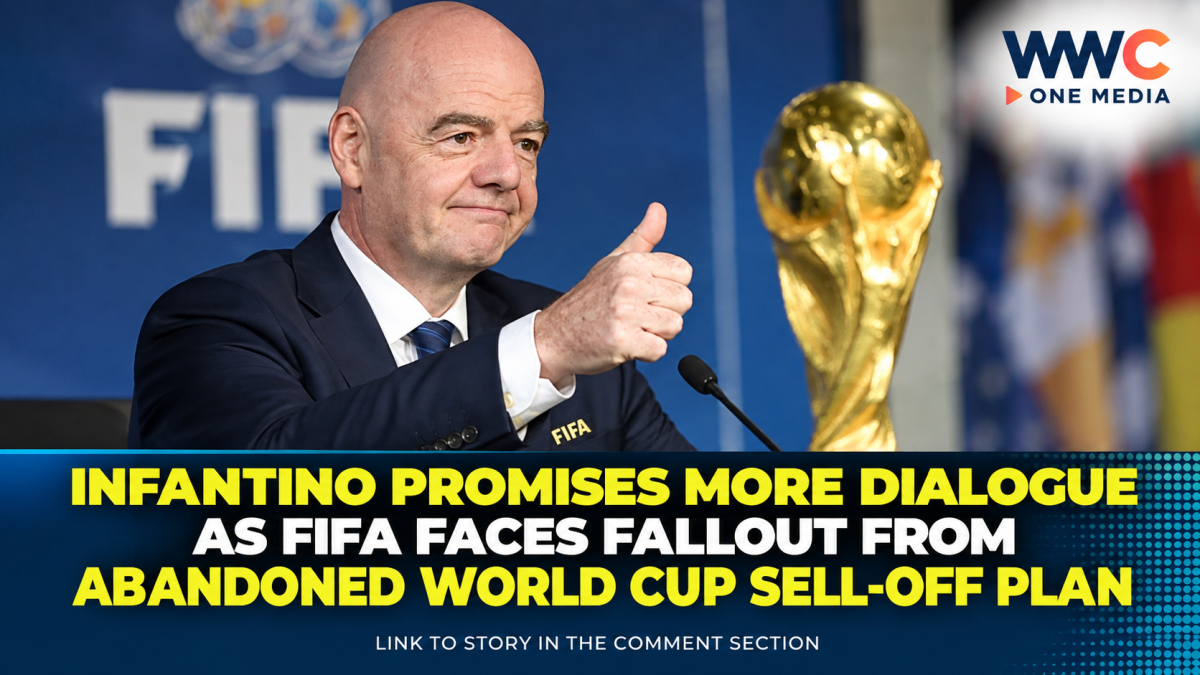
FIFA president Gianni Infantino has pledged to promote greater dialogue and openness within football’s global governing body after intense opposition to a controversial plan to sell a stake in the commercial rights connected to future World Cups.
Infantino said FIFA must develop a “culture of dialogue” in which officials listen to and respect one another. He said the proposed changes were about improving the organisation rather than generating favourable publicity.
The comments come two months after FIFA abandoned a proposed commercial structure that would have allowed outside investors to acquire minority stakes in a new subsidiary overseeing major competitions. The plan, known as FIFA Forward Enterprise, was designed to raise as much as US$4.2 billion, with FIFA retaining majority ownership.
The proposal triggered resistance from several major football bodies, including UEFA, CONCACAF and the Asian Football Confederation. Critics objected to the way the plan had been developed and communicated, while concerns were also raised about the long-term implications of giving private investors an interest in FIFA’s commercial operations.
FIFA had offered its 211 member associations one-off payments of US$20 million as part of the proposed arrangement. Opposing confederations argued that FIFA could instead distribute money from its substantial financial reserves without creating the proposed investment structure.
The backlash intensified in July, when senior FIFA figures publicly questioned the proposal and FIFA ultimately dropped the plan. The dispute exposed divisions between Infantino’s administration and football officials who wanted greater consultation over major strategic decisions.
Infantino has now proposed an independent external review of FIFA’s governance framework. The FIFA Council is expected to consider the proposal at its Oct. 15 meeting in Zurich, with consultations involving the organisation’s 211 member associations and six continental confederations also under discussion.
However, the scope of that review remains an important issue. Some FIFA Council members want the abandoned World Cup commercial plan and a separate dispute involving United States striker Folarin Balogun to be included. Infantino’s current proposal focuses more broadly on FIFA’s governance and decision-making processes rather than specifically committing to investigate those two controversies.
The governance dispute also comes as FIFA prepares for another presidential election. The next vote is scheduled for March 18, 2027, in Morocco, with the deadline for submitting candidacies approaching in November.
For FIFA, the controversy has moved beyond the fate of a single commercial proposal. The upcoming governance review and October council meeting will provide a clearer indication of how the organisation intends to handle major financial and strategic decisions in the future — and whether the promised culture of dialogue will translate into concrete changes in how FIFA operates.