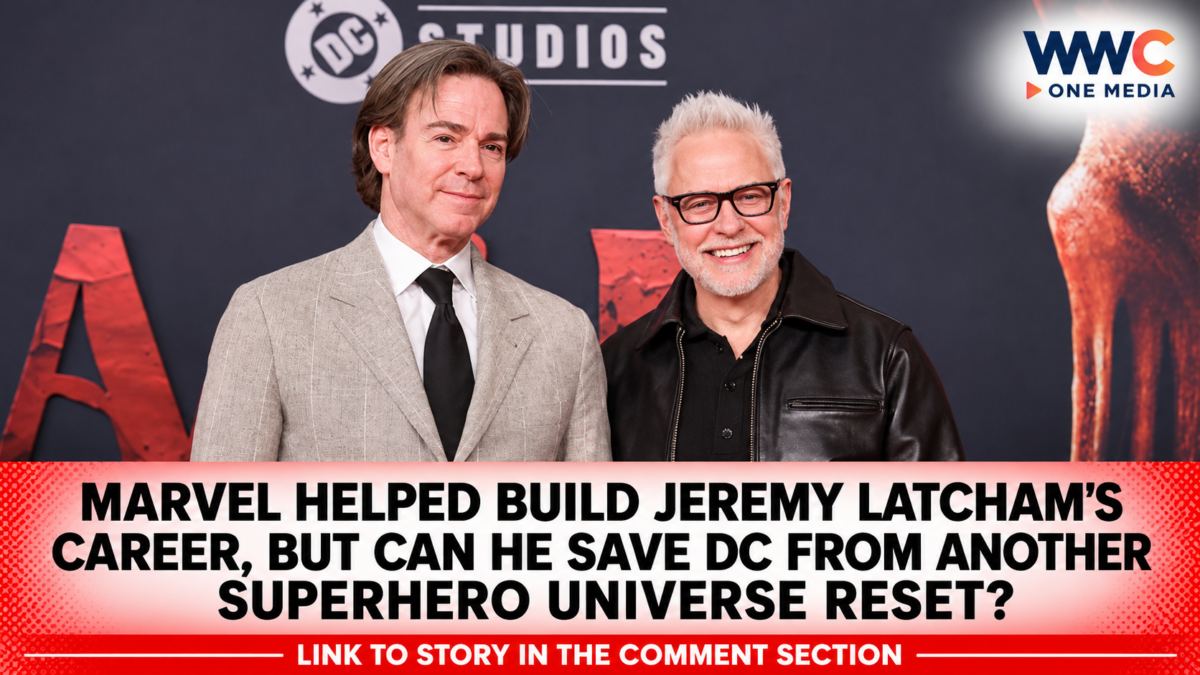
DC Studios is heading into another major leadership transition, with James Gunn and Peter Safran stepping away from their roles as co-chief executives and Marvel veteran Jeremy Latcham appointed to lead the studio’s next chapter.
The change, announced by Skydance on November 9, 2026, marks a significant shift for the company responsible for Superman, Batman and some of the world’s most recognizable comic-book characters. Latcham will become president and chief creative officer of DC Studios on December 1, overseeing its film, television and animation operations. Skydance+2
Gunn and Safran are not leaving filmmaking. Instead, they will return to full-time creative work after four years leading DC Studios, with Gunn continuing to work on the next Superman story, Man of Tomorrow.
The appointment puts a familiar name from Marvel’s cinematic universe in charge of DC’s creative pipeline. Latcham worked on major Marvel productions including Iron Man, The Avengers, Guardians of the Galaxy and Spider-Man: Homecoming.
For DC fans, the immediate question is whether the leadership change will preserve the direction Gunn and Safran established—or signal another major reset for the superhero franchise.
Skydance Confirms December 1 Leadership Change
In its announcement, Skydance said Gunn and Safran would transition out of their leadership positions after four years overseeing DC Studios.
The company credited the pair with establishing a new creative direction and rebuilding the studio’s slate.
Skydance chairman and chief executive David Ellison, alongside co-CEO Ynon Kreiz, said the company was grateful for their contributions and expected a collaborative handover.
Latcham will report to Dana Goldberg and Josh Greenstein, co-chairs of Skydance Motion Picture Group. His responsibilities will include DC’s creative development, production, talent and strategy across movies, television and animation. Skydance+1
The announcement comes shortly after Skydance completed its acquisition of Warner Bros. Discovery, placing DC Studios within a newly consolidated entertainment group that also includes major film, television and streaming businesses.
The leadership decision is therefore more than an ordinary executive appointment. It is one of the first major creative changes under the new corporate structure.
Who Is Jeremy Latcham, the New Head of DC Studios?
Latcham is not a newcomer to superhero filmmaking. He joined Marvel Studios in 2004 and became part of the team that helped establish the Marvel Cinematic Universe during its formative years.
His credits include:
- Iron Man — associate producer
- Iron Man 2 — co-producer
- The Avengers — executive producer
- Guardians of the Galaxy — executive producer
- Avengers: Age of Ultron — executive producer
- Spider-Man: Homecoming — executive producer
He worked closely with Marvel president Kevin Feige during the development of the studio’s early cinematic universe.
Latcham left Marvel in 2017 to establish Latcham Pictures. Since then, he has produced projects including Bad Times at the El Royale and Dungeons & Dragons: Honor Among Thieves.
His experience is particularly relevant because he has worked on both individual superhero films and interconnected franchises involving multiple characters and storylines.
That background could become important as DC attempts to build a consistent identity across its theatrical releases, television productions and animated projects. Skydance+1
Why James Gunn and Peter Safran Are Stepping Away
Gunn and Safran took charge of DC Studios in 2022, with the mission of bringing the company’s fragmented superhero properties under a more unified creative direction.
Gunn brought experience as a filmmaker and comic-book storyteller, having directed Marvel’s Guardians of the Galaxy films and DC’s The Suicide Squad.
Safran, meanwhile, had extensive experience as a producer, including work on major horror and superhero productions.
Their leadership marked a new phase for DC following years of changing creative plans, inconsistent franchise direction and uncertainty surrounding its cinematic universe.
The pair developed a slate that combined established characters with less familiar stories, aiming to make DC’s films and television productions feel connected without limiting every project to the same genre or tone.
In their departure statement, Gunn and Safran said they were proud of the work completed during their four-year tenure and looked forward to returning to the creative work that originally brought them into the industry.
They also emphasized their longstanding professional relationship with Latcham, dating back to their time working within Marvel’s filmmaking circle. Skydance+1
Their exit from executive leadership does not mean their creative contributions will disappear immediately. Several projects developed under their direction are already in production or moving toward release.
Superman’s Success Helped Define the Gunn-Safran Era
One of the most important projects from their leadership was Gunn’s Superman, which earned approximately $618.7 million worldwide, according to figures reported by the Associated Press.
The film introduced a new cinematic interpretation of Clark Kent and helped establish the tone of the DC universe under Gunn and Safran.
It also demonstrated Gunn’s preference for combining superhero action with humor, emotional storytelling and a broader collection of supporting characters.
However, the studio’s results have not been uniformly successful.
The performance of individual releases has varied, and the financial expectations surrounding major superhero productions remain substantial.
That mixed commercial picture is part of the context surrounding the leadership transition. The new management team will inherit a franchise with recognizable successes, ongoing projects and considerable pressure to deliver consistent results. AP News+2
What Happens to Man of Tomorrow and The Batman Part II?
One of the biggest concerns for DC fans is whether the leadership change will affect projects already in development.
The immediate answer is that several major productions are continuing through the transition.
Man of Tomorrow, written and directed by Gunn, is scheduled to arrive in theaters on July 9, 2027. The film continues the story of Clark Kent and Lex Luthor, with Gunn and Safran serving as producers.
The project is particularly significant because it represents a continuation of the Superman storyline that helped define the pair’s tenure.
Another major production is The Batman Part II, starring Robert Pattinson. The film is also moving forward, with Gunn and Safran attached as producers.
The existence of these projects means their creative influence will remain visible even after they leave the studio’s top executive positions. Skydance+2
For audiences, the more important question may be what happens after these projects are completed. Latcham will have to decide how much of the existing creative roadmap should remain intact and where the studio needs a different approach.
DC’s Television and Animation Plans Are Also in Transition
The leadership change extends beyond theatrical films.
During their time at DC Studios, Gunn and Safran oversaw projects including Peacemaker and Creature Commandos, while also serving as executive producers on Lanterns.
Another announced project is The People v. Gorilla Grodd, an eight-episode HBO Max series featuring Skyler Gisondo as Jimmy Olsen and Jimmy Tatro as Gorilla Grodd. The series has completed filming and is expected in 2027, according to Skydance’s announcement.
Latcham’s appointment gives him responsibility for the broader DC storytelling operation, including animation and television.
That is a substantial assignment. DC has to manage different audiences, formats and production schedules while ensuring its characters remain recognizable across multiple platforms.
The studio’s ability to coordinate these projects could become one of the most important tests of the new leadership. Skydance
A Marvel Veteran Now Has to Compete With Marvel
The appointment carries an obvious irony: a former senior Marvel executive is now responsible for one of Marvel’s biggest competitors.
Latcham helped build the Marvel Cinematic Universe during a period when the studio established a formula for connecting individual superhero films into a larger entertainment franchise.
The Avengers films demonstrated how separate characters and storylines could converge into major theatrical events.
DC has a different history and a different collection of characters, including Superman, Batman, Wonder Woman and the wider Justice League.
Its challenge is not simply to copy Marvel’s approach. It must build a sustainable identity that gives filmmakers creative room while maintaining audience interest across its shared universe.
Latcham’s experience may help with franchise planning, production coordination and the development of large-scale comic-book adaptations.
But his Marvel background does not guarantee success. DC’s characters, audiences and creative history require decisions that fit the brand rather than simply reproducing another studio’s formula.
Skydance’s Takeover Adds Another Layer of Uncertainty
The appointment comes as Skydance reshapes the larger Warner Bros. entertainment business following its acquisition of Warner Bros. Discovery.
The combined company now oversees major entertainment brands and operations, creating opportunities to consolidate resources while also raising questions about creative independence and corporate priorities.
WWC ONE MEDIA previously examined the financial implications in Skydance Targets $6 Billion in Annual Cost Cuts After Warner Bros. Takeover as AI and Layoffs Loom.
That broader restructuring matters because DC Studios operates within a much larger corporate organization. Its creative plans must coexist with the financial expectations, management decisions and strategic priorities of the new parent company.
The leadership appointment also follows the selection of Ynon Kreiz as co-CEO of the combined business. WWC ONE MEDIA previously covered that development in David Ellison Taps Mattel CEO Ynon Kreiz as Co-CEO for Paramount-Warner Bros. Megamerger.
The merger itself was another major turning point for the industry. Read WWC ONE MEDIA’s coverage: Paramount-Warner Merger Cleared by Judge, Deal Set to Close Next Week.
The wider consolidation could also affect how projects are financed and distributed. As explored in Private Money Is Flooding Into Hollywood — But It Could Change Which Movies Get Made Next, changes in the number of major studio buyers may influence the opportunities available to independent filmmakers.
These developments do not establish that Skydance’s cost-cutting plans directly caused Gunn and Safran’s departure. The company has publicly described the change as a leadership transition, and no official statement has attributed it to a specific financial dispute.
Nevertheless, the timing places DC’s creative future within a period of significant corporate change.
Can Jeremy Latcham Restore Confidence in DC’s Future?
Latcham inherits a valuable collection of characters and a slate of projects that already have significant audience attention.
But the job involves more than selecting which superhero appears in the next movie.
He will need to oversee the creative pipeline, coordinate production, attract filmmakers and talent, and determine how DC’s film, television and animation projects fit together.
He must also maintain the confidence of longtime fans who have experienced multiple changes in the franchise’s direction.
One challenge will be balancing continuity with creative flexibility. Abruptly abandoning established plans could frustrate audiences, while refusing to adjust underperforming strategies could limit the studio’s ability to grow.
Another challenge is commercial performance. Big-budget superhero productions require substantial investment, and audiences have become more selective about which films they choose to watch in theaters.
The industry is also facing competition from streaming services, video games and other forms of entertainment.
Latcham’s experience at Marvel gives him a strong background in franchise production. Whether that experience translates into a successful new era for DC will depend on the decisions he makes after taking office.
What Gunn and Safran Do Next Could Be Just as Important
Although their executive roles are ending, Gunn and Safran are expected to remain involved in creative work, including the next chapter of Superman’s story.
That creates an unusual transition: the executives who helped establish DC’s current direction will continue contributing to projects while another executive takes control of the studio’s broader creative operation.
Their future relationship with Latcham could influence how smoothly the change unfolds.
Skydance has described the transition as collaborative, but the long-term division of creative responsibilities will become clearer as the new leadership structure takes effect.
For fans, the immediate priority is whether upcoming releases maintain the quality and consistency they expect.
For filmmakers, the question is whether DC will continue supporting distinctive projects or move toward a more centralized approach.
And for Skydance, the challenge is turning one of entertainment’s most valuable superhero brands into a sustainable creative and commercial operation.
DC Studios Enters a New Era, but the Biggest Decisions Are Still Ahead
Jeremy Latcham officially takes over on December 1, 2026, ending Gunn and Safran’s four-year run as DC Studios co-chief executives.
His Marvel background gives him experience with some of the most successful superhero productions of the modern era. But leading DC will require more than relying on lessons from the Marvel Cinematic Universe.
The studio has projects already moving forward, including Man of Tomorrow, The Batman Part II and several television productions. Those releases will carry the influence of the outgoing leadership even as Latcham begins shaping what comes next.
The transition could provide DC with an opportunity to strengthen its franchise strategy under Skydance’s new ownership. It could also create uncertainty for fans who want the current creative direction to continue.
One thing is clear: the future of Superman, Batman and the wider DC universe is entering another defining moment.
Will Jeremy Latcham use his Marvel experience to build DC’s most successful era yet—or will another Hollywood leadership shake-up leave fans questioning the future of their favorite superheroes?