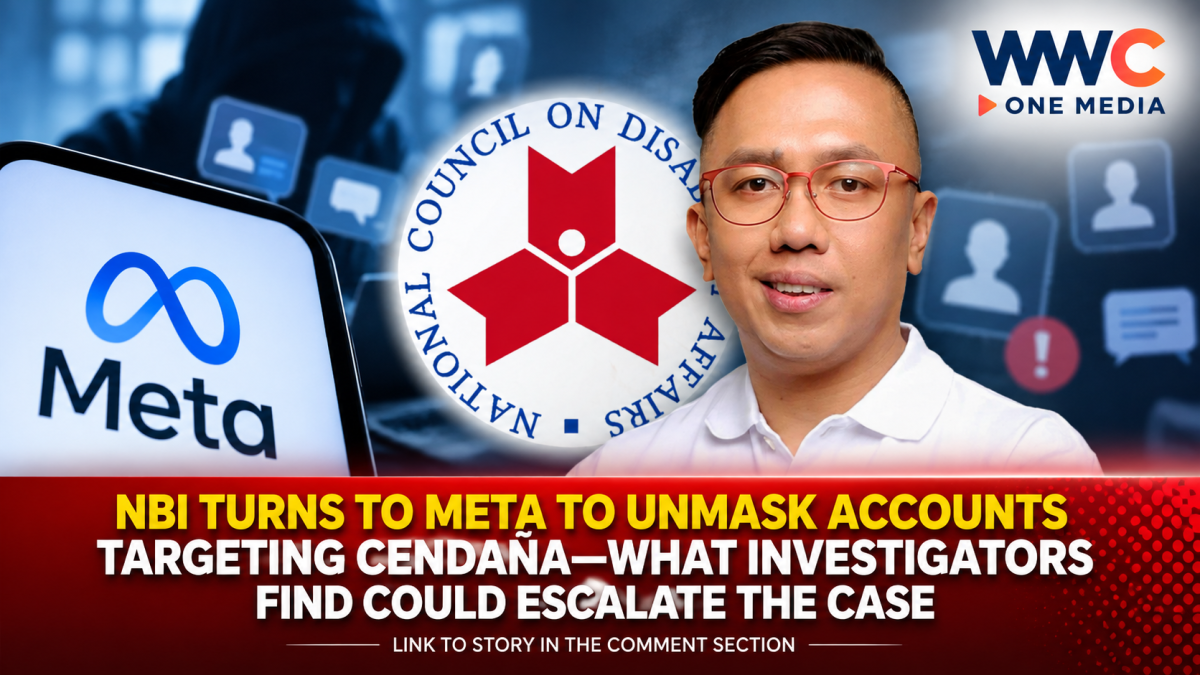
MANILA, Philippines — The National Bureau of Investigation (NBI) is coordinating with Meta to help identify the individuals behind around 30 social-media accounts accused of posting mocking, discriminatory and allegedly demeaning content targeting Akbayan Party-list Rep. Percival Cendaña.
NBI Director Melvin Matibag said the bureau’s Cybercrime Division is already acting on the complaint filed by Cendaña and will seek information from Meta that could help establish the identities behind the accounts.
“We are asking Meta for the identification. We already have a direct line with Meta for that purpose,” Matibag said, according to reports.
The NBI’s move comes after Cendaña filed a complaint on September 15 over what he described as sustained online harassment involving his disability, physical appearance and sexual orientation. Reports said around 30 accounts were included in the complaint, with accounts attributed to online personalities including Cho Moreno, MP Miko Pogay and Kiffy Chu among those identified by the lawmaker.
Cendaña: Complaint Goes Beyond His Personal Experience
Cendaña, a stroke survivor, has repeatedly said that he is open to legitimate criticism and political scrutiny but objects to attacks that use his medical condition or disability as material for ridicule.
When he brought the matter to the NBI, Cendaña emphasized that the issue was not solely about him.
He said the broader concern was the treatment of persons with disabilities in digital spaces and whether social-media platforms were being used to normalize bullying, humiliation and discrimination against PWDs.
Radyo Pilipinas reported that Cendaña asked investigators to identify those behind the accounts, examine possible violations and help preserve digital evidence related to the alleged online harassment.
Why Meta’s Role Matters
The NBI’s coordination with Meta could become an important part of the investigation because investigators are seeking to connect social-media accounts with the people operating them.
According to Daily Tribune, Matibag said the NBI has a direct line with Meta for such requests. He also said Meta had committed to assisting the bureau with documents following discussions between NBI officials and the technology company during a visit to Singapore.
The development does not, however, mean that the individuals behind the accounts have already been identified or found liable. The NBI is still conducting an investigation, and any criminal or administrative liability would have to be established through the appropriate legal process.
Possible Laws Cited in the Complaint
Cendaña’s complaint cited provisions of the Magna Carta for Persons with Disabilities, or Republic Act No. 7277, as amended.
RA 9442, which amended the Magna Carta, specifically prohibits public ridicule and vilification of persons with disabilities. The law defines public ridicule to include making fun of, mocking or contemptuously imitating persons with disabilities because of their impairment.
The complaint also cited the Safe Spaces Act (Republic Act No. 11313), particularly provisions concerning gender-based online sexual harassment. The law covers certain forms of online conduct, including unwanted sexual remarks and comments, threats, cyberstalking and other specified acts that cause or are likely to cause mental, emotional or psychological distress.
Whether particular posts or accounts actually constitute violations of these laws is a matter for investigators and, where applicable, prosecutors and the courts to determine based on the evidence.
The Controversy Has Been Building for Weeks
The NBI complaint follows a series of controversies involving online content directed at Cendaña.
In August, the National Council on Disability Affairs (NCDA) condemned an online caricature depicting Cendaña in what the agency described as a demeaning and offensive manner. The NCDA said the material exploited and ridiculed his physical appearance and disability and stressed that the issue involved the dignity of persons with disabilities more broadly.
Cendaña had also previously warned that attacks involving his appearance and medical condition had become increasingly personal. In an August 20 report, Interaksyon cited his statement that legitimate public scrutiny was different from attacks that allegedly used his medical condition to humiliate or ridicule him.
A Wider Debate Over Online Accountability
The case places renewed attention on a difficult question in the Philippine digital landscape: where does political criticism end and unlawful harassment or discrimination begin?
Public officials are subject to criticism, satire and political disagreement. At the same time, Philippine law contains specific protections concerning discrimination and ridicule directed at persons with disabilities, as well as gender-based sexual harassment in online spaces.
Cendaña has maintained that criticism of his political positions is part of public life. His complaint instead focuses on content that he says crosses into harassment, humiliation and discrimination.
Meanwhile, at least one person identified in reports as among those named in the complaint, vlogger Cho Moreno, has disputed the characterization of the complaint. UNTV reported that Moreno described it as politically motivated and said he intended to address any complaint through the legal process. These are his claims and have not been established as findings by the NBI.
For now, investigators are still gathering information.
The next stage could depend on what digital evidence is obtained from the platforms involved—and whether investigators can establish who actually operated the accounts and whether the reported posts meet the legal elements of any offense.
The NBI’s coordination with Meta could therefore become a key turning point in a case that has grown from a dispute over online posts into a broader debate over disability rights, political criticism and accountability on social media.