
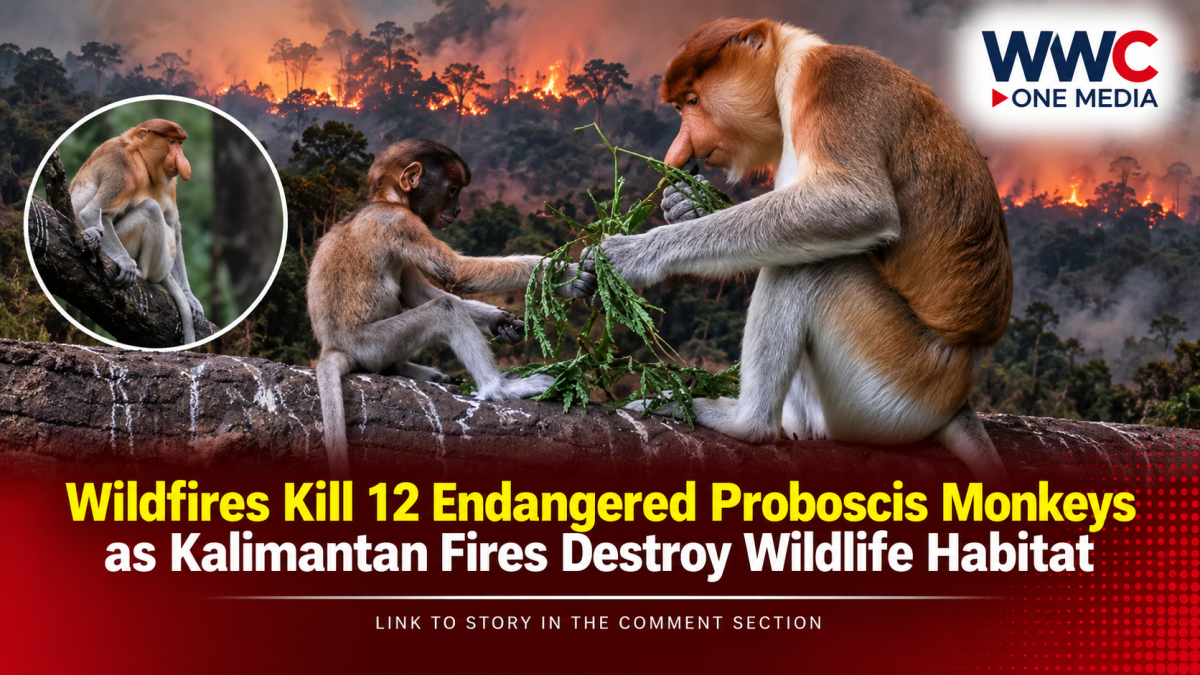
SOUTH KALIMANTAN, Indonesia — At least 12 endangered proboscis monkeys have died in wildfires sweeping parts of Kalimantan, adding to growing concerns over the impact of the fires on some of Borneo’s most threatened wildlife.
The dead animals were discovered on September 14 in Balimau village, Kalumpang district, South Kalimantan, after firefighters had extinguished a wildfire in the area. Authorities also reported finding other wildlife casualties, including a python and a king cobra.
The losses are particularly concerning because the proboscis monkey (Nasalis larvatus) is classified as Endangered and is found only on the island of Borneo.
Fires Leave Wildlife With Fewer Places to Escape
Wildfires can be especially damaging to wildlife in Kalimantan because they destroy the forests and wetland habitats animals depend on for food, shelter and movement.
According to reports, conservation authorities are assessing the affected habitat and considering whether surviving animals may need to be relocated if their environment is no longer suitable.
The latest deaths also highlight a broader conservation challenge: wildlife can remain at risk even after flames have been extinguished because fires can leave animals without adequate food or safe habitat.
Orangutans Also Among the Victims
The damage is not limited to proboscis monkeys.
Reports from Kalimantan say critically endangered orangutans have also been affected by the fires, with some suffering respiratory infections and burn injuries. Conservation groups and authorities have been working to rescue and treat affected animals while monitoring their habitats.
Food shortages are another concern because vegetation and other resources can be destroyed across burned areas.
Why Proboscis Monkeys Are So Vulnerable
Proboscis monkeys are strongly associated with riverine forests, mangroves and other wetland habitats across Borneo. Their habitat has already been affected by activities including forest clearing and other forms of land-use change.
Previous conservation research has identified forest fires as an important threat in some proboscis-monkey habitats in Kalimantan, particularly when fires damage riverside forests that provide food and sleeping sites.
That means the latest deaths are not simply an isolated wildlife incident. They come against a backdrop of long-term habitat pressure on an already threatened species.
Fires Raise Wider Environmental Concerns
The Kalimantan fires are also contributing to broader environmental problems, including habitat destruction and haze.
Wildfire smoke can affect both wildlife and people, while the loss of vegetation can make it more difficult for ecosystems to recover.
For conservation authorities, the immediate priority is identifying surviving animals, treating those that are injured or sick and determining whether damaged habitats can continue to support wildlife.
A Warning for Borneo’s Wildlife
The deaths of the 12 proboscis monkeys provide a stark reminder of how quickly a wildfire can turn a wildlife habitat into a dangerous landscape.
With orangutans and other species also facing the consequences, conservation efforts now extend beyond putting out the fires. Authorities must also assess whether remaining habitat can sustain displaced wildlife and how damaged ecosystems can recover.
For Kalimantan’s endangered animals, the flames may have been extinguished — but the struggle for survival is far from over.
WWC ONE MEDIA G.A




Leave a Reply