
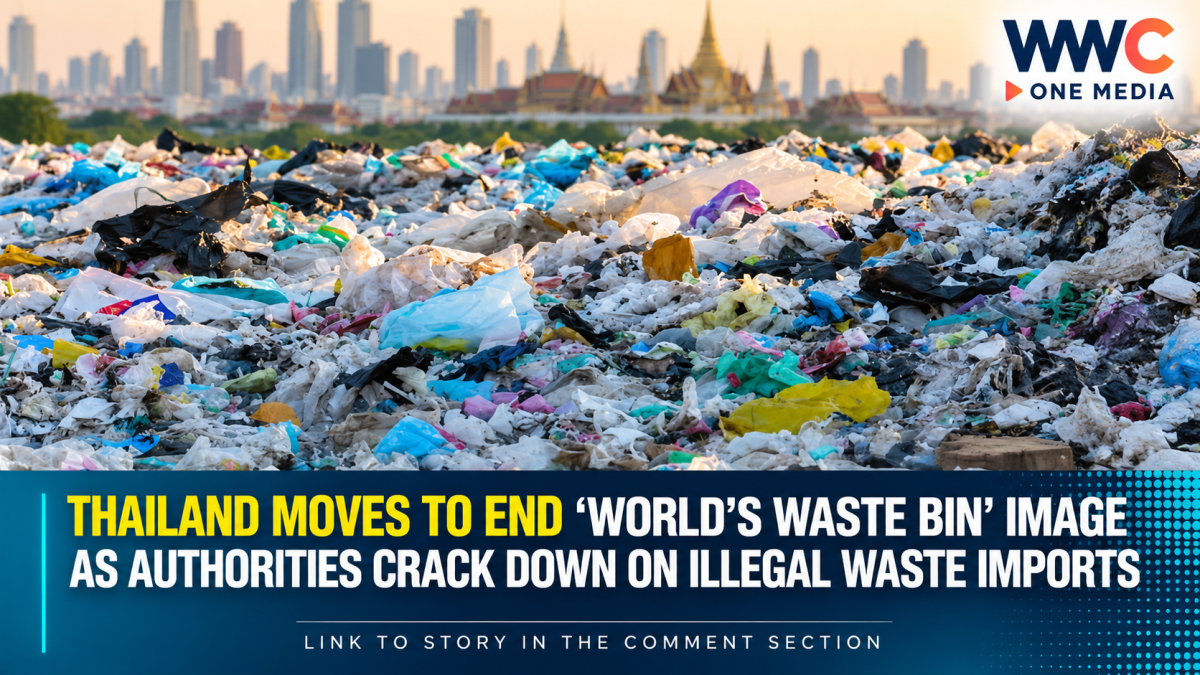
Thailand is stepping up its crackdown on illegal waste operations as the government seeks to end the country’s reputation as a dumping ground for rubbish from around the world.
Natural Resources and Environment Minister Suchart Chomklin has ordered tougher action against illegal waste-disposal networks, with authorities targeting facilities suspected of illegally storing, processing and disposing of imported waste.
The campaign reflects a broader effort to prevent Thailand from becoming a destination for waste that other countries are unwilling or unable to handle.
Thailand has faced growing environmental concerns since China tightened restrictions on foreign waste, prompting waste exporters to look for alternative destinations across Southeast Asia.
The country subsequently became a target for shipments of plastic waste and other materials, creating pressure on authorities to strengthen enforcement and close loopholes that allowed foreign waste to enter the country.
Thailand introduced a full ban on plastic-waste imports from Jan 1, 2025, in an effort to curb pollution and reduce the environmental damage associated with poorly managed waste.
But officials now face the more difficult task of ensuring that illegal operators cannot exploit the system.
Authorities are increasingly focusing on factories and warehouses that operate outside approved waste-management rules, particularly businesses suspected of accepting imported waste and disposing of materials improperly.
Illegal waste facilities can create serious environmental and public-health risks.
Plastic and electronic waste may contain hazardous chemicals and heavy metals. When such materials are burned, buried or processed without adequate safeguards, pollutants can enter the air, soil and water.
Communities living near illegal recycling and disposal sites can therefore face risks that extend far beyond unpleasant smells or piles of rubbish.
The government’s latest campaign is also aimed at changing Thailand’s international image.
For years, environmental groups have warned that Southeast Asian countries could become the world’s waste-processing centres after China restricted imports of foreign waste.
Thailand’s comparatively large manufacturing sector and established recycling industry made it an attractive destination for waste-related businesses.
But authorities have increasingly argued that Thailand should develop a circular economy based on domestic waste reduction, recycling and responsible resource use rather than relying on imported waste.
The challenge is that legitimate recycling businesses also depend on access to waste materials.
Government enforcement therefore needs to distinguish between companies operating legally and facilities using recycling as a cover for illegal dumping.
Authorities are expected to increase inspections and examine the movement of waste from ports to factories and disposal facilities.
Businesses found violating environmental and industrial regulations could face legal action, while officials are also under pressure to prevent illegal operators from exploiting weaknesses in the inspection and licensing system.
Thailand’s waste problem is not limited to foreign imports.
The country produces millions of tonnes of domestic waste every year, while plastic consumption and inadequate waste separation continue to place pressure on landfills and recycling systems.
That means stopping imported waste alone will not solve the country’s environmental challenges.
Thailand will also need to improve domestic recycling capacity, strengthen waste separation, increase enforcement and encourage businesses to reduce unnecessary packaging and single-use materials.
The government’s latest crackdown nevertheless sends a clear message to waste traders: Thailand does not want to become a convenient destination for waste generated elsewhere.
The move comes as countries around the world face growing pressure to take greater responsibility for the waste they produce rather than exporting environmental problems to countries with cheaper processing and weaker enforcement.
For Thailand, the goal is now bigger than simply stopping illegal shipments.
It is about transforming the country from a dumping destination into a more tightly regulated circular-economy hub — one where recycling is conducted legally, hazardous materials are controlled and environmental costs are not simply passed on to local communities.
Whether Thailand can permanently shed its “world waste bin” image will depend on how effectively the government can enforce its new rules and prevent illegal operators from finding new ways around them.


Leave a Reply