
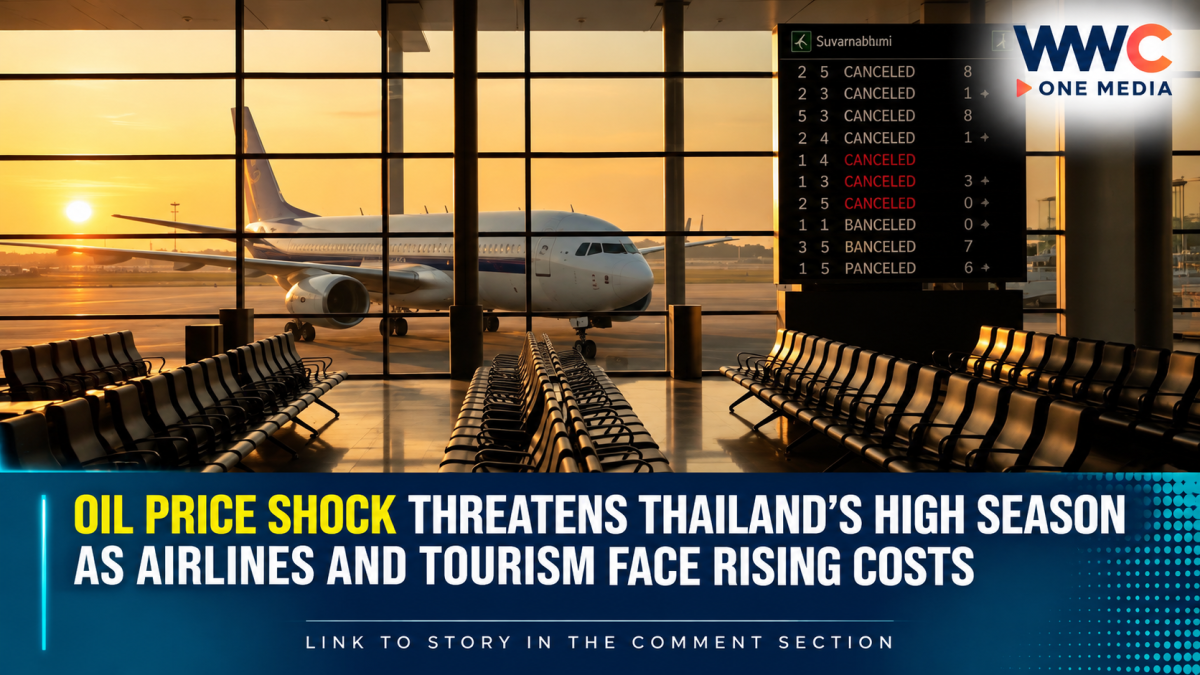
Thailand’s tourism industry is facing a fresh threat to its crucial high season after another surge in global oil prices pushed up fuel costs and raised concerns about more expensive flights, transportation and holidays.
The latest oil spike came after Saudi Arabia closed pipelines that bypass the Strait of Hormuz, adding to concerns over disruptions to one of the world’s most important energy corridors.
The Strait of Hormuz is a critical route for global oil supplies, and prolonged disruption could keep crude prices elevated while increasing costs for airlines, hotels, transport operators and other tourism businesses.
For Thailand, the timing is particularly sensitive.
The country is entering the period when international arrivals typically accelerate, with the tourism industry depending heavily on the final months of the year to generate revenue.
Higher jet-fuel prices could force airlines to raise fares, reduce capacity or reconsider planned routes if operating costs remain elevated.
That could make Thailand less competitive at a time when travellers have numerous destinations to choose from across Asia.
The impact would extend well beyond air tickets.
Tourists arriving in Thailand also rely on taxis, buses, tour operators, ferries and domestic flights, all of which are sensitive to fuel prices.
Higher transportation costs can eventually feed into hotel rates, restaurant prices and tour packages as businesses attempt to protect already thin margins.
The latest oil shock also threatens Thailand’s broader economic recovery.
A sustained increase in energy prices could raise inflation by increasing the cost of transportation, electricity, manufacturing and imported goods.
Businesses would face higher operating expenses while households could have less disposable income available for travel and other discretionary spending.
Thailand has already been dealing with concerns over uneven tourism demand and a challenging global economic environment.
The country remains heavily dependent on international visitors, making the tourism sector particularly vulnerable to external shocks such as geopolitical tensions, oil-price volatility and weaker consumer spending.
The Strait of Hormuz crisis therefore creates a difficult combination: higher costs for tourism operators at the same time that travellers become more price-sensitive.
Airlines are likely to be among the first businesses affected.
Fuel is one of the largest variable costs for carriers, meaning sustained increases in jet-fuel prices can quickly translate into higher operating expenses.
Although airlines can use fuel hedging and other financial measures to limit short-term exposure, prolonged price increases eventually put pressure on ticket prices and profitability.
The effect could be especially significant for long-haul visitors travelling to Thailand from Europe and other distant markets, where fuel represents a larger component of total travel costs.
Domestic aviation could also come under pressure if airlines face weaker demand or higher operating costs.
Thailand’s tourism authorities and businesses are therefore likely to watch global energy markets closely as the high season approaches.
If oil prices stabilise, the industry may be able to absorb part of the increase through efficiency measures, promotions and existing fuel hedges.
But if the disruption around the Strait of Hormuz persists, the consequences could become much more serious.
A prolonged oil shock could push up airfares, weaken tourist demand and increase the cost of almost every service connected to travel.
Thailand’s tourism industry has repeatedly demonstrated its ability to recover from major disruptions, but the latest energy shock presents a different challenge.
Instead of stopping tourists from travelling altogether, expensive oil could gradually make the entire holiday experience more costly.
That could force Thailand to compete even more aggressively on value, as travellers weigh higher airfare and transportation costs against destinations offering cheaper alternatives.
The coming months will therefore be crucial.
If energy prices remain elevated into the peak travel period, Thailand could enter its high season with strong visitor demand but significantly higher costs — putting pressure on airlines, tourism operators and the wider economy just when the country needs tourism revenue most.




Leave a Reply