
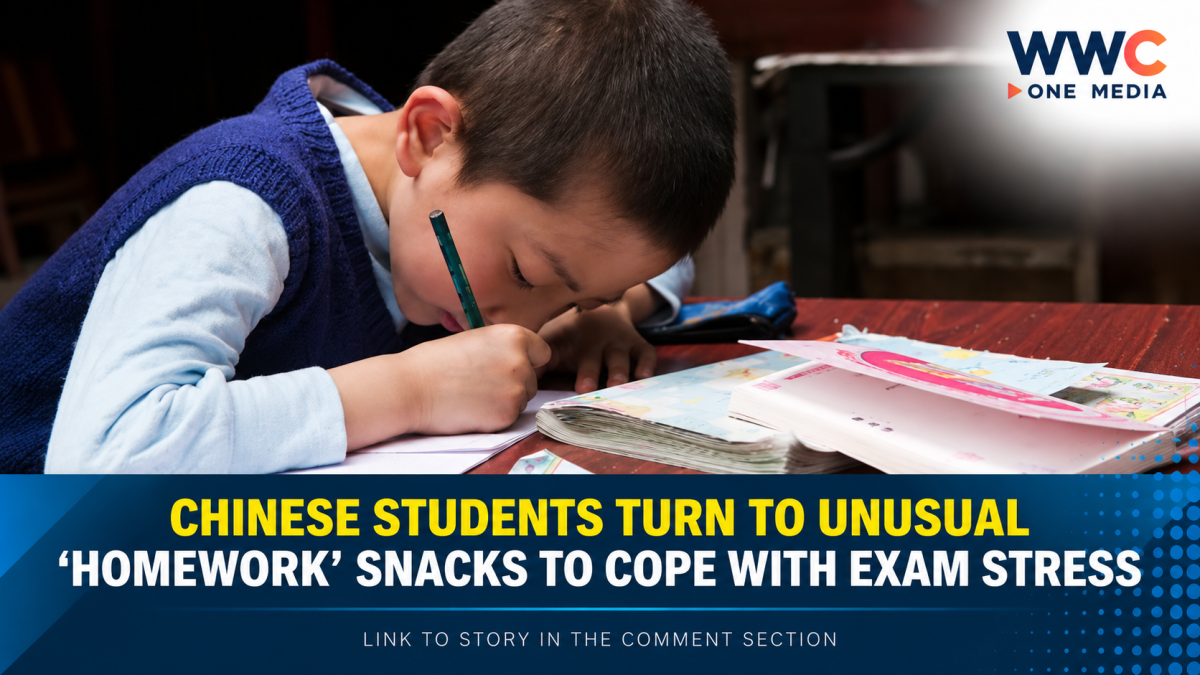
Chinese students have found an unusual way to deal with the pressure of exams: they are eating their homework.
A bizarre new snack trend has gone viral among primary and secondary school students, with edible versions of Chinese textbooks and workbooks being sold as a novelty food designed to turn one of students’ biggest sources of stress into something they can literally consume.
The miniature “homework” products are made from rice paper and are designed to look like real school assignments.
Instead of being filled with questions and answers, however, the tiny pages are edible.
The snacks have become popular online as students look for humorous ways to cope with the intense academic pressure associated with schoolwork and examinations.
On Chinese e-commerce platforms, individual edible homework snacks can reportedly cost less than 0.50 yuan, or around 7.5 US cents.
The low price has helped turn the novelty product into an easily accessible joke among students.
The appeal is obvious.
For students facing piles of worksheets, revision materials and examination papers, the idea of simply “eating” their homework offers a playful fantasy of eliminating the workload altogether.
The trend has also attracted amused reactions from the wider public, with many people treating it as an example of China’s increasingly creative internet culture.
But the novelty has also prompted questions about food safety.
Because the products are designed to resemble school materials rather than conventional snacks, consumers need to know whether they are properly manufactured, labelled and approved as food products.
Parents may also be concerned about what ingredients are used in edible paper and whether products purchased from online marketplaces have been produced under appropriate food-safety standards.
The controversy comes against the backdrop of intense academic competition in China.
Students can face significant pressure to achieve high examination scores, particularly during important stages of their education when test results can influence access to better schools and universities.
That pressure has created a large market for products and online trends aimed at helping young people manage stress.
The “homework” snack is therefore more than just an unusual food product.
It reflects the way children and teenagers increasingly use humour and social media to cope with pressures that can otherwise feel overwhelming.
Turning homework into food transforms something associated with anxiety into an object of entertainment.
The trend also demonstrates how quickly novelty products can spread through China’s enormous e-commerce ecosystem.
A simple idea can move from social media into online shops and then into classrooms and households within a short period.
Products that would once have remained a local novelty can quickly become national talking points when students begin sharing videos and photographs online.
For businesses, that creates opportunities to monetise internet trends almost immediately.
For parents, however, the popularity of the edible homework has another lesson.
Novelty does not automatically mean safe.
With children making purchases through online platforms, parents may need to pay particular attention to ingredient labels, manufacturing information and whether a product is genuinely intended for consumption.
The trend is unlikely to solve the deeper problem behind it.
Eating a rice-paper imitation of a workbook may provide a laugh, but it does little to reduce the academic demands facing Chinese students.
Yet the humour itself may have value.
For a child overwhelmed by revision and examinations, turning a stressful object into a joke can provide a brief psychological escape.
In that sense, the edible homework craze captures something familiar about student life everywhere.
When the workload becomes overwhelming, sometimes the easiest way to deal with it is to joke about making it disappear.
In China, students have taken that joke one step further — by putting their homework on the menu.



Leave a Reply