
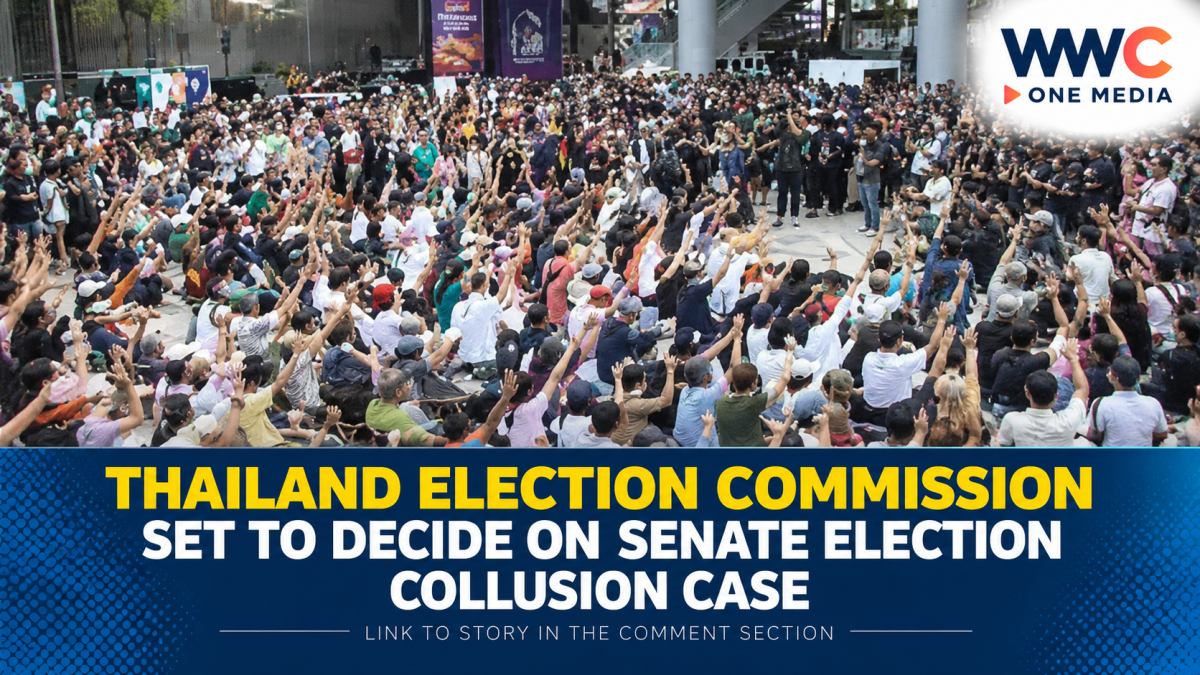
Thailand’s Election Commission (EC) is entering a crucial stage in its investigation into alleged collusion during the 2024 Senate election, with commissioners expected to decide on Monday whether the case should move forward to the next stage.
The case centres on allegations that candidates coordinated their voting and selection in ways that may have violated Thailand’s Senate election laws. The investigation has attracted considerable attention because the 200-member Senate plays an important role in the country’s political system, even though its members no longer participate in choosing the prime minister.
The EC’s decision could determine whether those accused face further legal proceedings. The commission has been examining evidence surrounding the Senate election, including claims of organised efforts to influence the selection process.
The issue is politically sensitive because the Senate election was already controversial when it took place. Unlike previous systems in which senators were appointed or partly appointed, the 2024 process involved candidates selecting representatives through a complicated multi-stage voting system across professional and social groups.
Critics have questioned whether the system was vulnerable to coordinated voting and whether certain groups attempted to manipulate the outcome. Any finding by the EC that election laws were breached could potentially affect the status of senators or lead to criminal and other legal consequences, depending on the offences involved.
The commission’s decision also comes at a politically important time for Thailand. The country held a general election in February 2026, with the Election Commission responsible for overseeing the electoral process and certifying results. The election produced another major test for Thailand’s political institutions after years of coalition changes, court interventions and disputes over electoral rules.
The Senate remains significant even without having a direct role in selecting the prime minister. Senators can still influence legislation, constitutional processes and other important state appointments, making questions about the legitimacy of the chamber particularly sensitive.
The EC is therefore facing pressure to handle the case carefully and transparently. A decision to proceed could trigger another lengthy legal battle, while a decision to end the matter could face criticism from those who believe allegations of coordinated voting deserve further scrutiny.
The outcome is expected to provide a clearer indication of how the commission intends to handle one of the most closely watched election-related cases in Thailand.
For Thailand’s political landscape, the case goes beyond the fate of individual senators. It is also a test of the country’s electoral safeguards and the Election Commission’s willingness to enforce rules governing political contests, particularly when allegations involve the integrity of an entire selection process.




Leave a Reply