
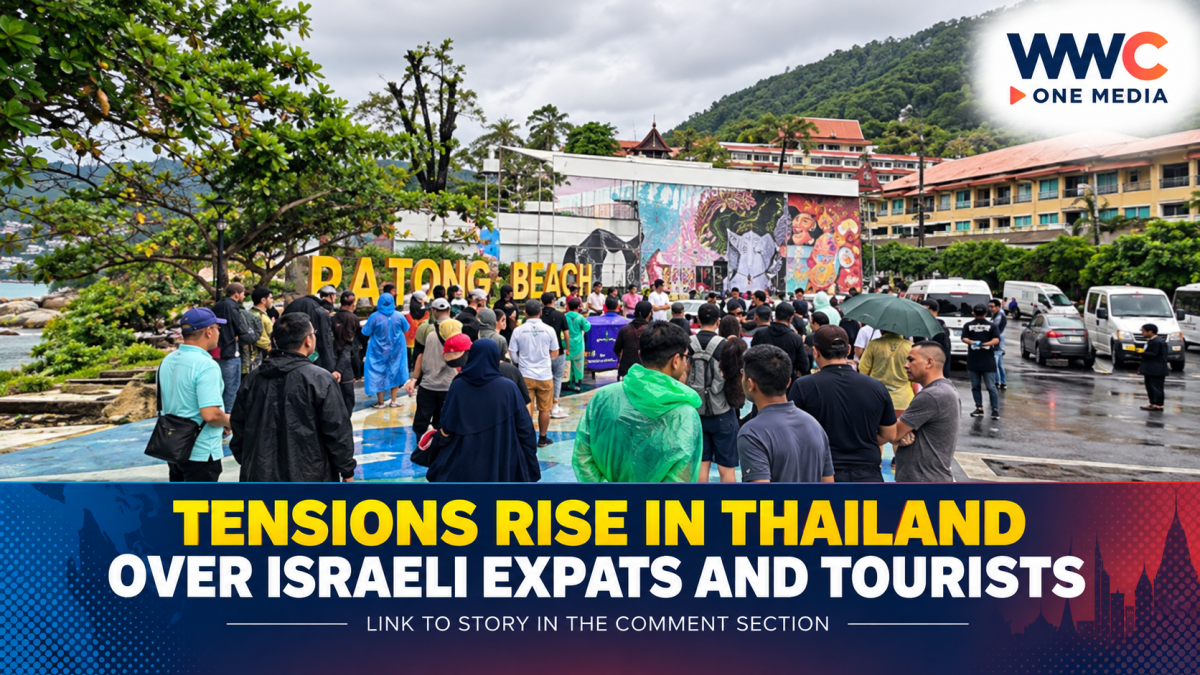
Tensions are rising in Thailand over the growing presence of Israeli tourists and expatriates, with complaints about alleged bad behaviour prompting protests, diplomatic discussions and calls for stricter enforcement of local laws.
The issue has become particularly visible in popular destinations such as Phuket, Koh Samui and other tourist areas, where some local residents have expressed frustration over incidents involving foreign visitors. While the controversy has increasingly focused on Israelis, Thai authorities and officials have stressed that expectations about behaviour apply to foreigners regardless of nationality.
One of the most prominent recent cases involved an Israeli visitor on Koh Samui who was convicted of threatening the owner of a zoo after becoming involved in a dispute over a Palestinian flag displayed at the attraction. The Thai government subsequently ordered his deportation under new measures aimed at removing foreigners who break the law or engage in behaviour considered undesirable.
The dispute did not end there. Thailand also ordered the deportation of the French co-owner of the zoo, following allegations surrounding his conduct and the confrontation. The two cases have added to a wider national debate over how Thailand should respond when foreign visitors become involved in public disturbances or violate local rules.
The growing tensions have also spilled onto the streets. Hundreds of demonstrators gathered outside Israel’s embassy in Bangkok on Sept. 10, demanding that foreign visitors respect Thai laws and culture. Protesters, led by political activist Sondhi Limthongkul, called for stronger action against what they described as repeated incidents of inappropriate behaviour by foreigners.
The controversy is particularly sensitive because Israeli tourism remains economically important to Thailand. More than 277,000 Israeli visitors arrived in the country during the first eight months of 2026, about 7 per cent more than during the same period a year earlier. Israeli visitors generated an estimated US$1.2 billion in Thai tourism revenue in 2025.
Israeli officials have responded by acknowledging the concerns. Israeli Ambassador Alona Fisher-Kamm discussed the issue with Thai Foreign Minister Sihasak Phuangketkeow and proposed creating a guide outlining appropriate behaviour for Israeli travellers in Thailand. The Israeli embassy has also said it takes the concerns seriously and has provided practical guidance to Israeli communities.
Thailand’s government has meanwhile made clear that its tourism industry cannot mean visitors are free to ignore local laws. Authorities have recently tightened measures against foreigners who overstay visas, circumvent property rules or cause disturbances, while new regulations have made it easier to deport visitors whose behaviour is deemed unacceptable.
The debate has also raised concerns about the danger of allowing individual incidents to shape perceptions of an entire nationality. The Israeli embassy said public attention may be disproportionate to the number of incidents involving Israeli citizens and stressed that the behaviour of some individuals should not be taken as representative of all Israelis living in or visiting Thailand.
For Thailand, the challenge is balancing its dependence on international tourism with growing demands from residents for greater respect for local customs and laws. The recent protests and diplomatic discussions suggest that authorities are taking those concerns more seriously, while also trying to avoid turning isolated incidents into a broader conflict between Thai communities and foreign visitors.
As tensions continue, the focus is likely to remain on enforcement rather than nationality: visitors who break Thai laws can face legal consequences, while officials on both sides are pushing for clearer guidance to prevent further confrontations.




Leave a Reply