
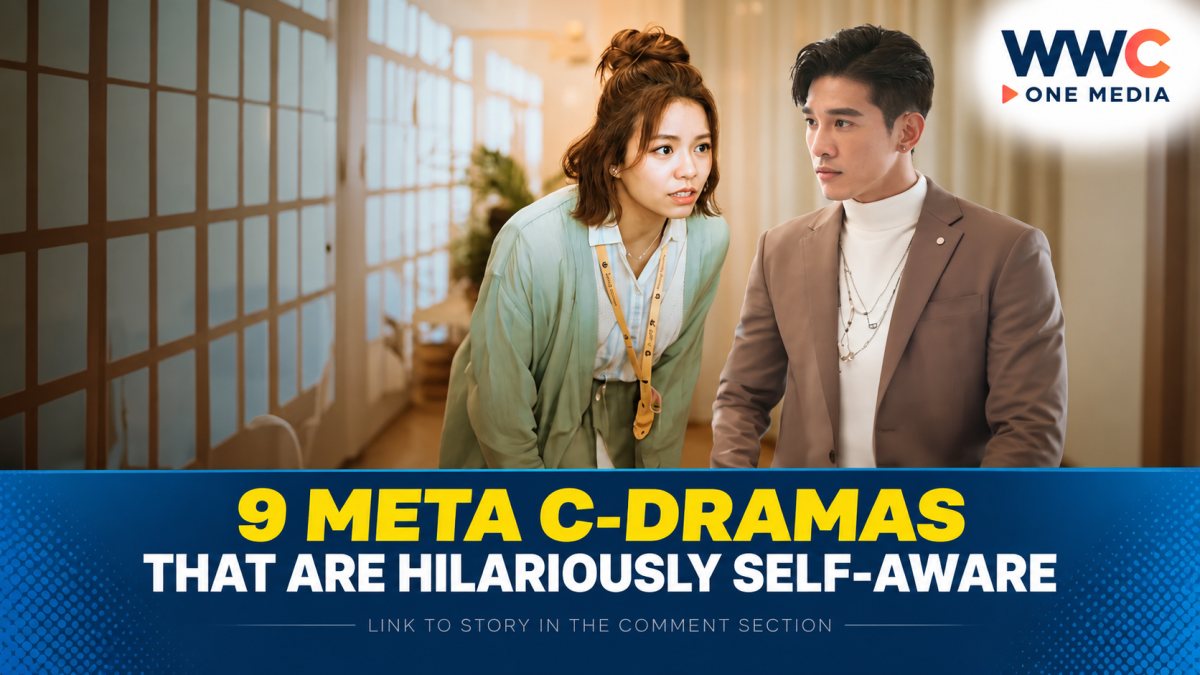
Chinese dramas have long embraced familiar romance tropes: destined lovers, dramatic palace intrigues, mysterious princes and heroines whose lives seem controlled by fate. But a growing wave of C-dramas has taken those clichés a step further by allowing their characters to realise just how ridiculous their fictional worlds can be.
These “meta” C-dramas play with the idea that characters can recognise the stories they are trapped in. Some wake up inside novels they have written or read, while others find themselves in video games, scripted worlds or stories with predetermined endings. Instead of simply accepting their fate, they try to rewrite the plot, manipulate the rules or escape the roles assigned to them.
1. How Dare You!? (2026)
Wang Cuihua, played by Wang Churan, finds herself transported into a historical romance novel, where she becomes Yu Wanyin, a secondary character with an unfortunate fate. She soon discovers that Xiahou Dan, played by Cheng Lei, is also a modern-day person hiding inside the fictional world.
Armed with knowledge of how stories like this usually work, the pair begin manipulating the plot to survive. Much of the comedy comes from watching two modern minds anticipate the melodramatic twists of a costume romance and attempt to outsmart the story itself.
2. The Romance of Tiger and Rose (2020)
One of the best-known examples of the meta-romance formula, The Romance of Tiger and Rose follows struggling screenwriter Chen Xiaoqian, played by Zhao Lusi, after she unexpectedly enters the historical drama she wrote.
The problem is that she is not the heroine. She wakes up as Chen Qianqian, a princess who is destined to die early in the story. Since she knows exactly how the plot was supposed to unfold, she decides to rewrite it from inside the world she created.
3. Lost Romance (2020)
Taiwanese drama Lost Romance takes a similar idea and gives it a contemporary twist. Romance novel editor Zheng Xiao’en, played by Vivian Sung, wakes up inside the pages of a novel she is working on.
Rather than patiently following the story, Xiao’en immediately recognises its clichés and decides to pursue the fictional CEO hero for herself. Her knowledge of romance conventions becomes her greatest advantage as she attempts to hijack the narrative.
4. The Queen of Attack (2021)
In The Queen of Attack, modern student Liang Weiwei becomes trapped inside a costume drama and finds herself playing an empress whose fate is already written: she is supposed to die within the first few episodes.
Every time she is killed, the story resets, effectively giving her another opportunity to change what happens next. She gradually learns to treat the drama like a game, studying its rules and using her knowledge of the plot to avoid another disastrous ending.
5. To Get Her (2019)
To Get Her combines romance, gaming and costume drama. Pop idol Tu Siyi becomes trapped inside a video game and loses his real-world memories, eventually believing that he is an ancient prince.
His girlfriend, Lin Zhengzheng, enters the game to rescue him while retaining her modern memories. Instead of treating the fictional world as reality, she approaches it like a game that needs to be completed, using its mechanics to guide Tu Siyi back toward his intended fate.
6. Unique Lady (2019)
Before meta-romance became a particularly popular C-drama formula, Unique Lady was already playing with the idea of a fictional world governed by game mechanics.
Lin Luojing finds herself in a world resembling a dating game, complete with multiple potential love interests, relationship routes and branching outcomes. Rather than simply accepting whatever destiny awaits her, she studies the system and tries to figure out how to beat it.
7. The Eternal Love (2017)
The Eternal Love takes a slightly different approach to the meta concept. Modern property salesperson Qu Xiaotan unexpectedly finds herself sharing the body of Qu Tan’er, a noblewoman living in the fictional Dongyue kingdom.
The two women have completely different personalities and attitudes toward romance and social expectations, creating chaos for Mo Liancheng, the prince Tan’er is expected to marry. The series turns the clash between modern behaviour and traditional costume-drama conventions into much of its comedy.
8. Love Better Than Immortality (2019)
Set in the year 2169, Love Better Than Immortality follows Lei Lei, a woman living in a future where humanity has achieved immortality but supposedly lost the ability to experience genuine love.
She enters a martial-arts world through a futuristic system designed to recreate romantic experiences. The system tells her that the first man she encounters is her destined partner, but her growing connection with another character quickly complicates the supposedly predetermined love story.
9. Different Princess (2024)
In Different Princess, novelist Hua Qingge enters the fictional world she created herself. Naturally, she assumes that knowing every character and plot development will give her complete control.
Instead, she discovers that being the author does not mean she can control what happens once she becomes part of the story. Her attempts to prevent tragedies and change the narrative create consequences she never anticipated, turning her own carefully written plot against her.
What makes these dramas particularly entertaining is their willingness to laugh at the conventions that traditionally define romantic costume dramas. Instead of asking audiences to overlook convenient coincidences, doomed side characters and predictable love triangles, meta C-dramas make those conventions part of the joke.
The result is a playful new approach to Chinese television, where characters are no longer content to simply follow the script. They know the rules, recognise the clichés and, more often than not, are determined to break them.



Leave a Reply