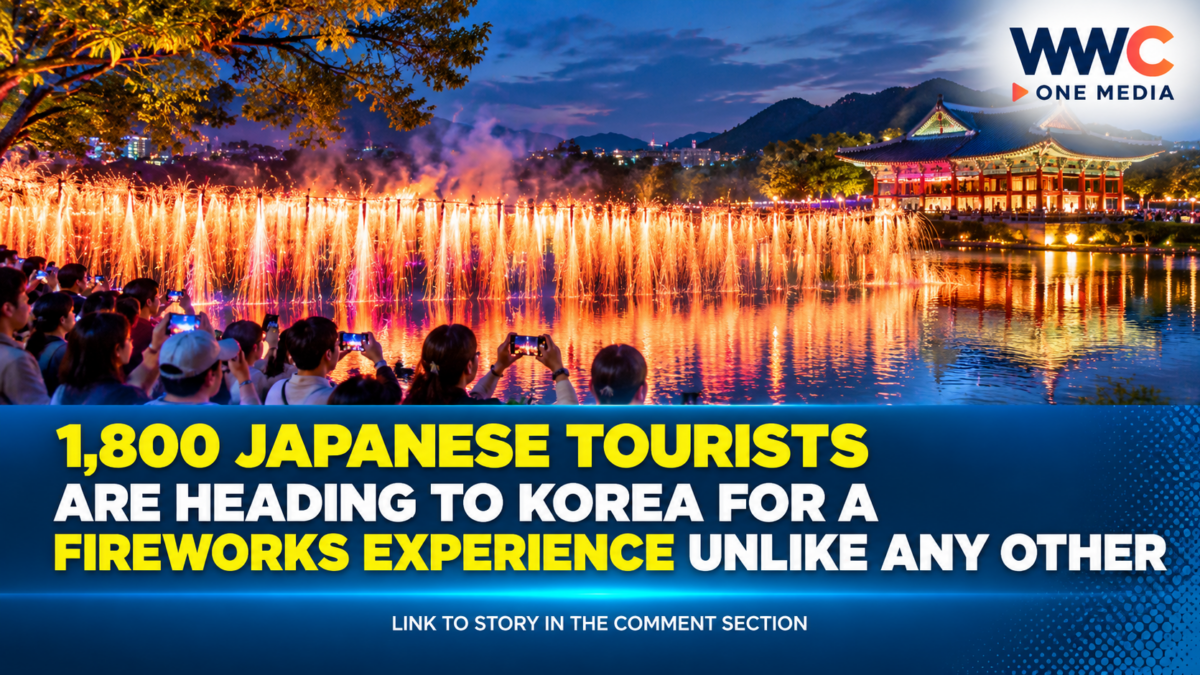
SEOUL — South Korea is turning centuries-old nighttime traditions into a new tourism draw, with about 1,800 Japanese travelers expected to visit Andong and Haman this October for specialized tours centered on traditional Korean “fireworks.”
The travel packages, developed with the Ministry of Culture, Sports and Tourism and the Korea Tourism Organization (KTO), are designed to encourage Japanese visitors to explore historic regional destinations beyond Seoul.
Andong’s Traditional Fireworks Take Center Stage
In Andong, North Gyeongsang Province, around 300 Japanese tourists are expected to attend five specially organized tour dates through the end of October.
The main attraction is Hahoe Seonyu Julbul Nori, a centuries-old tradition associated with the Joseon Dynasty.
At Hahoe Folk Village, pouches containing charcoal powder are suspended on ropes above the Nakdong River. As they burn, glowing sparks cascade toward the water, creating the distinctive nighttime spectacle.
The village itself is a UNESCO World Heritage site, adding another major cultural attraction to the experience.
The KTO’s Japan offices and the Japan Association of Travel Agents developed the packages, with visitors receiving access to a dedicated viewing area and traditional souvenirs.
The event gained additional attention after Japanese Prime Minister Sanae Takaichi watched the performance during a Korea-Japan summit in Andong in May.
Haman Is Expecting 1,500 Japanese Visitors
The bigger tourism push is taking place in Haman, South Gyeongsang Province, where approximately 1,500 Japanese tourists are expected for the Haman Nakhwa Nori Special Day at Mujinjeong Pavilion on Oct. 15.
That would represent another major increase in Japanese attendance.
The event attracted about 500 Japanese visitors in 2024 and 1,000 in 2025. This year’s expected figure would bring the total to 1,500.
Haman Nakhwa Nori is known as “falling fire play.” Charcoal powder wrapped in traditional hanji, or Korean mulberry paper, is burned along lines positioned above a pond, producing sparks that appear to fall like glowing flowers.
The Tours Go Beyond the Fireworks
The new travel products aren’t built around the nighttime displays alone.
Visitors to Haman can also explore the Marisan Tumuli, an ancient Gaya tomb complex, along with local museums and regional food.
The itinerary includes dishes such as ox-head soup and lotus-leaf rice, connecting the cultural event with local cuisine and attractions.
A premium package priced at about 3.2 million won ($2,350) also combines the Haman experience with destinations including Jeonju, Daegu and Busan.
Korea Wants Tourists to Look Beyond Seoul
The strategy reflects a broader tourism goal: moving more international visitors from Seoul into Korea’s regional cities.
Andong and Haman are roughly 190 to 280 kilometers south of Seoul, making them part of an effort to create longer, more specialized travel itineraries rather than short stays concentrated in the capital.
The Korea Tourism Organization says Japan is an important market because many visitors return to Korea multiple times.
By building travel packages around distinctive regional traditions, officials hope to give repeat visitors reasons to discover places they may not have visited on earlier trips.
A New Formula for Korean Cultural Tourism
The growing interest in Andong and Haman shows how traditional Korean culture is being packaged for international travelers without relying solely on Seoul’s better-known attractions.
Instead of another city sightseeing itinerary, visitors are being offered something more specific: heritage, traditional performances, local food and regional history built around a single cultural experience.
For Korea’s tourism industry, the experiment could have a much wider impact if more regional traditions can be transformed into compelling international travel products.
And with 1,800 Japanese visitors expected this month, two centuries-old Korean fire traditions are about to receive a very modern test — whether they can become the next major reason international travelers venture beyond Seoul.
WWC ONE MEDIA G,A