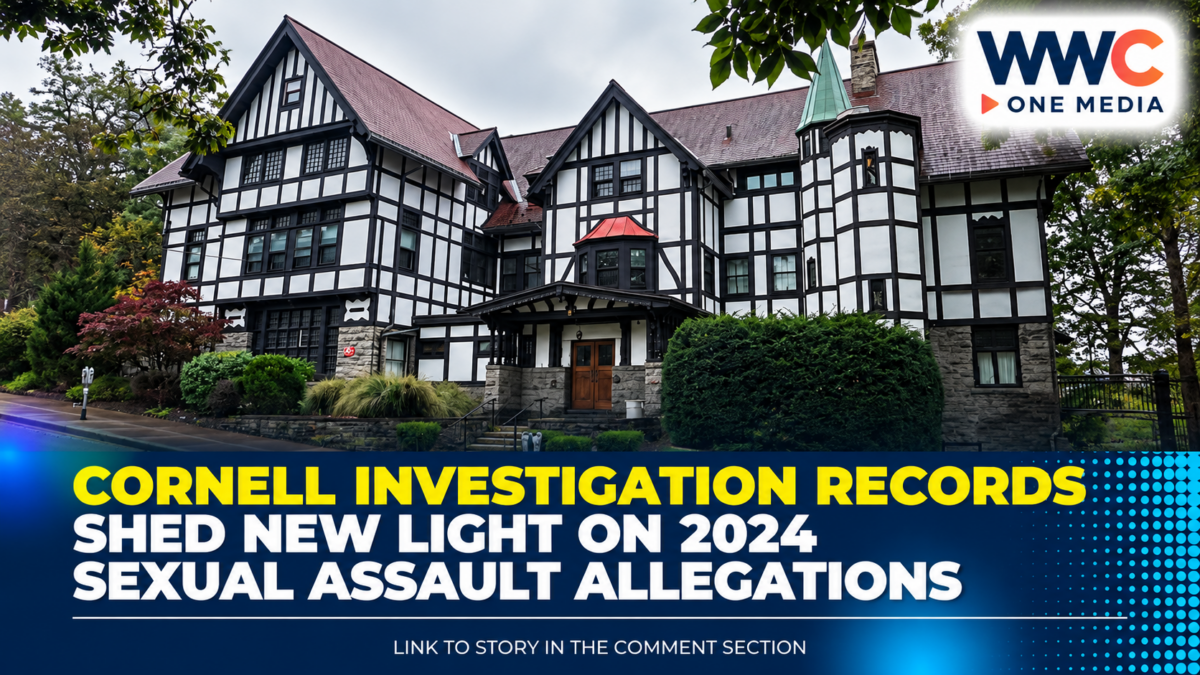
Cornell University is facing renewed scrutiny over its handling of sexual assault allegations after a civil lawsuit involving several fraternity members triggered a reopened criminal investigation and growing concern among students about campus safety.
The case centers on allegations involving a former Cornell student who says she was sexually assaulted at a Chi Phi fraternity house in 2024. The allegations became public again after she filed a civil lawsuit, prompting authorities in New York to reopen the criminal investigation.
The controversy has since spread beyond the legal case itself, with students questioning how the university handled the allegations and whether its disciplinary and reporting systems provide sufficient protection for students who report sexual misconduct.
At a public hearing organised by Cornell’s Student Assembly, students described feeling distressed and, in some cases, unsafe on campus. One student criticised university leadership over what she described as a lack of accountability, transparency and communication regarding the case.
The Student Assembly unanimously approved a resolution calling on university administrators to provide a fuller account of how the investigation was conducted. It also requested information about disciplinary measures imposed on the students involved, as well as annual reports on the outcomes of future sexual misconduct cases.
Cornell has defended its handling of the matter, saying it conducted a comprehensive investigation and barred the Chi Phi fraternity involved from campus. The university also said disciplinary measures, including expulsions, were imposed, although privacy laws prevent it from releasing detailed information about individual students.
The university said that its compliance with privacy requirements should not be interpreted as a lack of concern about the allegations or the seriousness of sexual misconduct.
The civil lawsuit has also brought renewed attention to the original criminal investigation. The Tompkins County district attorney’s office initially declined to pursue criminal charges in 2024, but the case was later reopened following the new lawsuit and additional information that emerged. New York Governor Kathy Hochul has appointed state Attorney General Letitia James as a special prosecutor to oversee the investigation.
The investigation remains ongoing, and the allegations against the former students have not been established as criminal findings. Attorneys representing some of the accused have denied involvement in sexual misconduct, while others have disputed the allegations.
The case has also drawn attention to Cornell’s own data on sexual misconduct. A university survey conducted in 2025 found that 35% of undergraduate women reported experiencing nonconsensual sexual contact involving force or incapacitation since entering Cornell, compared with 20% in a similar 2021 survey.
For students, the issue now extends beyond the allegations involving one fraternity. Several women who spoke at the hearing described their own experiences with sexual assault and concerns about navigating university reporting procedures. One student said the process following her report involved extensive paperwork and limited guidance about what would happen next.
Cornell students are continuing to call for greater transparency and stronger measures addressing sexual misconduct. A rally was scheduled for the following Monday, while student representatives said they intended to continue pressing university officials for changes.
The controversy has placed Cornell’s campus culture and institutional response under intense public scrutiny as the criminal investigation proceeds. The university’s disciplinary findings, the reopened state investigation and the civil lawsuit are separate proceedings, and their outcomes could provide further information about what occurred and how the institutions involved responded.