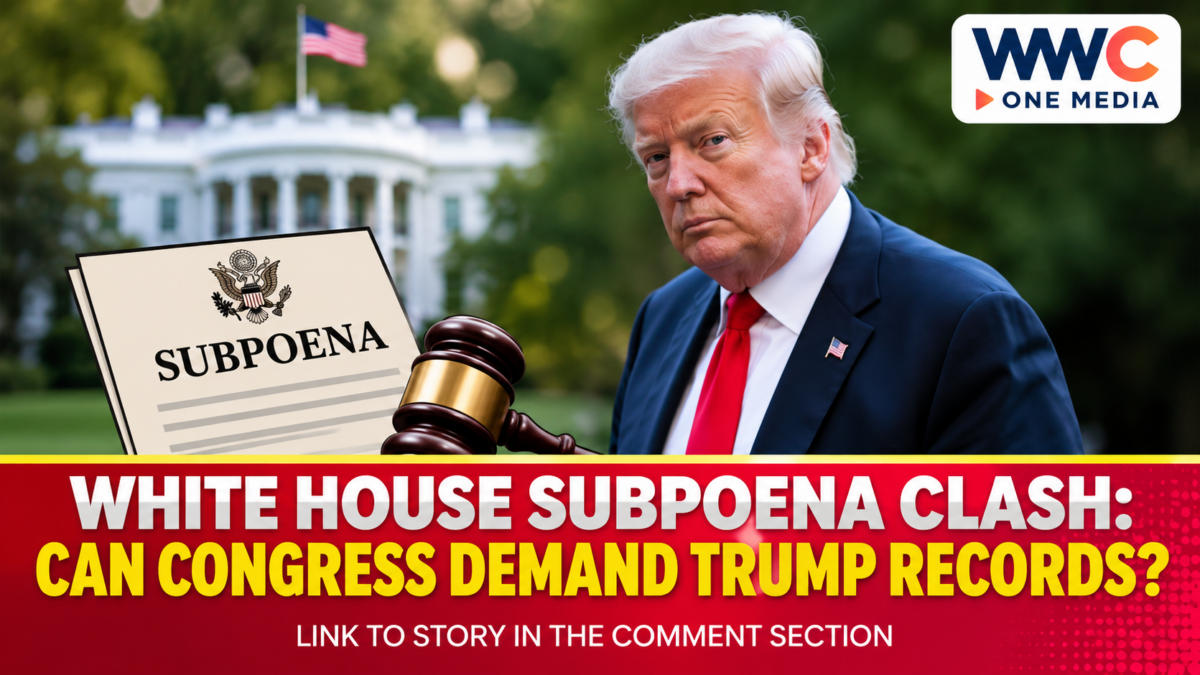
WASHINGTON, Nov. 15, 2026 — White House Counsel William O. Scharf challenged the planned use of congressional subpoenas in a Nov. 9 letter to Representative Robert Garcia, raising constitutional objections as Democrats prepare to assume control of the US House. Garcia publicly rejected the warning, setting up a dispute over how far lawmakers can press for information from President Donald Trump’s administration.
The White House subpoena clash goes beyond political messaging. Court decisions and Justice Department opinions recognise both Congress’s power to gather information for legislation and limits designed to protect presidential decision-making. The crucial question is not whether either branch possesses unlimited authority, but how a specific demand would fare under those rules.
White House subpoena clash begins with a signed letter
Scharf’s three-page letter, dated Nov. 9, argues that legislative investigations require a legitimate purpose and cannot serve as substitutes for criminal prosecutions. It warns that processes intended to intimidate executive officials or violate constitutional rights may warrant further scrutiny.
Those passages present the White House counsel’s legal position and allegations; they do not establish that Garcia or any other lawmaker has committed a crime. The letter identifies prospective concerns, not a court finding that a particular future subpoena is unlawful.
Garcia responded through the House Oversight Committee’s official website that Congress has constitutional authority to investigate executive-branch conduct. In a separate statement following the election, he confirmed the committee leadership role he expects to take when the new House convenes.
The dispute adds a legal dimension to the incoming House Oversight majority’s plans for investigations. Whether those plans produce enforceable information demands will depend on the actual requests, their legislative purpose and any legal objections raised.
What the Supreme Court has already decided
The Supreme Court’s 2020 ruling in Trump v. Mazars USA, LLP addressed congressional subpoenas for the president’s personal financial information held by third parties. The Court recognised that congressional inquiries are an essential part of lawmaking, but required closer attention to separation-of-powers concerns when a president’s records are sought.
Its analysis identified considerations including whether Congress can obtain the information elsewhere, whether a request is appropriately narrow, how clearly lawmakers explain their legislative need, and what burden it places on the presidency.
The Court vacated lower-court rulings and returned the cases for further proceedings. It did not declare all presidential records immune from congressional scrutiny or give committees an unrestricted right to demand everything they seek.
Equally important, the case concerned private financial records, not an asserted executive-privilege claim over confidential official advice. Treating those two categories as legally identical would misstate what the ruling decided.
Can communications with private advisers be protected?
An Aug. 10, 2026, Justice Department Office of Legal Counsel memorandum addresses a particularly sensitive category: conversations involving a president and advisers outside the federal government.
The memorandum concludes that presidential communications privilege can extend to private advisers when the discussions concern official presidential decisions, involve the president or direct advisers, and remain confidential. It also states that deciding whether privilege applies to a particular communication requires examining the facts and circumstances.
That qualification matters. A business executive’s contact with a president does not automatically make every communication privileged. A meeting about government policy, for example, presents a different legal question from an unrelated private commercial exchange.
The memorandum is the executive branch’s formal legal interpretation, not a judicial ruling granting immunity to all private individuals. A dispute over particular records could still require negotiation or judicial resolution.
Why congressional oversight and executive privilege collide
Congress needs information to evaluate government programmes and consider legislation. The presidency, meanwhile, has a recognised interest in protecting confidential advice and the functioning of the executive branch.
These interests are not mutually exclusive. A 1981 Justice Department opinion on executive privilege expressly described an obligation for the branches to make a principled effort to accommodate each other’s legitimate needs when they conflict.
The practical outcome may therefore be narrower document requests, agreed access to selected records, testimony with limits, or litigation. None of those routes guarantees that Congress will receive every item requested or that the White House can withhold information indefinitely.
WWC has already examined the competing congressional investigations and policy priorities emerging after the midterm elections. The underlying constitutional question is more specific: whether a particular investigation is tied to a legislative purpose and whether any recognised privilege genuinely applies.
What this could mean for businesses and government officials
Analysis: Organisations that interact with the federal government could face demands for information if lawmakers examine contracts, policy decisions or other matters within a committee’s jurisdiction. But an anticipated investigation should not be confused with an issued subpoena, and a subpoena should not be confused with a finding of misconduct.
The 2026 private-adviser opinion makes the potential boundaries especially important. Corporate representatives cannot presume that all dealings with the White House are protected, while lawmakers cannot simply dismiss an asserted privilege without considering its legal basis.
Political tensions have already surfaced in the debate over whether congressional scrutiny could provoke Justice Department action. The signed letter, however, provides no proof that an investigation itself is criminal; it expresses the administration’s objections to forms of oversight it regards as unlawful.
For officials and companies alike, careful preservation of records and advice from appropriate legal counsel would be more useful than assumptions about either automatic disclosure or blanket immunity.
What happens next
The next decisive developments would be specific committee demands, any formal White House privilege assertions, and negotiations over access. If the branches cannot reach an accommodation, courts may be asked to address the scope and enforceability of a disputed subpoena.
Analysis: The question to watch is not which side delivers the sharper warning. It is whether each request can be connected to legitimate lawmaking, whether any privilege claim fits the communications at issue, and how the competing constitutional interests are resolved.
Frequently asked questions
Can Congress subpoena records from the White House?
Yes. Congress has investigatory powers supporting its legislative responsibilities, but demands must have a valid legislative purpose and may face constitutional objections.
Does executive privilege protect all presidential conversations?
No. The scope depends on the nature and circumstances of the communication. The Justice Department’s August 2026 opinion describes conditions for certain confidential discussions with private advisers.
Did the Supreme Court ban subpoenas for Trump’s financial records?
No. In Trump v. Mazars, the Court required a more careful analysis and returned the disputes to lower courts; it did not impose a blanket ban.
Has the White House established that Democrats’ planned probes are illegal?
No court ruling establishing that conclusion appears in the primary records reviewed. Scharf’s Nov. 9 letter argues that certain prospective investigative tactics could be unlawful.