
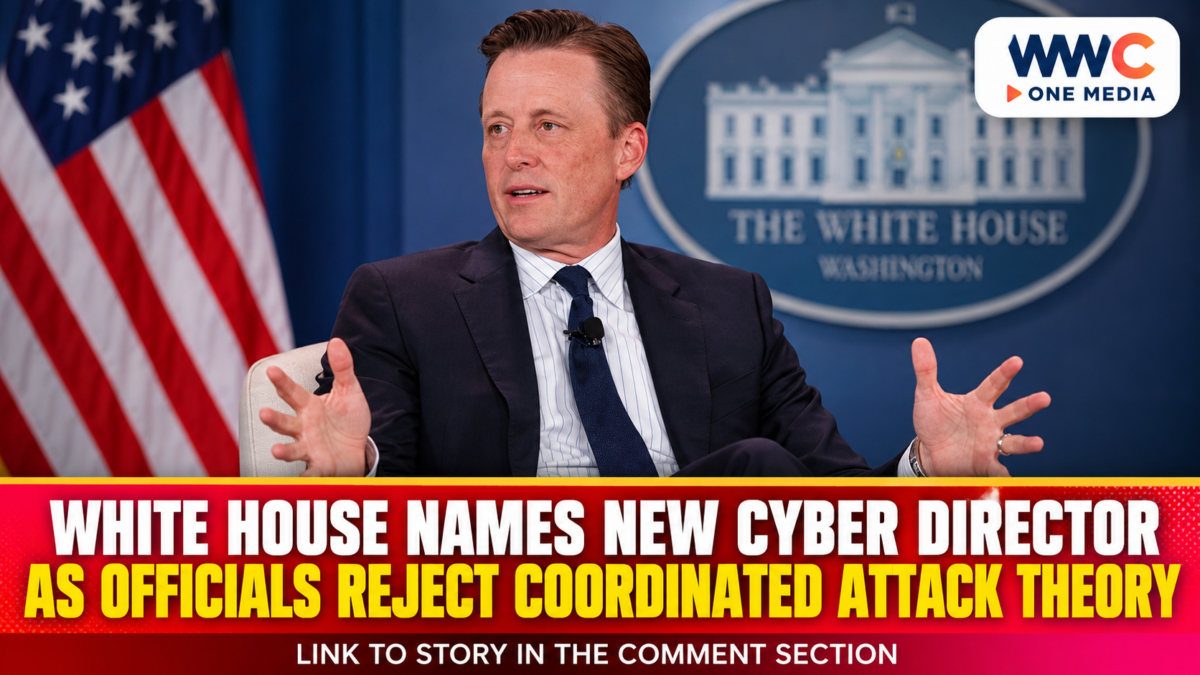
The White House announced on Nov. 20, 2026, that President Donald Trump had named Pentagon Chief Information Officer Kirsten A. Davies to lead the Office of the National Cyber Director, replacing Sean Cairncross in the administration’s top cybersecurity policy role. The announcement followed a series of technology outages, but the administration had already said it found no indication that the disruptions were linked or caused by a coordinated cyberattack. The White House+1
The change places a senior technology executive with experience in government and industry at the centre of US cyber-policy coordination. It also raises questions about how Washington will manage the growing dependence of government agencies, businesses and essential services on interconnected digital systems.
There is an important limit to what the official record establishes: the White House announcement confirms Davies’ appointment, but does not say that Cairncross was fired, give a reason for his departure or connect the personnel change to the outages.
The National Cyber Director role changes hands
The White House announcement identified Davies as the new leader of the Office of the National Cyber Director. It described her as the Pentagon’s Chief Information Officer and highlighted her experience in technology leadership.
The office is part of the Executive Office of the President. Under federal law, the National Cyber Director is appointed by the President with the advice and consent of the Senate, and serves at the President’s pleasure. The law assigns the director a central advisory and coordinating role in national cybersecurity policy. The White House+1
The office’s responsibilities extend beyond responding to individual cyber incidents. Its statutory duties include coordinating policies on information security and data protection, improving the country’s cybersecurity posture, deterring malicious cyber activity and strengthening the security of information and communications technology.
It also coordinates the implementation of national cyber policy across federal departments and agencies, including work on the National Cyber Strategy. In practical terms, the director helps align government priorities; the position does not replace the operational cybersecurity responsibilities of individual agencies. The White House+2
What Davies brings to the office
Before the White House announcement, Davies served as Chief Information Officer of the Department of War, the department’s official current name. The department’s published biography says she was sworn into that role on Dec. 23, 2025, after presidential nomination and Senate confirmation.
Her responsibilities there included advising the department on information management, information technology, cybersecurity and information assurance. The biography also records previous executive technology and cybersecurity roles, including service as chief information security officer at Unilever. dodcio.defense.gov+1
The appointment therefore moves an official with direct experience overseeing a large government technology environment into a White House-wide coordination position.
That distinction matters. A defence department’s internal technology operations and the coordination of cybersecurity policy across the entire federal government are related, but they are not identical jobs. The new role requires engagement with multiple agencies and private-sector organisations.
The official record on Cairncross
Cairncross had previously received Senate confirmation as National Cyber Director on Aug. 2, 2025. The Senate’s official roll-call record shows that the nomination was confirmed by 59 votes to 35, with six senators not voting. 1st Session+1
The White House’s Nov. 20 announcement names Davies as the new director and links to the earlier confirmation announcement for Cairncross. It does not publish a termination notice, resignation letter or explanation of his departure.
That means claims about the precise circumstances of his exit, including claims that he was dismissed for lacking cybersecurity credentials or because of the outages, cannot be presented as established facts from the official documents reviewed for this report.
The legal framework does, however, state that the National Cyber Director serves at the President’s pleasure. That provision describes the position’s terms; it does not establish what happened in Cairncross’s individual case. U.S. Code+1
What the administration said about the outages
On Nov. 18, the White House published remarks by Director of National Intelligence Jay Clayton and National Security Adviser Marco Rubio addressing the recent technology disruptions.
The administration said it had found no indication of a coordinated cyberattack, state-sponsored activity or a malicious actor behind the incidents. Clayton described the events as separate disruptions associated with companies patching vulnerabilities and upgrading older systems. Rubio said officials had no evidence that the Microsoft, aviation and banking incidents were connected. The White House+1
That is the administration’s stated assessment, not a universal guarantee that every affected system is free from cyber risk. It also does not mean the disruptions were unimportant. An outage caused by a software update, system hand-off or infrastructure change can still interrupt services relied on by businesses and the public.
WWC previously examined the operational consequences of a Microsoft 365 outage and the difference between a service being marked restored and every customer workflow returning to normal. The same distinction is relevant when assessing technology disruptions: restoration notices and the full recovery of dependent services are not always the same thing.
Why the appointment matters beyond Washington
The National Cyber Director’s statutory remit includes coordination between federal agencies and consultation with private-sector leaders on cybersecurity and emerging technology. That makes the office relevant to more than government computer networks.
Critical services such as finance, communications, transport and energy depend on systems operated by a mixture of public agencies and private companies. A disruption in one part of that network can create operational problems elsewhere, even when there is no evidence of a deliberate attack.
The importance of incident assessment is also reflected in WWC’s reporting on the investigation into alleged cyber incidents affecting Philippine government agencies. That coverage concerns separate events in the Philippines, but illustrates why authorities must distinguish confirmed breaches from claims that still require investigation.
The same care applies to private infrastructure. WWC has also covered a US utility’s disclosure that an unauthorised party obtained some customer information. That incident is unrelated to the current US outages, but shows why cyber resilience includes both preventing intrusions and managing the consequences when information is exposed.
Analysis: Davies’ appointment gives the administration a new leader for coordinating cyber policy at a time when public attention is focused on system reliability. The meaningful test will be whether the office can help agencies improve resilience, share information and coordinate responses without confusing technical failures with confirmed hostile activity.
What happens next
The next steps will include Davies taking up the National Cyber Director role and coordinating with federal agencies responsible for cybersecurity, intelligence, defence and infrastructure protection.
The public record reviewed for this article does not provide a timetable for any additional Senate action relating to Davies’ appointment, nor does it disclose a formal explanation for Cairncross’ departure. Further official statements or records may clarify those points.
For now, the confirmed developments are the appointment of Davies and the administration’s public assessment that the recent outages were separate incidents with no identified evidence of a coordinated cyberattack. The distinction between a leadership change, a technical outage and a confirmed cyber incident remains essential to understanding the story.
Frequently asked questions
1. Who is the new US National Cyber Director?
Kirsten A. Davies, previously Chief Information Officer of the Department of War, was named by President Donald Trump on Nov. 19, 2026, to lead the Office of the National Cyber Director. The White House+1
2. Who did Davies replace?
She was named to lead the office previously headed by Sean Cairncross, whose Senate confirmation took place on Aug. 2, 2025. The White House+1
3. What does the National Cyber Director do?
The director advises the President on cybersecurity policy and coordinates national cyber strategy across federal agencies. The role also covers information security, data protection and efforts to deter malicious cyber activity. U.S. Code+1
4. Did the White House confirm that Cairncross was fired because of the outages?
The official appointment announcement confirms Davies’ selection but does not state that Cairncross was fired or explain the reason for his departure.
5. Did US officials say the outages were cyberattacks?
No. In a Nov. 18 statement, the White House said officials had found no indication of a coordinated cyberattack or state-sponsored activity behind the recent outages.










