
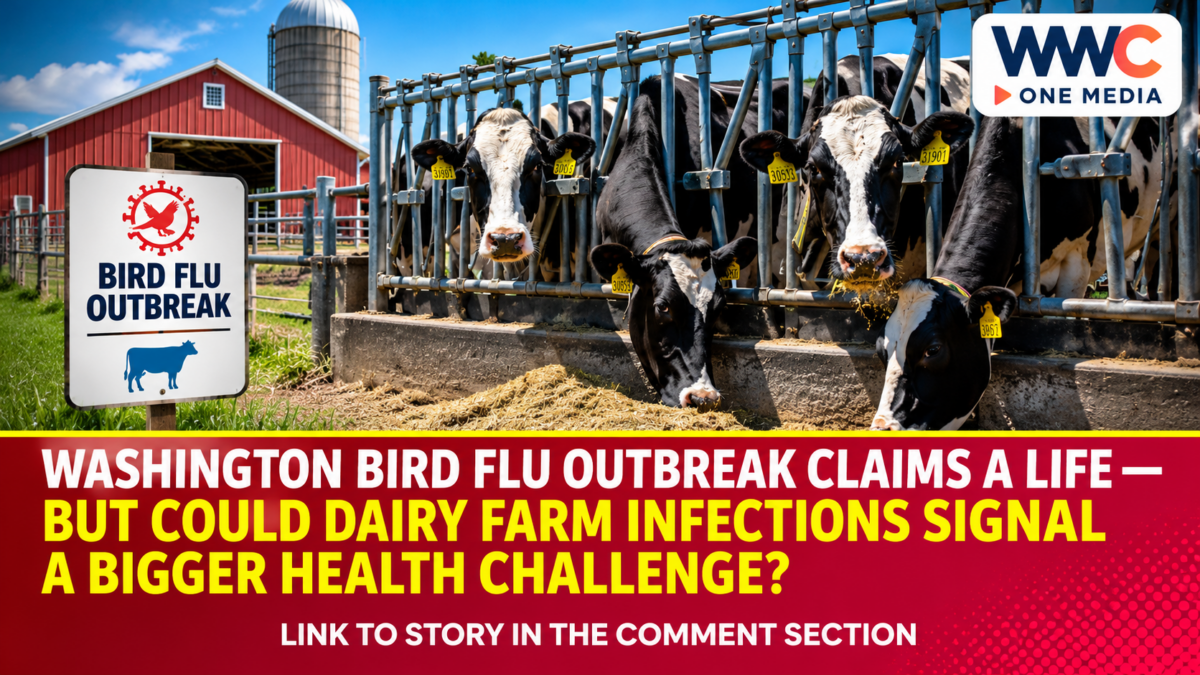
WASHINGTON STATE, United States — The Washington bird flu outbreak has raised renewed concerns over agricultural disease transmission after three dairy farm workers in Yakima County contracted avian influenza A(H5N1), with one patient dying following severe respiratory illness.
The World Health Organization (WHO) confirmed the infections on November 24, 2026, identifying the fatality as the first reported death globally associated with exposure to infected dairy cattle.
The development comes as the United States records 75 confirmed human infections with avian influenza A(H5) since 2024, including three associated deaths nationwide.
Despite the latest fatality, international and American health authorities continue to classify the risk to the general population as low. No evidence of person-to-person transmission has been established in the Washington cases.
Nevertheless, the infections highlight the importance of protecting agricultural workers, monitoring animal diseases and identifying potential changes in influenza viruses before they become wider public health threats.
Washington Bird Flu Outbreak: What Happened to the Three Dairy Workers?
The three confirmed infections involved adults employed on dairy farms in Yakima County, where H5N1 had recently been detected among cattle.
The cases were reported to WHO between October 16 and November 4, 2026.
The first patient developed symptoms on October 5, including irritated eyes, nasal symptoms, headaches and muscle aches. The individual subsequently recovered without requiring hospitalisation.
The second patient developed respiratory illness during the week ending October 24. The individual had underlying medical conditions and died on November 1 following hospitalisation.
The third patient experienced conjunctivitis, commonly known as pink eye, and recovered without hospital admission.
Whether the three individuals worked at the same dairy farm had not been established when WHO published its assessment.
The different clinical outcomes demonstrate that human bird flu infections can vary considerably in severity.
Bird Flu Infections Extend Beyond Washington
The latest infections are part of a broader investigation involving avian influenza outbreaks in American dairy cattle.
The CDC’s November 23 update identified four recent human cases associated with dairy farm outbreaks: three in Washington and one in neighbouring Oregon.
| Bird flu indicator | Confirmed figures |
|---|---|
| Recent Washington human infections | 3 |
| Recent Washington fatalities | 1 |
| Recent Oregon human infections | 1 |
| Cumulative US confirmed infections since 2024 | 75 |
| Associated US deaths since 2024 | 3 |
| Confirmed US person-to-person transmission | None identified |
Washington has recorded 15 confirmed human H5 infections since 2024, including 11 associated with infected poultry, one involving backyard birds and three linked to dairy cattle.
The figures highlight how avian influenza surveillance must extend beyond traditional poultry operations.
Similar agricultural disease concerns have emerged across Asia-Pacific, including Japan’s bird flu outbreak at a commercial poultry farm in Kyoto.
Although the circumstances differ, both developments demonstrate the importance of monitoring animal populations and protecting people whose occupations involve close contact with livestock.
Has H5N1 Mutated Into a More Dangerous Human Virus?
One of the most important findings concerns the genetic characteristics of the viruses detected in the Washington patients.
Laboratory sequencing identified similarities between the viruses recovered from all three individuals and those circulating among Washington dairy cattle.
The viruses belonged to genotype B3.13 within clade 2.3.4.4b.
Genetic analysis did not identify recognised mutations associated with increased human adaptation, transmissibility, infectivity or disease severity.
Investigators also found no recognised genetic markers of antiviral resistance in the viral genes examined.
These findings are encouraging, but they do not eliminate the need for continued surveillance.
The ability of an influenza virus to infect an individual following animal exposure is different from its ability to spread efficiently between people.
That distinction remains central to assessing whether an animal disease could develop into a broader human health emergency.
Why Dairy Farms Have Become a Public Health Priority
Although avian influenza primarily affects birds, certain influenza A viruses can also infect mammals, including dairy cattle.
The Washington State Department of Agriculture confirmed another H5N1 detection in a Grant County dairy herd on November 23, 2026, following routine animal surveillance.
Genetic investigations indicate that the virus circulating among Washington dairy herds is consistent with an introduction from Idaho through cattle movement.
Investigators have also identified transmission between dairy herds.
For agricultural businesses, controlling infectious diseases involves protecting both animal health and employees.
Farm operators may face additional requirements involving veterinary assessments, protective equipment, sanitation, testing and employee health monitoring.
The wider importance of animal health management has also been examined in regional livestock industry initiatives addressing farm technology, disease prevention and agricultural productivity.
Effective disease prevention can help protect workers while reducing the potential commercial consequences of agricultural outbreaks.
However, the latest Washington infections do not independently establish nationwide milk shortages or specific increases in dairy prices.
Is It Safe to Drink Milk During a Bird Flu Outbreak?
The emergence of H5N1 infections among dairy workers has renewed questions about food safety.
Pasteurisation destroys avian influenza viruses in milk, making properly pasteurised dairy products the recommended choice for consumers.
Unpasteurised milk may contain harmful microorganisms and should be avoided.
The possibility of human H5N1 infection specifically through consuming raw milk from infected cattle has not been definitively established. Nevertheless, public health authorities recommend avoiding such exposure as a precaution.
Properly cooked poultry, eggs and beef can also be consumed safely with respect to avian influenza when appropriate food-handling and cooking practices are followed.
The distinction between raw agricultural products and properly processed food is especially important as countries invest in modernising their food supply chains.
Such investments include livestock and dairy processing developments intended to strengthen food safety and market access.
For consumers, the Washington cases do not justify avoiding all commercially available dairy products.
What Happens Next for Global Bird Flu Surveillance?
WHO currently considers the H5N1 risk to the general population low, while occupationally exposed individuals face a low-to-moderate risk of infection.
Health authorities continue to monitor exposed workers and close contacts of confirmed patients.
Farm workers with potential exposure should follow recommended workplace protection procedures and monitor their health for 10 days after their last exposure.
Anyone developing eye irritation, fever, coughing or other compatible symptoms after contact with potentially infected animals should promptly contact a healthcare provider or local health authority and disclose the exposure.
People experiencing severe breathing difficulties should seek emergency medical attention.
The importance of sustained disease surveillance has also emerged in separate public health developments, including the United States’ loss of measles elimination status.
Measles and avian influenza are different diseases with different transmission characteristics. Their relevance here is the importance of identifying infections and responding appropriately.
For H5N1, the developments that could materially change the public health assessment include evidence of sustained human transmission or significant changes in viral characteristics.
Neither has been established in the latest Washington investigation.
The fatal dairy worker infection is a serious development, but it is not evidence that a new human influenza pandemic has begun.
The immediate priority remains protecting exposed individuals, controlling animal outbreaks and maintaining effective disease surveillance.
Frequently Asked Questions
How many people contracted bird flu in Washington in the latest outbreak?
Three adult dairy workers in Yakima County contracted H5N1, including one patient who died on November 1, 2026.
Can bird flu spread between humans?
Rare, limited human transmission has occurred internationally. However, no person-to-person H5 transmission has been identified in the United States as of the CDC’s November 23 update.
Is H5N1 a major threat to the general public?
WHO and the CDC currently assess the general population’s risk as low. People working with infected animals face greater exposure risks.
Is pasteurised milk safe during an H5N1 outbreak?
Yes. Pasteurisation destroys avian influenza viruses in milk. Consumers should avoid unpasteurised milk and products made from it.
What are the symptoms of bird flu in humans?
Symptoms may include irritated or reddened eyes, coughing, fever, headaches, muscle aches and respiratory difficulties. Symptoms alone cannot establish a diagnosis; medical evaluation and appropriate laboratory testing are necessary.










