
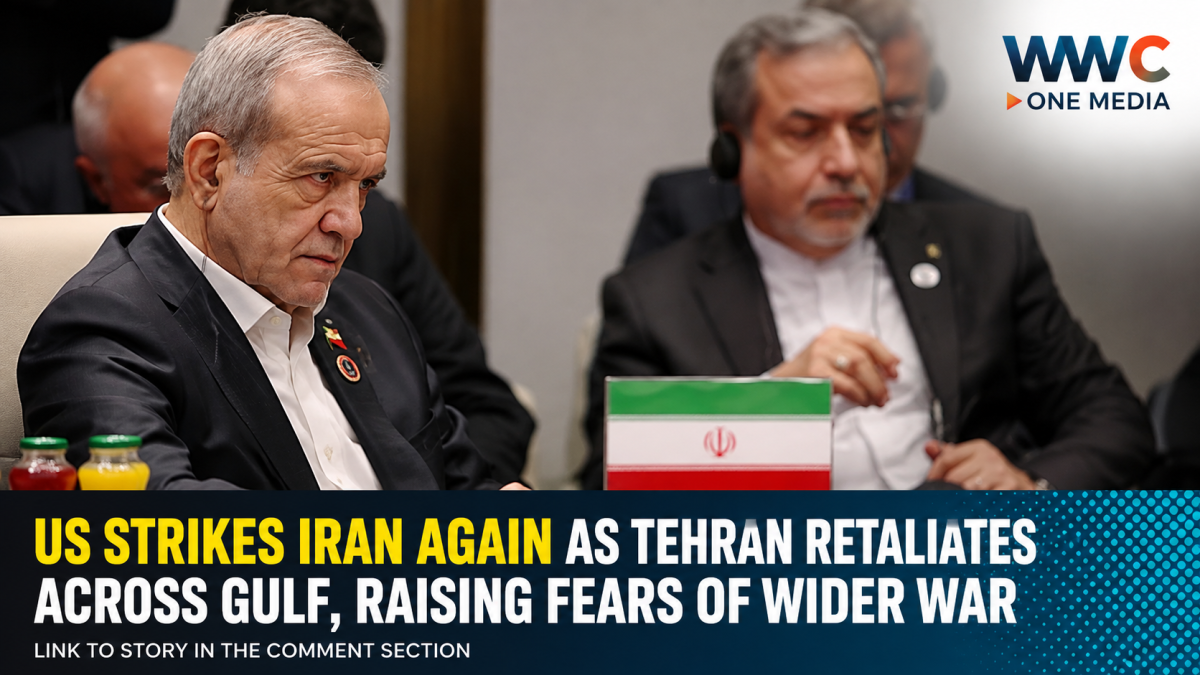
The conflict between the United States and Iran has entered another dangerous phase after Washington launched a new wave of strikes on Iranian military targets, prompting Tehran to retaliate against US-linked facilities and allies across the Gulf region.
The latest escalation began on Sept. 1, when US forces targeted Islamic Revolutionary Guard Corps facilities, including air-defense systems, radar installations, maritime assets, mine-laying capabilities and communications sites, according to US Central Command.
Iran responded with missile and drone attacks involving targets in Jordan, Bahrain and Iraq. Jordan said its air defenses intercepted 10 of 13 ballistic missiles that entered its airspace, while Bahrain reported intercepting Iranian drones. Iranian forces also claimed attacks on US facilities in northern Iraq, although some of those claims had not been independently confirmed.
The confrontation has also raised concerns about civilian casualties. Iran’s Red Crescent reported that five people were killed and 50 wounded at a wedding near Sirik, while Iranian state-linked media gave a higher figure for the wounded. The United States had not immediately responded to those reports.
Strait of Hormuz becomes the critical flashpoint
The latest fighting is particularly significant because it is unfolding around the Strait of Hormuz, one of the world’s most important energy routes.
Iran has threatened to prevent oil exports through the Gulf if Washington continues its military pressure. The Strait previously carried roughly one-fifth of global oil consumption, making any prolonged disruption a major threat to international energy markets.
Oil prices reacted sharply. Global crude prices climbed by more than US$4 a barrel on Tuesday, reaching a five-week high as traders assessed the possibility of further disruption to Gulf energy supplies.
The US Energy Secretary said about 17 million barrels of oil moved through the Strait on Monday, highlighting how important the waterway remains even amid the conflict.
Trump warns Iran of an even stronger response
US President Donald Trump has warned Tehran against further retaliation, saying Washington could respond at a significantly higher level.
At the same time, Trump has played down the possibility of immediately returning to a ceasefire, while Iranian officials have continued to reject what they describe as excessive US demands.
The escalation follows a period of relative calm after an earlier attempt at ending the fighting broke down.
Reuters reported that senior Trump administration officials are now seeking to keep the conflict contained ahead of the November US midterm elections, while heavier military action could be considered afterward.
The bigger danger
The newest exchange demonstrates how quickly the conflict can spread beyond US and Iranian territory.
Military targets, commercial shipping, Gulf energy infrastructure and countries hosting American forces are increasingly connected to the confrontation. Any further attacks on shipping or oil facilities could send energy prices higher and deepen pressure on the global economy.
For now, both Washington and Tehran appear unwilling to back down.
The key question is no longer simply whether the US and Iran will exchange more strikes, but whether the next escalation could pull more countries and the global energy market directly into the conflict.
WWC ONE MEDIA J.M.D



Leave a Reply