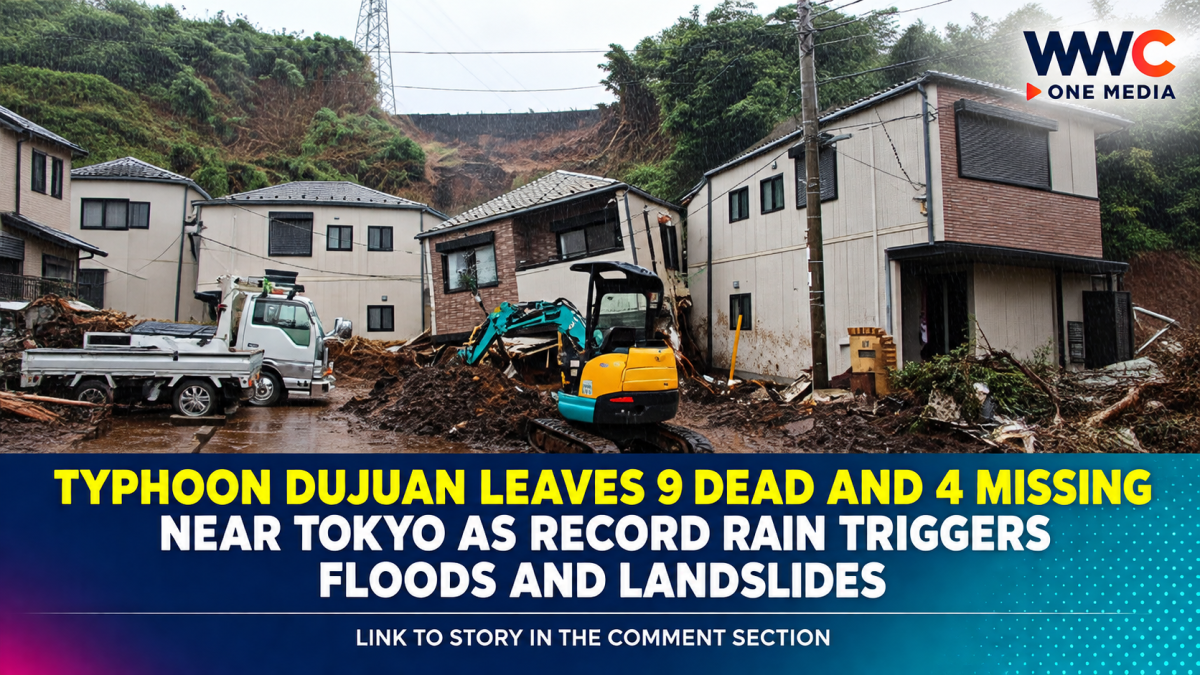
Typhoon Dujuan has left at least nine people dead and four missing in eastern Japan after torrential rain triggered landslides, flooding and widespread damage across the Kanto region near Tokyo.
Six of the confirmed deaths were reported in Chiba Prefecture and three in Kanagawa Prefecture, according to local authorities. Search-and-rescue operations involving police, firefighters and Japan’s Self-Defense Forces are continuing for those still missing.
The storm approached the Kanto region on Sept. 21 before moving northeast away from Japan’s Pacific coast the following night. Despite weakening, Dujuan brought exceptionally heavy rainfall, with some parts of eastern Japan recording more than 800 millimeters in 48 hours.
In Chiba, one man in his 60s was found near a submerged vehicle in Inzai and later pronounced dead at a hospital. Two other men, in their 60s and 70s, remained missing after they were believed to have been caught in a landslide in Kamogawa.
In Kanagawa, a woman in her 30s was found dead inside an apartment building in Miura after mud flowed into the property. Other residents in the prefecture were also reported missing following landslides.
The storm damaged around 500 homes across Chiba, Kanagawa and Ibaraki prefectures. Floodwaters also inundated roads and residential areas, while landslides blocked routes and damaged homes.
The rainfall was particularly extreme in Tokyo’s Izu island chain. Oshima recorded about 832 millimeters over 48 hours, while other areas around Tokyo and Chiba also recorded record or near-record rainfall totals.
The storm also disrupted transportation and holiday activities during Japan’s Silver Week period. Flights were cancelled, roads and rail services were affected, and several major events were disrupted as authorities warned residents about flooding and landslide risks.
Although Dujuan has moved away from Japan, authorities have continued to warn that dangers can remain after a typhoon passes. Saturated ground and swollen rivers can trigger additional landslides and flooding even after the heaviest rain has stopped.
The disaster has left communities around Tokyo dealing with fatalities, missing residents, damaged homes and continuing recovery efforts as emergency teams search affected areas and assess the full extent of the damage.