
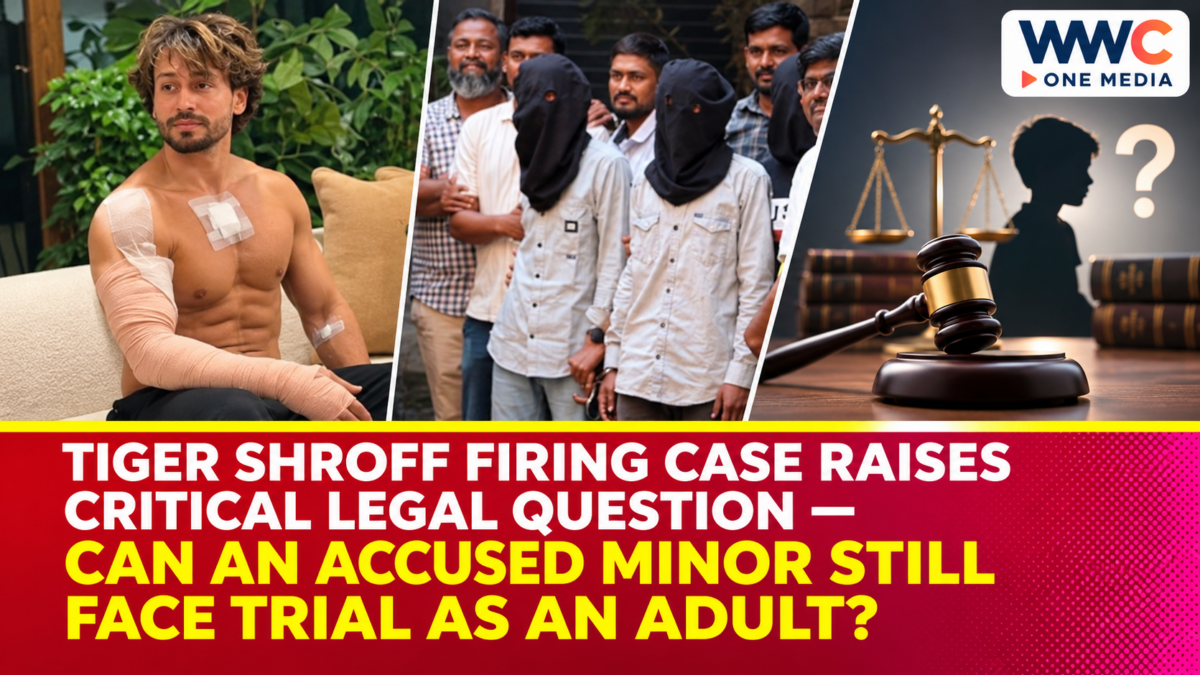
MUMBAI, INDIA — The Tiger Shroff firing case has brought renewed attention to India’s juvenile justice framework, highlighting the importance of establishing an accused person’s age before determining the appropriate criminal proceedings.
Under India’s Juvenile Justice (Care and Protection of Children) Act, 2015, individuals who were below 18 years of age when an alleged offence occurred are entitled to specific procedural safeguards.
However, the legislation also provides a framework under which children aged 16 or older accused of certain heinous offences may face proceedings as adults.
The distinction raises an important legal question surrounding the Mumbai case: how does India’s justice system balance accountability for serious criminal allegations with the protections afforded to children?
An age determination can significantly influence the course of criminal proceedings, but it does not independently establish guilt, innocence or the eventual punishment.
Tiger Shroff Firing Case: Why Age Verification Matters
India’s juvenile justice legislation places considerable importance on an individual’s age at the time of an alleged offence.
The relevant consideration is not simply whether the accused has reached adulthood by the time a court hearing takes place.
A person who subsequently turns 18 may remain entitled to juvenile justice protections concerning an alleged offence committed while underage.
Section 9 of the legislation establishes procedures for examining claims of juvenility raised before courts that do not exercise the powers of the Juvenile Justice Board.
Such claims require an appropriate inquiry and assessment of relevant evidence.
Consequently, establishing that an accused person was below 18 when an alleged offence occurred can affect the authority responsible for handling the proceedings.
The wider importance of distinguishing legal status from substantive judicial findings has also been examined in WWC ONE MEDIA’s coverage of India’s Supreme Court ruling on voter registration and citizenship.
Although that litigation concerns a different area of law, both situations illustrate why the precise legal classification of an individual can influence the procedures available to government institutions.
Can a Minor Face Trial as an Adult in India?
India’s juvenile justice framework does not provide an automatic exemption from adult criminal proceedings for every individual below 18.
Section 15 establishes a preliminary assessment procedure for children who were at least 16 years old when they allegedly committed a legally classified heinous offence.
The Juvenile Justice Board must consider several factors, including:
- The child’s mental and physical capacity in relation to the alleged offence.
- The ability to understand the potential consequences of the alleged conduct.
- The circumstances surrounding the alleged offence.
The Board may seek assistance from qualified psychologists, psychosocial professionals and other relevant specialists.
Importantly, the preliminary assessment is not a determination of criminal guilt.
Its purpose is to establish whether the circumstances justify proceeding through a different judicial framework.
If the statutory conditions are satisfied, the Board may refer the matter to the Children’s Court under Section 18.
The Children’s Court must then determine whether an adult trial is necessary or whether the matter should continue through procedures applicable to children.
An adult trial is therefore not an automatic consequence of the seriousness of an accusation.
What Happens When Organised Crime Allegations Involve Children?
The involvement of children in serious criminal allegations presents additional challenges for investigative authorities and judicial institutions.
Authorities must consider the evidence concerning the alleged offence while also complying with statutory protections applicable to young defendants.
These responsibilities can include appropriate custody arrangements, legal representation, privacy protection and access to child-sensitive judicial proceedings.
India’s legislation also recognises the seriousness of adults using children for unlawful activities.
Section 83 addresses circumstances in which adults or groups use children to participate in illegal conduct.
However, the existence of that provision does not establish that any particular individual or organisation recruited a child in the Tiger Shroff case.
Such allegations require their own evidence and judicial determination.
The distinction between investigative allegations and established criminal responsibility is particularly important in high-profile cases.
WWC ONE MEDIA previously examined similar evidentiary principles in its coverage of the legal responsibilities of jurors in Australia’s Beau Lamarre-Condon criminal trial.
While India and Australia have different criminal justice systems, allegations should not be presented as convictions before the appropriate judicial process has established responsibility.
Why Juvenile Justice Proceedings Protect a Child’s Identity
India’s Juvenile Justice Act provides specific privacy protections for children involved in legal proceedings.
Section 74 generally prohibits publication of information that could identify a child involved in an investigation or judicial proceeding, unless the competent authority authorises disclosure under the prescribed conditions.
These protections extend beyond simply withholding a person’s name.
Information concerning schools, addresses, photographs and other identifying particulars may also fall within the statutory restrictions.
The objective is to protect children’s privacy and prevent unnecessary harm arising from public exposure during criminal proceedings.
In cases attracting significant entertainment and public interest, maintaining those safeguards becomes particularly important.
Public interest in a criminal investigation does not automatically justify publishing information that could identify an accused child.
Responsible coverage can explain the legal developments, relevant legislation and broader public safety implications without exposing protected personal information.
Why an Age Determination Is Not an Acquittal
Determining that an accused individual was a minor at the time of an alleged offence addresses a procedural legal question.
It does not independently resolve whether the individual participated in the alleged conduct.
The appropriate judicial authority must still examine the evidence and determine the legal outcome.
Likewise, decisions concerning custody, referral to another judicial body and the eventual imposition of penalties represent distinct stages of criminal proceedings.
The importance of these distinctions has previously been examined in WWC ONE MEDIA’s explanation of confirmed criminal sentences and separate legal proceedings in Australia.
India’s juvenile justice legislation also establishes specific sentencing protections for children, including restrictions against imposing the death penalty or life imprisonment without the possibility of release for offences committed while underage.
These provisions demonstrate that accountability and rehabilitation are both significant considerations within the juvenile justice framework.
They do not, however, predetermine the outcome of an individual case.
What Happens Next in the Tiger Shroff Case?
The precise next stage of proceedings depends on the authenticated court directions and the decisions of the relevant judicial authorities.
Where an accused individual is formally recognised as having been a child at the time of an alleged offence, the juvenile justice procedures become an important consideration.
Any subsequent assessment concerning a possible adult trial must comply with the statutory requirements.
Investigators must also continue establishing the evidence necessary to support any allegations pursued against individual defendants.
For the public, the distinction between a procedural ruling and a finding of criminal responsibility remains essential.
The central issue extends beyond the involvement of a prominent Bollywood actor.
It concerns whether India’s criminal justice institutions can uphold public safety, ensure accountability and protect the legal rights of children simultaneously.
The eventual outcome must be determined through evidence and lawful judicial proceedings rather than public expectations.
Frequently Asked Questions
Why does the accused person’s age matter in the Tiger Shroff firing case?
India’s juvenile justice legislation establishes different legal procedures for individuals who were below 18 at the time of an alleged offence.
Can a 17-year-old be tried as an adult in India?
Potentially, yes. For qualifying heinous offences, the Juvenile Justice Board must conduct a preliminary assessment, after which the Children’s Court determines whether an adult trial is necessary.
Does turning 18 during criminal proceedings remove juvenile protections?
Not automatically. The individual’s age when the alleged offence occurred is an important consideration under India’s juvenile justice framework.
Does being declared a minor mean an accused person is acquitted?
No. An age determination concerns legal status and the applicable judicial procedures. It does not independently establish innocence or criminal responsibility.
Why is the accused child’s identity being withheld?
Section 74 of India’s Juvenile Justice Act generally restricts the publication of information that could identify children involved in judicial proceedings, subject to legally authorised exceptions.










