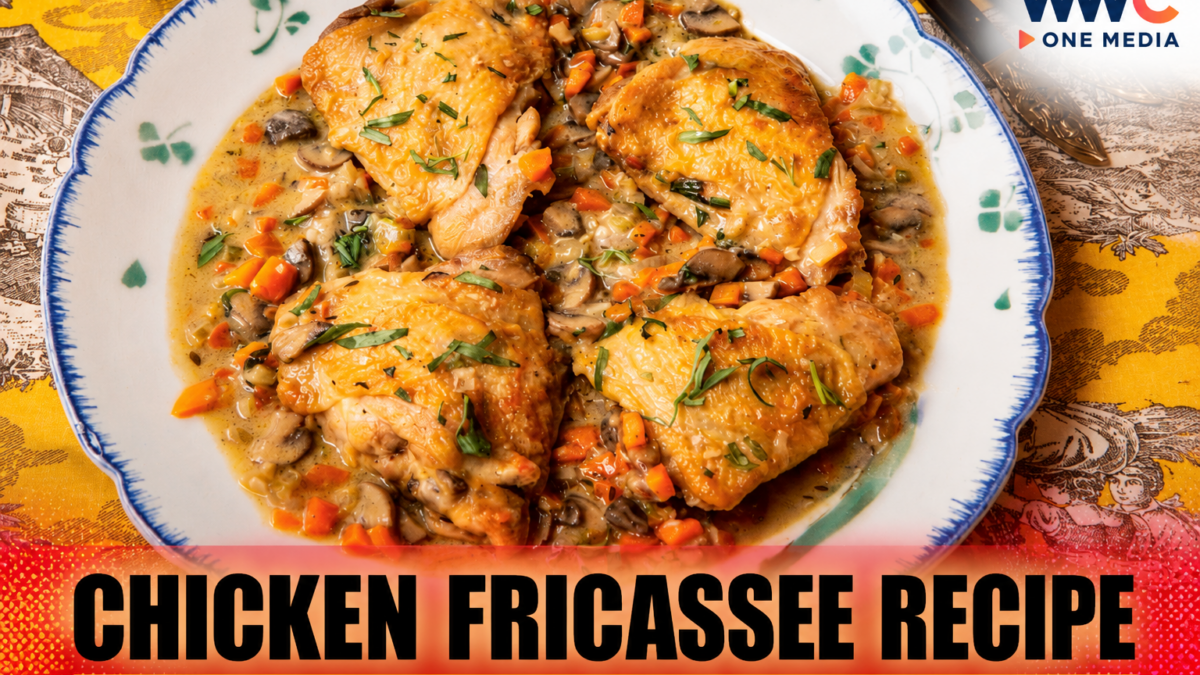
This French Chicken Classic Could Become Your New Comfort-Food Favorite — But the Secret Is in One Slow-Cooked Step
NEWPORT BEACH, California, November 11, 2026 — When dinner calls for something warm, hearty and satisfying, a complicated restaurant-style meal is not always necessary. Sometimes, the answer is a pot of slowly simmered chicken, tender vegetables and a rich, creamy sauce.
That is the appeal of chicken fricassee, a traditional French dish that food writer and recipe creator Corre Larkin is bringing into the spotlight through her cookbook, Season to Taste.
The dish sits somewhere between a sauté and a stew. Chicken is first coated in seasoned flour and browned in butter, then gently cooked with carrots, celery, onions, herbs, wine, broth, mushrooms and cream.
The result is a comforting meal built around a flavorful sauce rather than a complicated cooking technique.
Larkin’s version is designed to serve four people and uses bone-in, skin-on chicken thighs. It also includes a practical lesson for home cooks: do not rush the vegetables. Their slow cooking helps develop the flavor that gives the finished sauce its depth.
But chicken fricassee is more than another recipe for a cold evening or a busy family dinner.
It has a long culinary history, with variations that have appeared in French and other European cooking traditions for centuries.
And the best part? The technique is flexible enough to make this classic feel at home in a modern kitchen.
What Is Chicken Fricassee? A French Classic Between a Sauté and a Stew
Chicken fricassee, also spelled chicken fricassée, is a traditional preparation in which chicken is browned or lightly cooked before being simmered in a sauce.
Unlike deep-fried chicken, the meat is not served with a dry, crispy coating. Instead, the cooking process creates a savory sauce that surrounds the chicken and brings together the flavors of vegetables, herbs and cooking liquid.
The sauce can vary from one recipe to another. Some versions use cream, while others rely on broth, egg yolks or other methods to create a smooth, rich consistency.
The Oxford Companion to Food describes fricassee as a French culinary term historically associated with cooking meat and finishing it in a thickened sauce. Modern French versions commonly feature white meats such as chicken or veal with a creamy sauce.
That flexibility is one reason the dish has survived across generations.
It can be prepared with different cuts of chicken, seasonal mushrooms and available herbs, while keeping the same basic idea: gently cooked meat served with a flavorful sauce.
Corre Larkin’s Chicken Fricassee: What Makes This Version Special?
Larkin’s recipe comes from her cookbook, Season to Taste, published in 2026.
The recipe uses familiar ingredients, but the order in which they are cooked is important.
Chicken thighs are coated in seasoned flour before being browned in butter. The flour helps create a base for the sauce, while browning develops flavor on the surface of the meat.
The chicken is temporarily removed so the vegetables can cook in the flavorful fat left in the pot.
Carrots, celery and onion are then slowly softened with fresh thyme and bay leaves. Larkin recommends allowing this stage to take approximately 15 minutes rather than rushing it.
Garlic is added afterward, followed by dry white wine, which is reduced before broth, mushrooms and cream are incorporated.
The chicken returns to the pot and simmers until fully cooked and tender.
A little red wine vinegar is added near the end to balance the richness of the cream.
Fresh parsley provides the final touch.
The result is a dish that combines the savory flavor of browned chicken with the sweetness of slowly cooked vegetables, the earthiness of mushrooms and the richness of a creamy sauce.
The Ingredients You Need for Chicken Fricassee
Larkin’s published recipe serves four people.
Here are the main ingredients, organized by their role in the dish.
For the chicken and coating:
- Four large bone-in, skin-on chicken thighs
- Two tablespoons all-purpose flour
- Flaky sea salt
- Freshly ground black pepper
- Two tablespoons unsalted butter
For the vegetables and herbs:
- Two medium carrots, peeled and diced
- Two celery stalks, diced
- One medium yellow onion, diced
- Four garlic cloves, minced
- Six fresh thyme sprigs
- Two bay leaves
For the sauce:
- Half a cup of dry white wine
- One cup of bone broth
- Two cups chopped mushrooms
- One-third cup plus one tablespoon heavy cream
- One teaspoon red wine vinegar
For finishing:
- Finely chopped fresh parsley
The mushrooms can be selected according to availability. Larkin notes that small varieties such as button, chestnut, baby bella or cremini mushrooms can work.
Home cooks who dislike mushrooms can leave them out.
The recipe also allows dried bay leaves when fresh ones are unavailable. However, dried leaves should be added separately rather than tied into the herb bundle, because they can crumble during cooking.
How to Make Chicken Fricassee at Home
The method is relatively straightforward, but allowing enough time for each stage is important.
Step 1: Season and coat the chicken
Mix the flour with some of the salt and pepper. Coat the chicken thighs evenly, shaking off any excess.
Step 2: Brown the chicken
Melt the butter in a large, heavy-bottomed pan or Dutch oven over medium-high heat.
Place the chicken skin-side down and brown it for approximately five to seven minutes. Turn the pieces and cook the other side for another three minutes.
The chicken does not need to be completely cooked at this stage. Transfer it to a plate.
Step 3: Slowly cook the vegetables
Add the carrots, celery and onion to the remaining fat.
Season with the remaining salt, then add the thyme and bay leaves.
Cover the pot and cook over medium-low heat for around 15 minutes, stirring occasionally.
This is an important stage because it allows the vegetables to soften and release their flavor.
Step 4: Add garlic and wine
Stir in the minced garlic and cook until fragrant.
Pour in the dry white wine, scraping the bottom of the pot to release the browned bits left behind by the chicken.
Allow the wine to reduce by approximately half.
Step 5: Build the creamy sauce
Add the broth, mushrooms and most of the cream.
Return the browned chicken and any accumulated juices to the pot.
Allow everything to simmer uncovered until the chicken reaches the recommended internal temperature and becomes tender.
Step 6: Finish and serve
Remove the herb bundle and transfer the chicken to a serving platter.
Stir the red wine vinegar and remaining cream into the sauce.
Pour the sauce over the chicken and finish with chopped fresh parsley.
The finished dish can be served immediately while warm.
The Secret to Better Chicken Fricassee Is Not Rushing the Vegetables
One of the most useful lessons from Larkin’s recipe is the time spent cooking the vegetables before adding the liquid.
It may be tempting to add everything to the pot immediately, especially when preparing dinner after a long day.
But allowing the carrots, celery and onion to soften slowly helps develop a deeper flavor.
The vegetables absorb some of the browned butter and chicken drippings, creating a more flavorful foundation for the sauce.
The wine then helps lift the browned bits from the bottom of the pot, adding another layer of flavor.
This is a common principle in many traditional stews and braised dishes: building flavor gradually can make a noticeable difference in the final result.
The technique is also useful beyond chicken fricassee.
It can be applied to other one-pot meals that begin with browning meat, cooking aromatics and developing a sauce.
Why Chicken Thighs Work Well in This Recipe
Larkin uses bone-in, skin-on chicken thighs rather than boneless chicken breast.
That choice is practical for a dish that spends time simmering.
Chicken thighs generally contain more fat and connective tissue than breast meat, which can help them remain tender during longer cooking.
The bones also contribute flavor to the cooking liquid.
The skin develops a golden surface when browned, adding another layer of flavor before the chicken returns to the sauce.
The recipe specifies an internal temperature of 175°F (approximately 80°C) before serving.
For food safety, a thermometer should be inserted into the thickest part of the meat without touching the bone. The USDA’s minimum safe internal temperature for poultry is 165°F (74°C). Larkin’s higher target is a recipe-specific doneness recommendation for tender thighs, not the general minimum safety requirement.
Can You Make Chicken Fricassee Without Mushrooms or White Wine?
Yes. One of the advantages of fricassee is that the basic method can accommodate different ingredients.
Larkin specifically says that mushrooms can be omitted or replaced with small varieties that are available locally.
For home cooks who do not want to use white wine, unsalted or low-sodium broth can provide additional liquid. The flavor will differ because wine contributes acidity and complexity, so a little adjustment to the seasoning may be needed.
Other practical adjustments include:
- Different mushrooms: Cremini, button and baby bella mushrooms can all work.
- Dried herbs: Dried bay leaves can replace fresh ones, but should be removed before serving.
- Different serving options: Rice, mashed potatoes, pasta or crusty bread can accompany the sauce.
- A lighter sauce: Home cooks can adjust the amount of cream, although the finished dish will be less rich.
The important thing is to preserve the cooking method: brown the chicken, develop the vegetable base, add the liquid and simmer until tender.
What Should You Serve With Chicken Fricassee?
The creamy sauce makes chicken fricassee particularly suitable for side dishes that can absorb its flavor.
Some good choices include:
Mashed potatoes: Their soft texture works well with the rich sauce.
Steamed rice: A practical option for a simple family dinner.
Pasta: A useful choice for anyone who enjoys creamy chicken dishes served over noodles.
Crusty bread: Ideal for soaking up the remaining sauce.
Roasted vegetables: A lighter side that can balance the richness of the chicken.
The best pairing depends on how the meal is being served. Rice may be the easiest everyday option, while mashed potatoes or crusty bread can make the dish feel more like a traditional comfort-food dinner.
Chicken Fricassee Has a Much Longer History Than Modern Comfort Food
Although Larkin’s version is a contemporary cookbook recipe, fricassee itself has a long history.
PBS Food’s historical account of chicken and waffles traces early fricassee preparations to medieval Mediterranean cooking and French culinary writing.
The word began appearing in French food literature by the 1300s. Early versions were not limited to chicken and could be made with different meats.
By the 17th century, chicken appeared more frequently in fricassee recipes.
The dish also became part of early American cooking.
PBS notes that Martha Washington’s recipe collection included two versions of fricassee. Historical cookbooks from the colonial period also featured preparations that combined chicken, frying and sauce.
Over time, cooking styles changed, and many fried-chicken recipes developed separately from the older fricassee tradition.
That history demonstrates how a cooking technique can move between countries and generations while evolving to reflect local ingredients and tastes.
Chicken fricassee remains recognizable because its central idea is simple: prepare meat carefully, build a flavorful cooking liquid and finish with a satisfying sauce.
Why Comfort Food Is Still Important in Today’s Restaurant and Food Business
Chicken fricassee also fits into a broader interest in familiar dishes prepared with care.
Restaurants and food businesses increasingly compete through more than novelty. Taste, quality, ingredient choices and the overall dining experience remain important to customers.
WWC One Media has explored the changing restaurant landscape in its report on San Juan’s growing food scene, from local classics to chef-driven newcomers.
It has also examined how restaurants are rethinking familiar meals in its coverage of Hong Kong’s YuSang and its reinvention of Korean comfort food.
The appeal of traditional dishes is also visible in the wider fast-food market. WWC’s report on US and Chinese fast-food chains expanding into each other’s markets examines how familiar food products travel across borders and adapt to new customers.
Meanwhile, the changing strategy of major US restaurant chains shows why taste, quality and value remain central to restaurant competition.
Chicken fricassee is not a fast-food product, but its appeal reflects a similar idea: people continue to value food that feels satisfying, familiar and worth preparing.
The Bottom Line: A Traditional French Chicken Dish That Still Belongs in the Modern Kitchen
Corre Larkin’s chicken fricassee is a reminder that a memorable meal does not always require complicated techniques or unusual ingredients.
A few chicken thighs, vegetables, herbs, broth, wine and cream can become a hearty dinner when each stage is given enough attention.
The recipe’s most important lesson is patience.
Brown the chicken properly. Allow the vegetables to soften. Reduce the wine. Let the sauce develop before returning the chicken to the pot.
The result is a dish that connects traditional French cooking with the practical needs of today’s home kitchen.
And because the recipe can accommodate different mushrooms, serving options and pantry ingredients, it offers room for cooks to make it their own.