WASHINGTON / BANGKOK — November 11, 2026
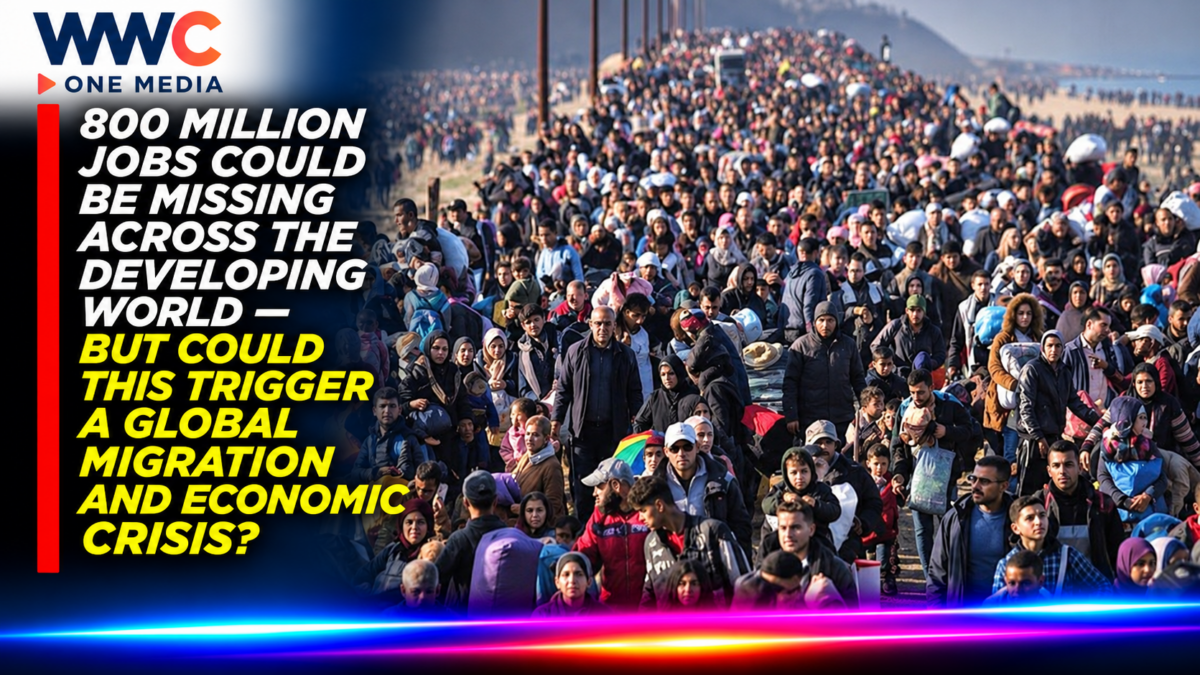
The developing world is approaching an employment crisis that could reshape economies, accelerate migration and deepen social instability.
Over the next 10 to 15 years, approximately 1.2 billion young people are expected to reach working age across developing economies. But current economic trajectories suggest that only around 400 million jobs may be created.
That leaves a potential shortfall of approximately 800 million employment opportunities.
The warning, highlighted in a November 11 Bloomberg report, reflects one of the most serious long-term challenges facing emerging and developing economies.
World Bank Group President Ajay Banga has repeatedly warned that the widening gap could have consequences far beyond unemployment.
Without enough opportunities to earn a living, millions of young people could struggle to support their families, establish financial independence or participate meaningfully in their countries’ economies.
The consequences could extend into increased migration pressures, social frustration, political instability and greater demands on governments already facing financial constraints.
The problem is particularly concerning because many developing countries have some of the world’s fastest-growing working-age populations.
Their young populations could become a major economic advantage.
But without sufficient investment, businesses and productive employment, that demographic opportunity could turn into a major economic liability.
The 800 Million Jobs Gap: What Is Actually Happening?
The central projection is straightforward, but its implications are enormous.
According to World Bank President Ajay Banga, approximately 1.2 billion people in developing countries will reach working age over the next 10 to 15 years.
Under current economic conditions, those economies are expected to generate only around 400 million jobs.
The resulting shortfall is approximately 800 million opportunities.
This does not mean 800 million people are already unemployed.
It means the number of people entering working age could substantially exceed the number of jobs that economies are currently projected to create.
The distinction matters because the challenge is not limited to people actively searching for employment.
It also includes young people who may remain outside the labor force because of limited opportunities, inadequate skills, education barriers or discouragement.
The World Bank’s broader jobs strategy emphasizes that countries need more than employment numbers.
They need better-paid, productive and sustainable jobs that can improve living standards.
A country may technically create millions of positions while still struggling with low wages, informal employment and insecure working conditions.
The quality of those opportunities will therefore matter just as much as the total number created.
Why the World Bank Is Raising the Alarm
Banga has warned that the employment shortage could create serious economic and social consequences if governments fail to act.
In an April 13 Reuters interview, he said the developing world’s employment challenge could contribute to illegal migration and instability.
The warning came as international financial officials were preparing to discuss the economic consequences of the Middle East conflict, energy disruptions and other global shocks.
Banga argued that governments cannot focus exclusively on immediate crises while ignoring the longer-term problem of employment.
The issue returned to the international agenda during the October 2026 IMF–World Bank Annual Meetings in Bangkok.
There, Banga again called for a different development model that would combine public financing, private investment, technology and institutional reforms to create jobs at a much larger scale.
His message was clear: traditional development financing alone will not be enough to meet the employment needs of the next generation.
Governments need to make it easier for businesses to invest, expand and hire.
Why Developing Countries Face a Bigger Employment Challenge
The problem is not distributed equally across the world.
Many advanced economies are dealing with ageing populations and slower growth in their working-age populations.
Developing economies, particularly in parts of Africa and South Asia, face a different demographic situation.
Millions of young people are entering adulthood and preparing to join the labor force.
The World Bank estimates that 1.2 billion young people will reach working age in emerging-market and developing economies between 2025 and 2035.
Sub-Saharan Africa is expected to experience especially rapid growth in its working-age population.
A July 2026 World Bank analysis found that the region could account for more than three-quarters of the increase in the global working-age population through 2050.
That represents a major potential economic opportunity.
A large working-age population can support economic growth, increase consumption, expand businesses and strengthen government revenues.
But the demographic advantage only materializes when people can find productive work.
Without enough jobs, countries may experience rising underemployment, informal work, poverty and pressure on public services.
The challenge is therefore not simply population growth.
It is whether economic growth can keep pace with the number of people who need employment.
The Private Sector May Hold the Key to Creating Millions of Jobs
One of Banga’s central arguments is that governments cannot create the required number of jobs by relying exclusively on public-sector hiring or development assistance.
Private businesses must become a much larger part of the solution.
Companies create employment when they expand production, build facilities, establish new services and enter new markets.
But businesses are less likely to invest when regulations are unpredictable, infrastructure is unreliable or financing is difficult to obtain.
The World Bank has identified several areas where investment could help generate employment.
These include:
- Infrastructure and energy
- Smallholder agriculture and agribusiness
- Primary healthcare
- Tourism and hospitality
- Value-added manufacturing
- Small and medium-sized enterprises
These industries can support employment across different skill levels.
Infrastructure projects require engineers, construction workers, technicians and logistics personnel.
Agriculture can support farmers, processors, distributors and food manufacturers.
Tourism creates opportunities in accommodation, transportation, restaurants and entertainment.
Manufacturing can generate employment across production, maintenance, engineering and supply-chain operations.
The goal is to build businesses capable of employing people at scale rather than depending entirely on temporary projects or government programs.
Small Businesses Could Become One of the Biggest Job-Creation Engines
Micro, small and medium-sized enterprises (MSMEs) are particularly important to developing economies.
They often operate closer to local communities and can provide employment in areas where large corporations have limited operations.
However, many small businesses struggle to obtain financing, access international markets and manage regulatory requirements.
The World Bank has emphasized the importance of helping these businesses build reliable financial records, secure loans, connect with larger buyers and improve their ability to operate.
Access to credit is especially important.
A small manufacturer that cannot finance equipment may be unable to increase production.
A tourism business that cannot secure working capital may struggle to hire additional employees.
An agricultural enterprise that lacks storage and transportation infrastructure may lose products before they reach customers.
Addressing these barriers could help businesses expand and employ more workers.
But investment alone is not enough.
Businesses also need skilled workers, reliable infrastructure, predictable regulations and customers with sufficient purchasing power.
Artificial Intelligence Could Make the Jobs Crisis More Complicated
The employment challenge is emerging at the same time artificial intelligence is changing how businesses operate.
AI could increase productivity, help companies reduce costs and create entirely new industries.
But it could also transform traditional entry-level and administrative jobs.
The International Labour Organization and World Bank examined this issue in a March 2026 joint study covering 135 countries.
The research found that generative AI could affect developing economies differently from advanced economies.
In poorer countries, the disruption from AI may arrive before the productivity benefits because many workers and businesses lack reliable internet access, digital infrastructure and the skills needed to use advanced technology.
The World Bank’s August 2026 World Development Report also highlighted the importance of electricity, connectivity, skills and institutional capacity in determining whether developing economies can benefit from AI.
The organization estimated that 4.5% of existing jobs in low- and middle-income countries were at risk of automation from generative AI, compared with 14.2% in high-income countries.
At the same time, 16.2% of jobs in developing economies could experience meaningful productivity improvements through AI.
This creates a complicated situation.
Developing countries may face a shortage of new jobs while also needing to prepare existing workers for technological changes.
The challenge is not simply preventing AI from replacing people.
It is ensuring that workers can participate in the new opportunities created by the technology.
Young Workers Could Be Among the Biggest Victims
The employment shortage is especially concerning for younger generations.
Young people often need their first jobs to gain practical experience, build professional networks and develop the skills required for more advanced positions.
But when companies reduce entry-level hiring or demand previous experience for even junior positions, new graduates can struggle to enter the workforce.
The International Labour Organization’s January 2026 Employment and Social Trends report projected global youth unemployment at 12.4%.
It also estimated that approximately 260 million young people, or 20% of the global youth population, were not in employment, education or training.
These figures demonstrate that the employment problem is already significant.
The projected 800-million-job shortfall adds another layer of concern because many developing economies will need to absorb even larger numbers of young workers in the coming years.
WWC ONE MEDIA previously examined how Malaysia’s graduates are sending hundreds of job applications while AI makes their first career break even harder.
The report highlighted the difficulties facing young applicants who need experience to secure employment but cannot gain that experience without first being hired.
This is one of the most important challenges policymakers must address.
A labor market that fails to provide opportunities for new graduates risks wasting years of education and training.
The Philippines Could Also Feel the Pressure
The global employment challenge has direct relevance to the Philippines.
The country has a large working-age population and depends heavily on industries such as manufacturing, tourism, construction, agriculture and business-process outsourcing.
Its ability to create productive domestic jobs will influence wages, household spending and the number of Filipinos seeking opportunities overseas.
The Philippines also faces a changing employment landscape as artificial intelligence affects traditional office and outsourcing tasks.
In November, WWC ONE MEDIA reported on a proposed measure seeking stronger protection for Filipino workers affected by AI-related dismissals.
The proposal, discussed in Erwin Tulfo’s bill requiring six months’ warning and stronger separation pay for AI-related layoffs, highlights the growing debate over how governments should protect workers while businesses adopt new technology.
The measure is a proposal, not an enacted nationwide protection.
Its significance lies in the wider policy question: how can countries encourage innovation without leaving workers behind?
The Philippines also has an opportunity to create higher-value employment through technology.
WWC ONE MEDIA recently reported on a Philippine technology firm’s $1-million investment in training 2,000 AI engineers for international companies.
The initiative reflects a growing effort to move Filipino professionals into more specialized technical roles.
However, training programs must translate into actual employment opportunities, competitive salaries and sustained demand from businesses.
The Philippines cannot rely on overseas employment or traditional outsourcing alone to address the needs of its future workforce.
Domestic investment and higher-productivity industries will remain essential.
South Korea Shows That Low Unemployment Does Not Guarantee Youth Opportunities
The employment challenge can also appear in countries with relatively low headline unemployment.
South Korea reported an unemployment rate of 2.0% in October 2026, but employment among young people declined by 196,000 compared with the previous year.
The figures illustrate how an economy can report a low overall unemployment rate while younger workers experience worsening conditions.
WWC ONE MEDIA examined this contrast in South Korea’s unemployment rate falling to 2% as youth jobs plunge by 196,000.
The broader lesson is that employment statistics must be examined carefully.
Headline unemployment does not reveal everything about job quality, youth participation, underemployment or the ability of graduates to secure stable positions.
For developing economies, those indicators will become increasingly important as larger generations enter the workforce.
Why Migration Could Become a Bigger Global Issue
When workers cannot find sufficient opportunities at home, they may consider moving to countries with stronger labor markets.
Migration can provide important economic benefits.
Workers may earn higher incomes, acquire new skills and send remittances to their families.
Receiving countries can also benefit from additional labor, particularly in industries facing worker shortages.
But migration can become more difficult when people move because they have no realistic alternative.
Irregular migration can expose individuals to exploitation, unsafe travel routes, trafficking and illegal recruitment.
Countries may also face political tensions when large migration flows place pressure on housing, public services and labor markets.
This is why the World Bank’s warning extends beyond the number of jobs created.
Employment opportunities can help reduce the economic pressures that push people toward dangerous migration routes.
However, the 800-million-job projection does not mean that 800 million people will migrate.
Migration decisions depend on many factors, including income differences, family circumstances, immigration rules, conflict and access to opportunities at home.
The employment shortage is one risk among several that could influence those decisions.
What the World Bank Wants Governments to Do
The World Bank’s response focuses on making developing economies more attractive to investment and better equipped to create jobs.
Several priorities stand out.
1. Improve business conditions
Companies need predictable regulations, reliable institutions and simpler procedures for registering and operating businesses.
2. Expand infrastructure
Reliable electricity, transportation, water systems and digital connectivity make it easier for businesses to operate and expand.
3. Strengthen education and practical skills
Training must match what employers actually need, including technical, digital, communication and problem-solving capabilities.
4. Support small businesses
MSMEs need access to financing, technology and larger markets so they can grow and employ more people.
5. Mobilize private investment
Governments and development institutions can use guarantees, equity financing and other instruments to reduce investment risks.
6. Prepare workers for AI
Countries need to expand digital access and help workers adapt to technologies that can change job requirements.
These measures are not quick fixes.
Creating hundreds of millions of productive jobs requires sustained investment, stronger institutions and long-term economic reforms.
The Bigger Picture: A Generation Needs Jobs, Not Just Economic Growth
The projected 800-million-job shortfall is a warning that economic growth alone may not be enough to deliver opportunities to the next generation.
Countries can report rising GDP while millions of young people remain unable to find stable work.
They can attract investment while failing to develop the skills required by new industries.
They can expand technology adoption while leaving workers without the infrastructure or training needed to benefit from it.
The coming decade will therefore test whether developing economies can convert demographic growth into productive employment.
For the World Bank, the answer requires a larger role for private investment, stronger institutions, better infrastructure and more effective skills development.
For governments, the challenge is to make their economies places where businesses can grow and workers can build sustainable careers.
For young people, the stakes are personal.
A job is not simply a statistic. It can determine whether someone can support a family, pay for education, establish independence or build a future in their own country.
The world has roughly a decade to prepare for one of the largest waves of new workers in history.
The question is no longer just how developing countries will grow. It is whether they can create enough decent jobs before an entire generation is left waiting for its first real opportunity.