
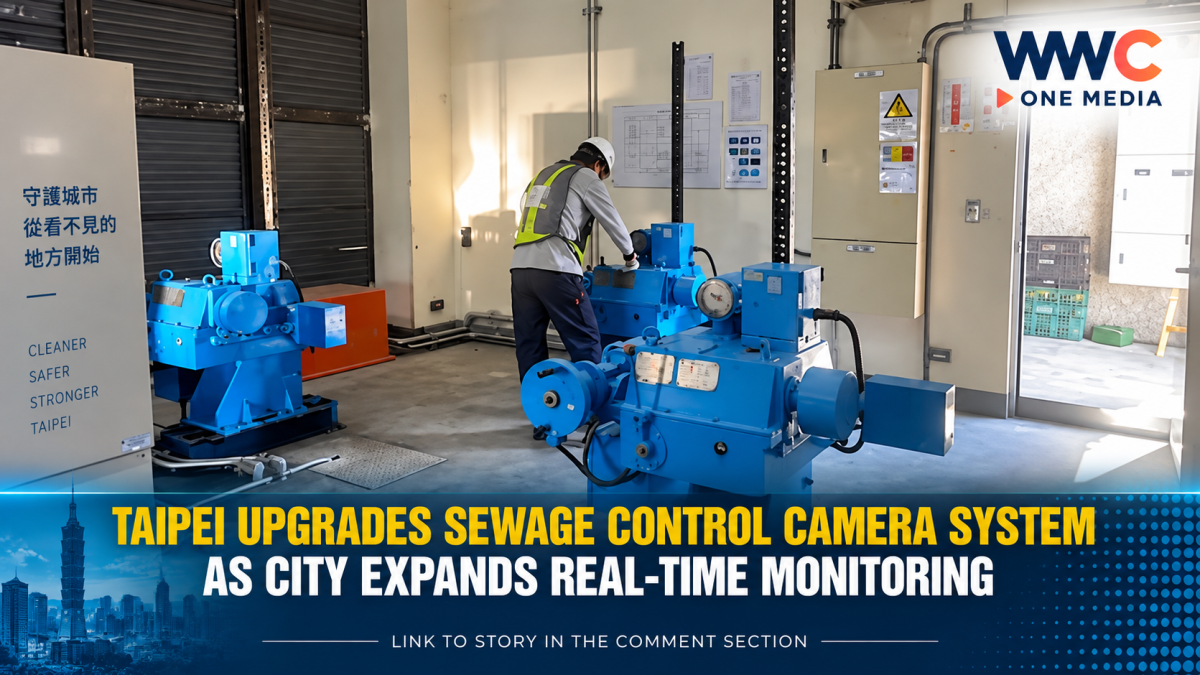
TAIPEI, Taiwan — Taipei is strengthening its smart-city infrastructure by upgrading its sewage control camera system, bringing more real-time visual monitoring to key pumping stations across the capital.
According to a September 9 report by Taiwan News, the upgraded system now provides real-time monitoring across 10 sewage pump stations, giving operators a faster way to observe conditions and respond when problems arise.
The move adds another layer to Taipei’s broader effort to digitize the management of its underground sewage and drainage infrastructure.
Cameras bring sewage infrastructure into the digital age
Taipei has already developed extensive remote-monitoring capabilities for its pumping stations. The city’s Hydraulic Engineering Office says CCTV systems can transmit real-time images from pumping stations to district and central management centers, allowing officials to monitor facilities remotely.
The system is designed to work alongside other water-management data, including rainfall, sewer-water levels and river levels. Taipei’s automated pumping-station network can use that information to help operators activate equipment when heavy rainfall threatens the city.
This matters because Taipei faces recurring risks from intense rainfall, typhoons and urban flooding. The city has previously emphasized continuous monitoring and emergency readiness at its pumping stations, including remote supervision of facilities.
More than cameras: Taipei is building a smart sewer network
The latest camera upgrade is part of a wider modernization of Taipei’s sewage infrastructure.
In 2025, Taipei’s Sewerage Systems Office received a Golden Map Award for its Cloud-Based Smart Sewerage Management System, which combines geographic information systems with sewer inspections, maintenance records, incident reporting and cleaning operations.
One of the system’s notable features is a dynamic pipeline-video function that allows authorized users to select sections of the sewer network on a digital map and view corresponding inspection footage. Defects can be visually identified and linked with repair information, helping officials track the condition of underground infrastructure more efficiently.
The city has also been pursuing a long-term inspection and rehabilitation program aimed at extending the service life of aging sewer pipelines.
Why the upgrade matters
For residents, the technology may be largely invisible—but its potential impact is significant.
Real-time camera feeds can give operators an immediate view of conditions at critical facilities, while integrated water-level and rainfall information can help authorities respond more quickly when drainage problems emerge. Taipei’s broader flood-control system combines monitoring data with automated pumping-station operations and centralized management.
Taipei’s Sewerage Systems Office also describes sewage infrastructure as a critical part of the city’s basic services, with wastewater collected through the sewer network before being treated at sewage treatment plants.
The upgrade therefore represents more than a surveillance improvement. It is another step toward data-driven sewage management, where cameras, geographic information, water-level data and automated controls work together to help Taipei maintain underground infrastructure and respond to extreme-weather events.
As cities across Asia confront heavier rainfall, aging infrastructure and growing urban populations, Taipei’s approach highlights how technologies that are normally associated with smart-city traffic or security systems are increasingly being applied beneath the streets—where much of a city’s most important infrastructure operates out of sight.
WWC ONE MEDIA G.A




Leave a Reply