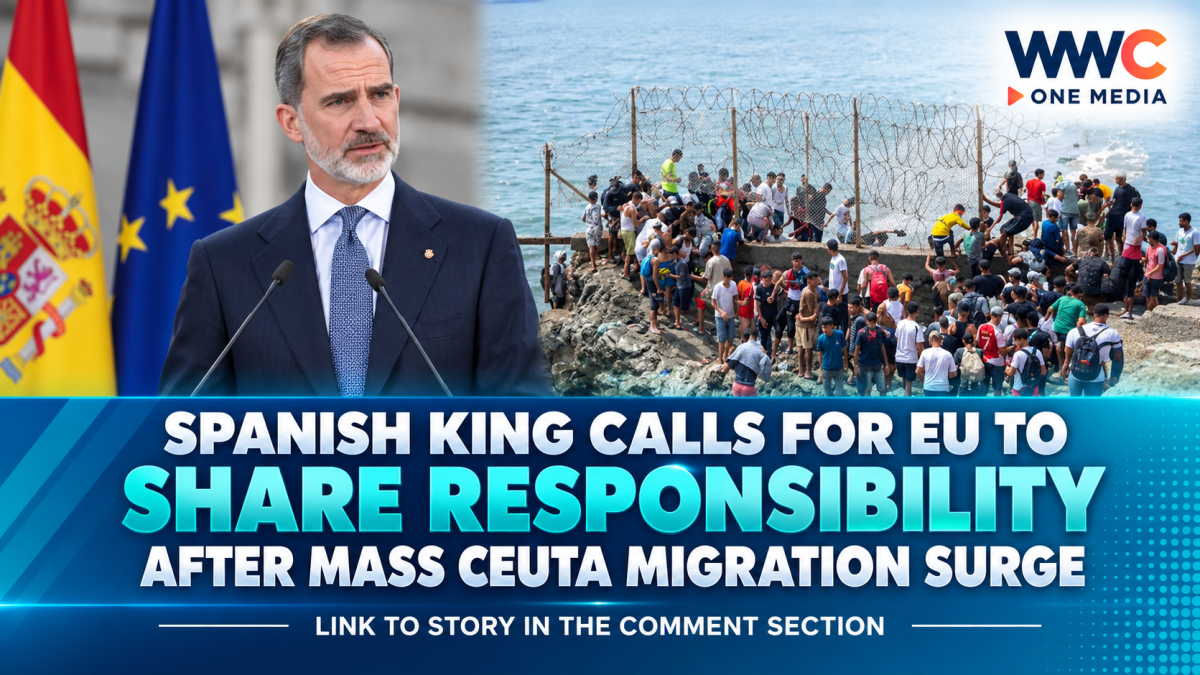
Spanish King Felipe VI has called for greater European solidarity after a mass arrival of migrants in Ceuta, saying countries along the European Union’s external borders should not be left to manage migration pressures on their own.
Speaking during a state dinner in Madrid attended by French President Emmanuel Macron, Felipe said the events in the North African Spanish enclave created major security, public-order and humanitarian challenges. He urged EU member states to strengthen cooperation and provide additional resources to countries facing the greatest pressure at the bloc’s external borders.
The comments followed the arrival of about 72,000 migrants in Ceuta on July 30, according to the reported figures. Spain returned most of those who crossed to Morocco, while the episode prompted debate among European governments over border management and responsibility for migration flows.
The crisis has also led to discussions over Spain’s asylum and immigration procedures. Prime Minister Pedro Sanchez’s government is considering changes that could allow authorities to process and return some arrivals more quickly. Spanish officials have acknowledged that any changes would have to comply with international law.
The proposed changes have drawn criticism from humanitarian organizations and legal groups, which argue that some measures could conflict with international human-rights obligations. The Spanish government has said it is still examining the legal framework for any amendments.
The European Commission has meanwhile backed Spain’s handling of the immediate influx, while European Migration Commissioner Magnus Brunner announced plans to strengthen EU border controls. The proposal would expand the mandate of Frontex and provide a standing force capable of being deployed more rapidly to support member states.
Spain has separately been seeking deeper integration of Ceuta and neighboring Melilla into EU structures, including a permanent Frontex presence and moves toward integrating the two cities into the EU Customs Union.
The latest developments highlight the continuing debate within the European Union over how responsibility for external-border management, asylum processing and migrant arrivals should be shared among member states.