
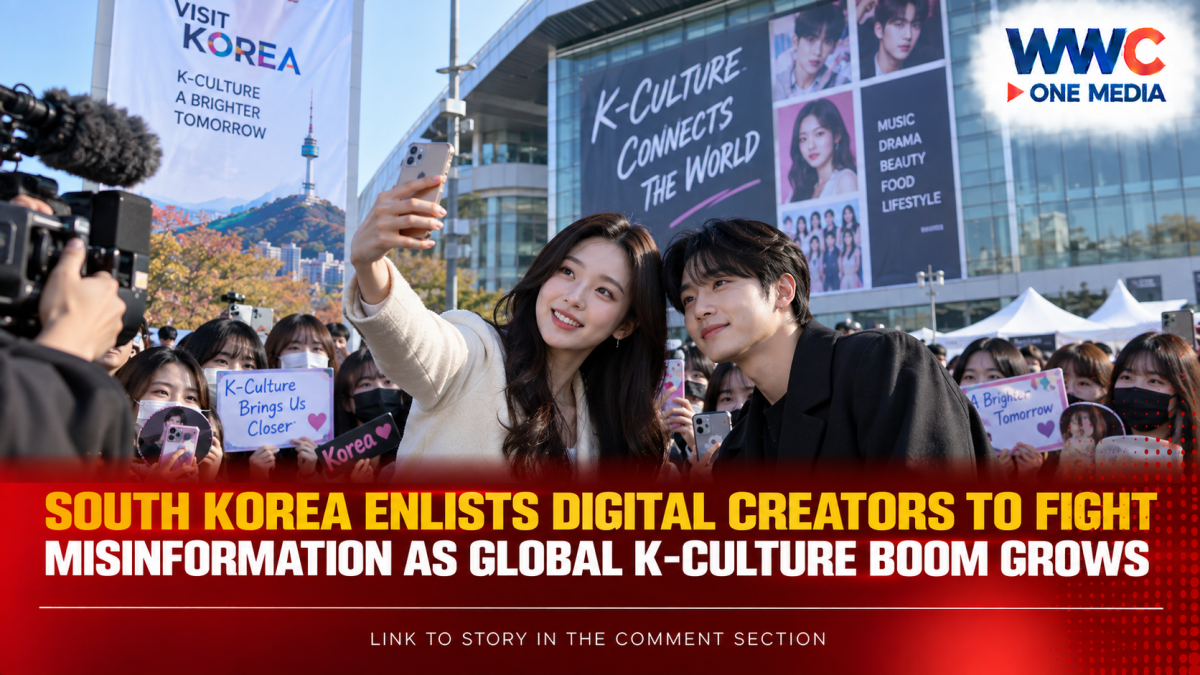
SEOUL — South Korea is turning to an increasingly powerful group in the global information battle: digital creators.
As Korean food, music, entertainment, history and tourism reach larger international audiences, the government is working with influencers and online personalities to correct inaccurate or misleading information about the country.
The initiative is being carried out through FACTS: KOREA, a service operated by the Ministry of Culture, Sports and Tourism (MCST), which allows errors about Korea appearing in overseas content to be reported and reviewed.
The effort comes as South Korea prepares to mark the 10th anniversary of FACTS: KOREA, launched in 2016. According to ministry data cited by The Korea Times, the service had received more than 20,000 correction requests worldwide as of July 2026.
From gimbap to Korean history, creators are correcting the record
One of the creators involved is food YouTuber Cookim, who has built a large international following by introducing Korean cuisine online.
His FACTS: KOREA collaboration tackles misconceptions surrounding Korean food, including the common description of gimbap as “Korean sushi.”
The campaign also addresses misunderstandings about kimchi, including the idea that its characteristic sourness simply comes from vinegar. Korean kimchi traditionally develops its distinctive flavor through fermentation, although recipes and preparation methods vary.
Cookim’s approach illustrates why the government is working with creators rather than relying exclusively on conventional public-information campaigns: online personalities can explain cultural details in formats designed for social-media audiences.
Why influencers matter in the information battle
The strategy extends beyond food.
Creators including Hailey Kim and Jannah Kim have participated in collaborations designed to address cultural, historical and geographical inaccuracies about Korea.
Hailey Kim, for example, has produced content introducing Korean museums, landmarks and basic information about the country, while Jannah Kim has highlighted incorrectly labeled Korean tourist destinations.
The objective is not simply to tell audiences what is wrong.
It is to make accurate information easier to discover in the same digital spaces where misconceptions can spread quickly.
That distinction is becoming increasingly important as short-form video, search engines and AI-generated content become major sources of information for international audiences.
Korea’s fact-checking network is not new
The government’s current creator strategy builds on a program that has been operating for years.
The Friends of Korea initiative, established in 2013, brings together civilian volunteers who identify inaccurate information about Korea overseas and report it through the government’s system.
In August, MCST launched the 21st Korea Correct Information Ambassadors, involving 40 young people from 11 countries. Their work includes identifying inaccurate information overseas, reporting it through FACTS: KOREA and promoting accurate information about Korea and K-content.
Korea JoongAng Daily reported that volunteers involved in the program have helped flag and seek corrections to more than 20,000 pieces of misinformation over the years. Issues can range from basic geographic or naming errors to more sensitive historical and territorial matters.
The government is also watching AI
The information challenge is no longer limited to newspapers, websites and social media.
South Korea’s cultural ministry has previously said its fact-checking volunteers would examine inaccurate information appearing through generative AI platforms and streaming services, reflecting the changing way people learn about Korea.
That could become increasingly important as AI-generated answers, videos and images are used by people researching countries, food, history and culture.
A false claim can potentially be reproduced many times once it enters digital systems.
For South Korea, ensuring that internationally consumed information is accurate is therefore becoming part of its broader cultural diplomacy strategy.
K-culture’s global success raises the stakes
The campaign comes at a time when international interest in Korean culture continues to expand.
The MCST said its 2026 K-influencer program selected 1,152 creators from 98 countries to promote Korean culture through YouTube and other digital content. The program received more than 4,000 applications from 134 countries.
That growing network gives South Korea an enormous opportunity to showcase its culture — but it also means inaccuracies can travel farther and faster.
The government is therefore attempting to pair global cultural promotion with greater information accuracy.
More than correcting mistakes
The larger significance of the campaign is that South Korea is treating cultural information as part of its international image.
K-pop, Korean dramas, food, beauty, tourism and history have helped create unprecedented global interest in the country. But the more people consume Korean culture, the more important context becomes.
Digital creators can provide that context in a way that feels more immediate and accessible than traditional government communications.
For South Korea, the challenge ahead is finding the right balance: correcting genuine inaccuracies while allowing independent creators to tell authentic stories about Korean life and culture.
The global K-wave has already won millions of viewers. Now Seoul is trying to make sure that what the world learns about Korea is not only popular — but accurate.



Leave a Reply